Tools to avoid duplicate payments on vendor invoices guide
Tools to avoid duplicate payments on vendor invoices using intake controls, vendor governance, matching rules and payment approvals with Venn visibility.

Ahmed Shafik
Co-founder

Trusted by 15,000+ Canadian businesses
Business banking for Canada
Local CAD and USD accounts, corporate cards with cashback, the lowest FX rates in Canada, free local transfers, and more.
Duplicate vendor payments drain cash, create accounting headaches, and damage supplier relationships. For Canadian businesses processing hundreds or thousands of invoices each month, even a 1% duplicate rate translates into significant losses and hours spent on recovery efforts.
The good news: duplicate payments are preventable. The solution combines process controls with the right tool capabilities, from invoice intake through payment execution. "Tools" here does not mean adding more apps to your stack. It means building a controlled workflow where each step catches errors before money leaves your account.
This guide walks through the prevention framework Canadian businesses need, the specific tool features to look for, and how to implement controls that actually work. Throughout, we will show how centralizing your payables through a business banking platform like Venn helps teams reduce duplicate risks while simplifying multi-currency operations and accounting automation.
What Counts as a Duplicate Payment (And What Does Not)
Common Duplicate Scenarios
Most duplicate payments fall into predictable patterns:
Same invoice paid twice due to re-submission. A vendor sends an invoice by email, then uploads it to your portal. Your team processes both without realizing they represent the same charge.
Same invoice paid via different methods. Your controller sends an EFT, but the payment does not clear immediately. A team member, worried the vendor is waiting, sends a wire or pays by card. Now you have paid twice.
Duplicate vendor records. "ACME Inc." exists in your system alongside "Acme Incorporated." Each profile receives its own payment for the same invoice.
Credit memo or partial payment confusion. A vendor issues a credit, but your team pays the original invoice amount anyway. Or a partial payment gets recorded incorrectly, triggering a full second payment.
Not Duplicates, But Often Mistaken for Them
Some payments look suspicious but are legitimate:
• Progress billing with similar amounts across milestones
• Recurring invoices for monthly services
• Split payments allocated across projects or cost centers
Your detection rules need to flag true duplicates while allowing these legitimate patterns to flow through with proper documentation.
Why Duplicate Payments Happen (Root Causes)
People and Process Issues
No standardized invoice intake. Invoices arrive via email, portal uploads, Slack messages, and even text. Without a single channel, duplicates slip through.
No clear owner for vendor master changes. When anyone can add vendors or update bank details, duplicate records multiply.
Weak approval design. Approvers cannot see prior invoices or payment status. They approve what lands in their queue without context.
Lack of segregation of duties. The same person creates the vendor record, enters the invoice, and releases the payment. No checkpoint exists to catch errors.
Data and Systems Issues
Inconsistent invoice numbers. "INV-1029" and "INV 1029" look different to a system but represent the same invoice.
Vendor naming inconsistencies. "Smith Consulting Ltd" and "Smith Consulting Limited" create separate vendor profiles.
Manual entry errors. Typos in amounts, dates, or currency fields create mismatches that hide duplicates.
Disconnected systems. Invoices live in email, approvals happen in chat, and payments execute in a bank portal. Nothing connects.
Payment-Rail Issues That Trigger Double Sends
Timing uncertainty on EFT/ACH. Payments show "pending" for days. Teams re-send because they cannot confirm the original went through.
Cross-border payment confusion. International wire status tracking is often unclear, prompting duplicate attempts.
Multiple bank accounts and cards across departments. Different teams pay the same vendor from different accounts without visibility into each other's activity.
The Prevention Framework: Controls Before, During, and After Invoice Entry
Step 1: Lock Down Vendor Onboarding and Vendor Master Data
Controls to implement:
• Single intake form for new vendors with mandatory fields: legal name, payment method, currency, tax IDs, and remittance email
• Bank detail change approvals with call-back verification before any update takes effect
• Matching rules that block duplicate vendor creation
Tool capabilities to look for:
• Vendor master governance with audit logs and role-based permissions
• Duplicate vendor detection based on name, email domain, and bank account fingerprint
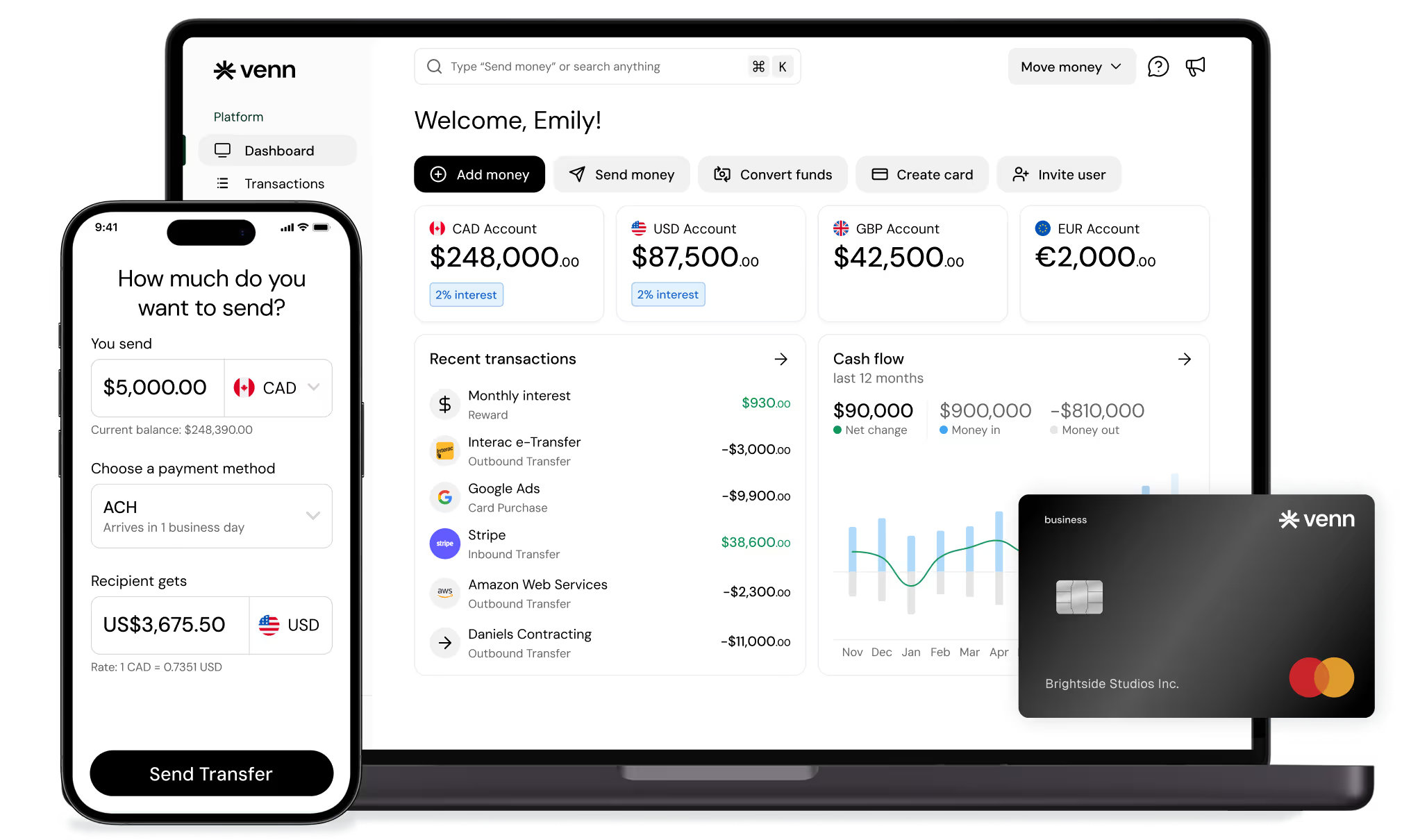
Centralizing payables through one business banking platform eliminates "shadow vendor lists" across teams. When you manage vendor payees through Venn, you create a single source of truth for payment information, and controls at the banking layer prevent duplicate sends.
Step 2: Standardize Invoice Capture and Intake
Controls to implement:
• One channel for all invoices: a dedicated AP inbox, portal, or capture tool
• Require actual invoice attachments, not "please pay" emails
• Clear handling rules that distinguish statements from invoices
Tool capabilities to look for:
• OCR capture with field validation
• Duplicate attachment detection
• Mandatory metadata: vendor, invoice number, invoice date, due date, currency, tax, and PO reference where applicable
When your invoice metadata connects directly to your payment records, reconciliation becomes straightforward. Venn's QuickBooks and Xero integrations ensure invoice data and payment records stay synchronized.
Step 3: Apply Duplicate Invoice Detection Rules
Run duplicate checks at entry and again before payment release. Your detection logic should include:
Exact match rules:
• Same vendor + same invoice number
• Same vendor + same amount + same invoice date
Normalization rules:
• Trim spaces and remove punctuation
• Standardize prefixes (INV-, #, leading zeros)
• Handle common variations: "INV 1029" matches "INV-1029"
Fuzzy match rules:
• Vendor name variations: "ACME Inc." flags against "ACME Incorporated"
• Amount tolerance: same vendor + amount within 1% + date within 7 days triggers review
Currency-aware rules:
• Prevent duplicates caused by CAD vs USD confusion
• Flag when the same vendor receives payments in different currencies for similar amounts
Exception workflow:
• Define who reviews flagged items
• Document what evidence is required to proceed
• Record approval decisions in an audit trail
For businesses paying international vendors, currency-aware detection is essential. Using Venn multi-currency accounts keeps vendor payments organized by currency, reducing confusion that leads to duplicate sends.
Step 4: Use Matching Controls (Two-Way and Three-Way Match)
Two-way match: Purchase order to invoice. The invoice amount and details must match an approved PO.
Three-way match: Purchase order to invoice to receipt. Add confirmation that goods or services were received before payment releases.
Tool capabilities to look for:
• Match exceptions queue for handling partial receipts and backorders
• Approval routing based on exception type, value thresholds, and cost centers
Industry-specific considerations:
• Construction and field services: tie invoices to purchase orders and job cost codes
• Retail and product businesses: match against receiving records and handle returns
• Professional services: validate against pre-approvals and SOW-based billing terms
Step 5: Design Approvals and Segregation of Duties
Controls to implement:
• Separate roles for vendor creation, invoice entry, approval, and payment release
• Require approvers to see prior invoices, payment status, and vendor bank change history before approving
Tool capabilities to look for:
• Role-based access controls
• Dual approvals for payment runs above threshold amounts
• Audit trails for all approvals and changes
• Alerts when an invoice is edited after approval
Venn serves as the controlled execution layer for outgoing payments. Approval policies and permissions at the banking level reduce duplicate sends by ensuring proper authorization before any payment releases.
Step 6: Build Payment-Run Controls
This step is where most duplicates actually happen. A payment passes all earlier checks, then someone re-sends because they cannot confirm status.
Controls to implement:
• Scheduled payment batching with clear cutoffs
• Final duplicate check immediately before release
• Payment method hierarchy: when to use EFT/ACH vs wire vs card
• Clear payment status tracking visible to all relevant team members
Tool capabilities to look for:
• Payment file approvals and payee lock
• Confirmation logs and exception alerts
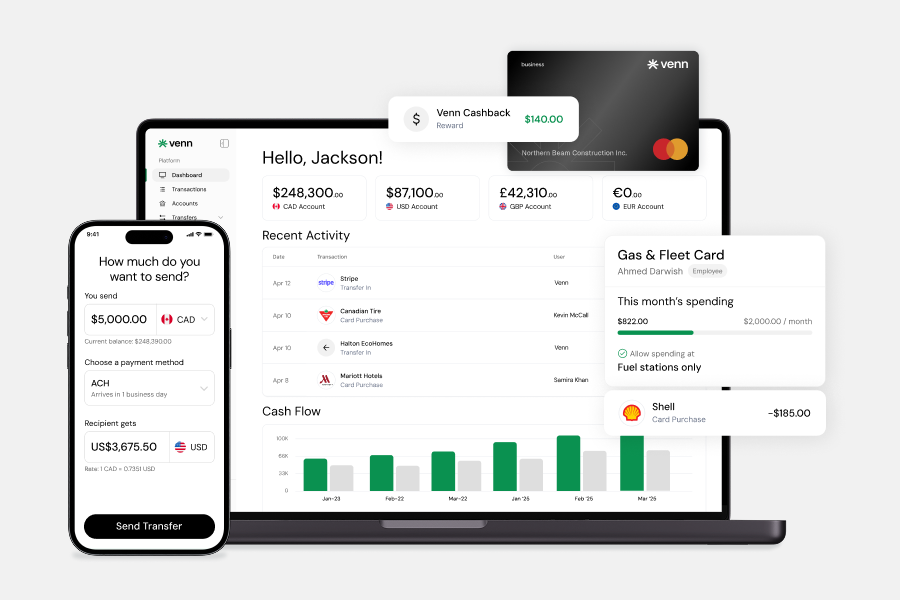
• Centralized payments dashboard showing all outgoing activity
Where Venn fits in the stack:
Venn supports a modern payables workflow with:
• CAD account capabilities for local payments
• USD account functionality for US vendor payments via ACH
• Global wires for broader international coverage
• Corporate card for controlled vendor spend where card payment is appropriate
The cash flow benefits compound: earn 2.75% interest on CAD balances and up to 3.5% interest on USD balances (learn more) while waiting for payment dates, plus 1% cashback on eligible card spend (with plan-based caps).
Controls to Tools Mapping Table
| Duplicate Payment Risk | Prevention Control | Tool Capabilities to Look For | Where Venn Fits |
|---|---|---|---|
| Duplicate vendor records | Vendor master governance | Duplicate vendor detection, approval for new vendors | Centralize payees and payments in one platform |
| Same invoice re-submitted | Duplicate detection at intake | OCR, normalization, exact and fuzzy matching | Cleaner reconciliation when banking and accounting connect |
| PO not enforced | Two-way or three-way match | Matching engine, exception queue | Payables execution layer after approvals |
| "We already paid" confusion | Payment status visibility | Audit trail, payment confirmations, alerts | Single source of truth for outgoing payments |
| Currency mix-ups | Currency-aware validation | Multi-currency rules, locked currency fields | Multi-currency accounts reduce errors |
| Manual entry mistakes | Field validation | Required fields, tolerance thresholds | Stronger downstream data for accounting automation |
| Weak approvals | Segregation of duties | RBAC, dual approvals, immutable logs | Permissions and approvals around payment execution |
| Off-invoice spend | Spend controls | Card limits, receipt capture, expense workflows | Corporate card with cashback plus expense controls |
Recommended Tool Categories
1. Accounting System and GL
For most Canadian SMBs, QuickBooks or Xero serves as the foundation. Your accounting system manages vendor lists, bill entry, approvals, audit evidence, and reconciliation. Strong accounting data makes duplicate detection more reliable.
2. AP Automation Layer
This layer handles invoice capture, matching, and approvals. Look for OCR capabilities, configurable duplicate rules, PO matching, exception workflows, and comprehensive audit logs.
3. Banking and Payments Execution Layer
This is where funds actually move. Look for permissions and approval workflows for payments, clear payment records, multi-currency support, and reliable rails for both domestic and cross-border needs.
The modern finance stack for Canadian businesses:
• Accounting: QuickBooks or Xero
• AP controls and approvals: automation layer
• Banking and spend controls: Venn
Venn serves as the business banking platform that complements accounting and AP automation by executing payments, centralizing balances, and simplifying reconciliation through direct QuickBooks and Xero integrations.
4. Corporate Card and Expense Management
Receipt capture, policy controls, reporting, and role-based access reduce reimbursement overlaps and off-system purchases that create duplicate-prone workflows.
Venn's corporate card controls employee spend while earning 1% cashback. OCR receipt capture and expense workflows reduce the messy reimbursement processes where duplicates hide.
Implementation Playbook
First 30 Days: Quick Wins
• Centralize invoice intake to one channel
• Enable basic duplicate detection rules in your AP system
• Clean existing vendor master duplicates
• Define roles and payment approval thresholds
• Consolidate vendor payments into one controlled banking workflow
This is the right time to sign up for a Venn account and begin centralizing your payables execution.
Days 60 to 90: Strong Controls
• Implement two-way or three-way matching for PO-based categories
• Add bank detail change approval workflow with verification procedures
• Build exception handling and documentation standards
• Train approvers on what to review before authorizing payments
Ongoing: Scale and Audit Readiness
• Monthly vendor master review to catch new duplicates
• Quarterly duplicate payment KPI review
• Continuous improvement on detection logic based on what slips through
KPIs, Reporting, and Audit Evidence
KPIs to Track
• Duplicate invoice rate (flagged and confirmed duplicates per 100 invoices)
• Exceptions per 100 invoices processed
• Time to approve and time to pay
• Recovery rate for overpayments that do occur
• Percentage of spend on controlled rails (approved payments, controlled card spend)
Audit Evidence to Retain
• Vendor onboarding approvals and bank change logs
• Invoice approval trail with timestamps and approver identity
• Match exceptions and their resolutions
• Payment confirmations and payment-run approvals
Conclusion
Duplicate payment prevention is a system, not a single tool. The framework combines vendor master governance, standardized intake, strong duplicate detection, matching controls, proper approvals, and payment-run governance.
Each layer catches what the previous layer missed. When you centralize the execution layer, where money actually moves, you create the final checkpoint that prevents duplicate sends.
Ready to strengthen your payables controls? Sign up for a Venn account to centralize payables execution, multi-currency operations, and spend controls as part of your modern finance stack. With CDIC insurance protection, free unlimited Interac e-Transfer® for vendor payments, and direct accounting integrations, Venn provides the banking layer Canadian businesses need.
FAQ
Q: What is the most common cause of duplicate vendor payments?
A: Usually a combination of manual invoice intake and weak visibility into payment status, which leads someone to re-enter or re-send the same payment.
Q: How do tools detect duplicate invoices if invoice numbers differ slightly?
A: Through normalization (format cleanup) and fuzzy matching rules that flag close matches for review rather than rejecting them outright.
Q: Should we rely on approvals alone to prevent duplicates?
A: No. Approvals help, but you also need automated duplicate checks, vendor master controls, and payment-run governance to catch errors at multiple points.
Q: How do multi-currency payments increase duplicate risk?
A: Currency confusion can cause teams to pay twice, once in CAD and once in USD, or to re-send due to unclear cross-border status. Currency-aware tools and clear multi-currency account structures reduce this risk.
Q: Can we still prevent duplicates if we do not use purchase orders?
A: Yes. Use strong vendor master controls, standardized invoice intake, duplicate detection rules, and strict payment-run approvals. PO matching adds a layer but is not required for effective prevention.
Venn Mastercard Charge Card is issued by Peoples Trust Company under licence from Mastercard International Incorporated. Mastercard is a registered trademark, and the circles design is a trademark of Mastercard International Incorporated.
---
**Disclaimer:** This publication is provided for general information purposes and does not constitute legal, tax or other professional advice from Venn Software Inc or its subsidiaries and its affiliates, and it is not intended as a substitute for obtaining advice from a financial advisor or any other professional. We make no representations, warranties or guarantees, whether expressed or implied, that the content in the publication is accurate, complete or up to date.
This publication is provided for general information purposes only and does not constitute legal, tax, financial, or other professional advice from Venn Software Inc., its subsidiaries, or its affiliates, and is not a substitute for advice from a qualified professional. All comparisons and competitor information reflect publicly available information believed accurate as of May 26, 2026; features, pricing, rates, and terms referenced are subject to change and may differ at the time you read this. All product names, logos, and brands referenced are the property of their respective owners; their mention does not imply affiliation with or endorsement by Venn. Any comparative statements reflect Venn's views and are provided to help readers evaluate options. We make no representations, warranties, or guarantees, express or implied, that the content is accurate, complete, or up to date.

Venn is all-in-one business banking built for Canada
From free local CAD/USD accounts and team cards to the cheapest FX and global payments—Venn gives Canadian businesses everything they need to move money smarter. Join 15,000+ businesses today.
Frequently asked questions
Everything you need to know about the product and billing.
Join 15,000+ businesses banking with Venn today
Streamline your business banking and save on your spend and transfers today
No personal credit check or guarantee.