How to reduce Cheque payments as a Canadian Business Guide
Learn how to reduce Cheque payments as a Canadian Business using EFT, Interac e-Transfer, cards and controls plus a practical 30 60 90 day plan and save time.

Ahmed Shafik
Co-founder
Trusted by 15,000+ Canadian businesses
Business banking for Canada
Local CAD and USD accounts, corporate cards with cashback, the lowest FX rates in Canada, free local transfers, and more.
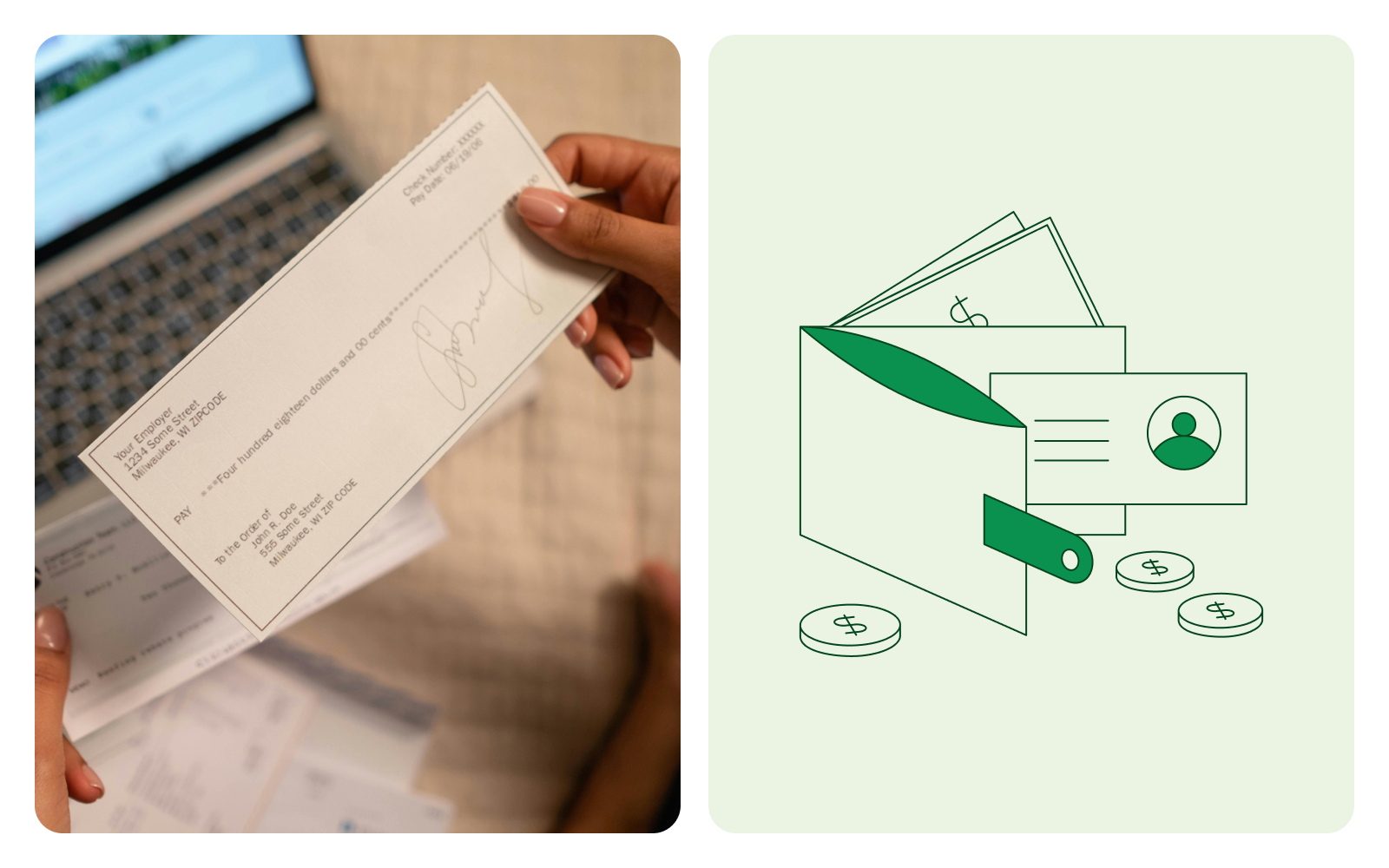
Every business owner knows the drill. A stack of cheques sits on your desk waiting for signatures. You chase down approvers who are travelling or in meetings. You stuff envelopes, track postage, and then wait days for vendors to receive payment. When month-end arrives, your team scrambles to match cheques to invoices while vendors call asking where their money is.
This process costs more than you think. Beyond the obvious expenses of cheque stock, envelopes, and postage, you're losing hours of productive time each week. Your team handles reissues for lost mail, processes stop payments, and manually reconciles payments that lack clear remittance details.
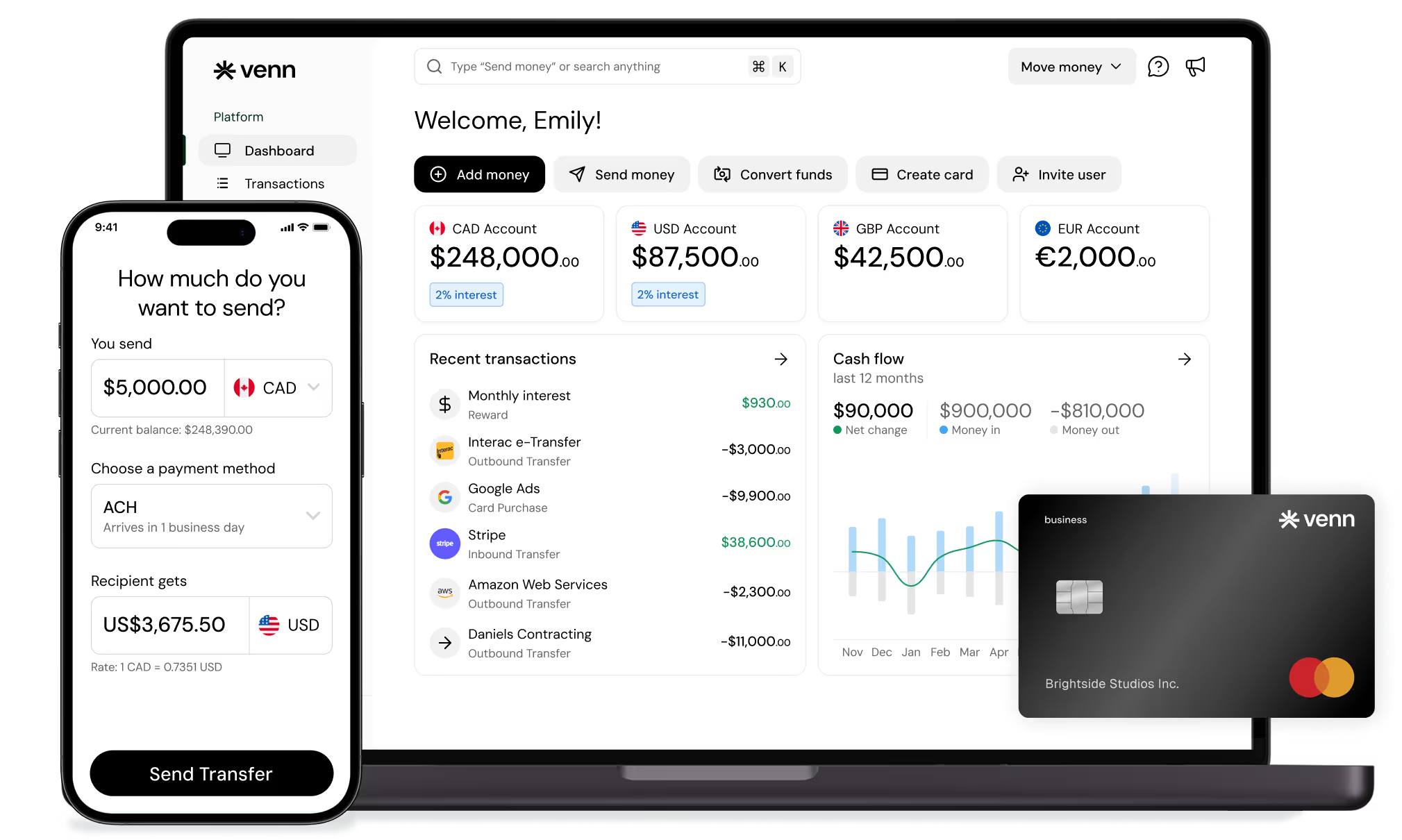
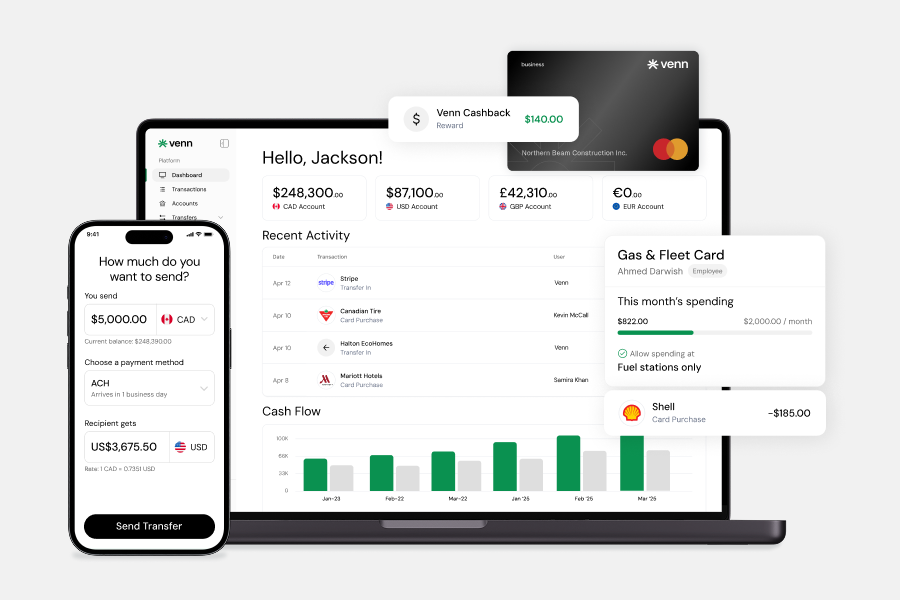
The good news? Canadian businesses have more electronic payment options than ever in 2026. With the right approach, you can dramatically reduce cheque volume without disrupting vendor relationships or weakening financial controls. This guide provides a practical roadmap to migrate your accounts payable from paper to digital, including which payment rails to use, how to maintain security, and how platforms like Venn can centralize your payables, corporate card spending, and accounting workflows in one place.
Why Cheques Are Still Common (And Why They Hold You Back)
The Hidden Cost Of Cheques (Time, Errors, Delays)
Consider every step involved in paying a single vendor by cheque. Someone creates the payment request. An approver reviews and signs. Another person prints the cheque, often requiring a second signature for amounts above a threshold. The cheque goes into an envelope with an invoice stub, gets stamped, and heads to the mailbox. Three to seven business days later, the vendor receives it. They deposit it. A few more days pass before the funds clear.
The reconciliation burden compounds the problem. Cheques often arrive at vendors without clear remittance details, leading to confusion about which invoices are being paid. Your accounting team spends hours matching cleared cheques to invoices, tracking down missing payments, and handling vendor inquiries. When a cheque goes missing in the mail, you process stop payments, reissue cheques, and update records. Each exception consumes time that could go toward higher-value work.
Risk Profile: Fraud, Lost Mail, And Weak Controls
Cheques carry significant fraud risk. They contain your business name, address, account number, and an authorized signature, everything a fraudster needs. Cheque washing, where criminals alter payee names or amounts, remains a persistent threat. Lost or stolen cheques create exposure that electronic payments simply avoid.
Internal controls suffer too. Manual signing processes often lack proper segregation of duties. Approval trails live in email threads or sticky notes rather than auditable systems. When someone leaves the company, updating signing authorities involves bank visits and paperwork rather than a simple permission change.
Digital payment rails offer built-in control upgrades: role-based approvals, complete audit logs, recipient verification, and real-time visibility into payment status.
The Best Cheque Alternatives In Canada (And When To Use Each)
EFT (Electronic Funds Transfer) For Vendor Payments
Best for: Regular suppliers, higher payment volumes, businesses needing predictable settlement and lower administrative burden.
EFT moves funds directly between bank accounts through Canada's Automated Clearing Settlement System. For businesses making recurring vendor payments, EFT scales efficiently. You batch multiple payments, submit them with proper remittance details, and vendors receive funds within one to two business days.
Pros: Standardized process, lower per-payment cost than cheques, easier reconciliation with proper remittance data, scalable for growing payment volumes.
Watch-outs: You need to collect banking details securely from vendors. Cut-off times affect settlement. Approval workflows require proper setup.
Venn supports business payment workflows that help replace cheques with electronic transfers while keeping reconciliation cleaner, especially when paired with accounting automation through QuickBooks or Xero.
Interac e-Transfer® For Business Payments
Best for: One-off payments, urgent vendor payouts, field operations, smaller invoices, contractors.
Interac e-Transfer® has become ubiquitous in Canada. Nearly every vendor can receive funds instantly using just an email address or phone number. For businesses, this rail excels at handling the "long tail" of payments, those one-time or infrequent vendors who don't warrant full EFT setup.
Pros: Speed (often instant), high vendor adoption, minimal setup required from recipients, convenient for remote teams.
Watch-outs: Manage transfer limits carefully, maintain consistent recipient naming for records, ensure proper documentation for accounting.
Venn offers free, unlimited Interac e-Transfer® on all plans, making it practical to move even occasional vendors off cheques quickly without worrying about per-transaction fees eating into savings.
Pre-Authorized Debit (PAD) For Recurring Payments
Best for: Subscriptions, rent-like recurring vendor payments, predictable fixed amounts.
PAD lets you pull funds from your account automatically on set dates. For payments that occur monthly at consistent amounts, PAD eliminates manual processing entirely.
Pros: Full automation, fewer missed payments, reduced administrative overhead.
Watch-outs: Requires proper authorization agreements, dispute handling processes need attention, clear documentation is essential.
Bill Payments (Including Government And CRA Use Cases)
Best for: Utilities, telecom providers, some government remittances, any payee set up as a biller in the Canadian payments system.
If your vendor appears as a biller in your banking platform, bill payment offers a familiar workflow. Schedule payments in advance, and funds reach the payee through established channels.
Pros: Familiar interface, easy scheduling, works well for standard recurring payees.
Watch-outs: Timing can vary, proof of payment may lack detail, ensure remittance references are correct to avoid misapplied payments.
Wires (When Speed Or Destination Demands It)
Best for: High-value payments, time-sensitive transactions, cross-border payments, vendors requiring wire specifically.
Wires provide same-day or next-day settlement with global reach. When a construction company needs to release a large progress payment immediately, or an ecommerce business must pay an overseas supplier urgently, wires deliver.
Pros: Speed, global reach, certainty of settlement.
Watch-outs: Higher fees than other rails, requires accurate bank details, cut-off times matter, FX considerations for international payments.
Venn offers global wires priced by plan, providing cost predictability for businesses that need this rail regularly.
Cards For Business Payments
Best for: Software subscriptions, online vendors, travel expenses, advertising spend, suppliers who accept card payment.
Corporate cards replace cheques in scenarios you might not expect. That software subscription paid monthly by cheque? Put it on a card. Vendor who accepts credit card? Pay them and earn rewards instead of writing cheques.
Pros: Rewards and cashback, built-in expense controls, simplified reconciliation, immediate payment confirmation.
Watch-outs: Not all vendors accept cards, some charge surcharges, requires clear policy controls.
Venn's corporate card offers 1% unlimited cashback on eligible spend. Combined with expense management features, cards eliminate cheque-based reimbursement workflows entirely, your team uses cards directly instead of paying out-of-pocket and waiting for cheque reimbursements.
Decision Matrix: Which Payment Method Should You Use?
A 30/60/90-Day Plan To Reduce Cheque Payments
Days 1-30: Audit And Categorize Your Cheques
Start by understanding your current cheque usage. Pull the last 90 days of cheque payments from your accounting system and categorize each by:
• Vendor name and relationship (regular supplier, one-time, contractor)
• Amount range (under $500, $500-$5,000, over $5,000)
• Frequency (weekly, monthly, quarterly, one-time)
• Urgency pattern (scheduled, rush, emergency)
• Geography (domestic, U.S., international)
• Vendor flexibility (already offered EFT, likely to accept, resistant)
Identify quick wins first. Vendors who have already asked for electronic payment, vendors you pay monthly like clockwork, and vendors who likely accept Interac e-Transfer® represent your first migration targets.
Centralizing spend and payments in Venn makes it easier to see what's still cheque-based and what can be digitized, with clear visibility across CAD and USD accounts.
Days 31-60: Replace Cheques With The Right Rails
Select 10-20 vendors for your pilot migration. Choose a mix of quick wins and moderately complex cases to build your process.
Set a clear policy: "No new vendors will be paid by cheque unless an exception is approved by [role]."
Reach out to vendors with a simple request:
"We're updating our payment processes to pay you faster and more reliably. Please provide your banking details using our secure form so we can set up electronic payment. This will ensure you receive funds within 1-2 business days instead of waiting for mail delivery."
Implement verification for all banking details received. Call the vendor at a known phone number to confirm details before the first payment. This step prevents business email compromise fraud where criminals impersonate vendors with fake banking information.
Days 61-90: Operationalize Controls And Measure Results
Standardize your payment operations:
• Weekly AP runs: Process all approved invoices on set days rather than ad-hoc
• Approval workflows: Implement proper segregation of duties with role-based permissions
• Exception tracking: Monitor remaining cheque payments and require justification for each
Track these KPIs monthly:
• Total cheque volume (count and dollar amount)
• Percentage of payments by rail (EFT, Interac e-Transfer®, card, wire, cheque)
• Average days to vendor receipt
• Time spent on payment processing
• Reconciliation exceptions
Venn connects payables, corporate card spending, and accounting workflows through QuickBooks and Xero integrations. This consolidation means your team sees all payment activity in one place, with receipt capture and invoice matching that eliminates the manual work keeping many businesses stuck on cheques.
Controls And Fraud Prevention When Moving Off Cheques
Bank-Detail Change Verification
Business email compromise represents one of the fastest-growing fraud types. Criminals send emails that appear to come from vendors, requesting bank detail changes. Without verification, your next payment goes to the fraudster.
Implement these controls:
• Dual approval for any vendor bank detail change
• Call-back verification using phone numbers from your original vendor records, not from the change request email
• Written policy: "No banking detail changes will be processed based solely on email requests"
Approval Workflows And Audit Trails
Define clear roles:
• Who can add new payment recipients?
• Who can modify existing recipient details?
• Who can initiate payments?
• Who can approve and release payments?
• What dollar thresholds require additional approval?
Maintain complete records. Every payment should link to its supporting invoice, approval chain, and remittance details.
Record-Keeping And Reconciliation Best Practices
Attach invoices and receipts to every transaction. Use consistent naming conventions for vendors and payment references. Venn's OCR receipt capture and invoice matching capabilities reduce the manual work that often keeps teams stuck on paper processes.
How Venn Fits Into A Modern Financial Stack
One System For Payables, Card Spend, And Accounting
The most effective way to sustain cheque reduction is consolidating your financial operations. Rather than juggling separate systems for banking, payments, corporate cards, and expense management, a unified platform eliminates the gaps where cheques persist.
A modern stack looks like:
• Venn for accounts, payables, and corporate cards
• QuickBooks or Xero for general ledger and reporting
• Payroll tool (if separate)
• Clear AP policies documented and enforced
Reduce Cheques With Faster Local Rails
Venn provides local CAD and USD accounts, plus local GBP and EUR accounts for businesses with global operations. This matters because many cheques exist to work around currency friction. When you can pay a U.S. vendor from a real local U.S. account via ACH, you eliminate the cheque workaround entirely.
For agencies paying international contractors, ecommerce businesses with overseas suppliers, or professional services firms with global clients, multi-currency accounts reduce the operational friction that often defaults to cheques.
Card Spend That Replaces Cheques And Reimbursements
Every employee reimbursement cheque represents a process failure. Someone paid out-of-pocket, submitted an expense report, waited for approval, and then waited again for a cheque.
Venn's corporate cards with 1% unlimited cashback eliminate this workflow. Team members use cards directly for business expenses. Receipts get captured via OCR. Expenses sync to your accounting software. No cheques required.
The multi-currency card logic pays in the currency you hold first, reducing FX friction for teams making purchases across borders.
Common Edge Cases
Vendors Who Insist On Cheques
Some vendors resist change. For these cases:
• Offer incentives: Faster payment terms for electronic acceptance
• Set thresholds: Payments under $500 to cheque-only vendors require director approval
• Build expiration dates: "We will continue cheque payment through [date], then transition to electronic only"
High-Value Or Time-Sensitive Payments
Wires serve legitimate purposes. A healthcare clinic releasing funds for equipment, or a construction company making a large progress payment, may need wire speed and certainty. Ensure proper controls prevent rushed decisions that bypass verification, the urgency criminals exploit.
Cross-Border Vendors
International payments often default to cheques because alternatives seem complex. Multi-currency accounts simplify this. Pay your U.S. supplier via ACH from your USD account. Pay your UK contractor via local transfer from your GBP account. Choose the right rail for each destination.
Conclusion
Cheques persist not because they're effective, but because changing payment processes feels daunting. The operational cost, fraud risk, and reconciliation burden make cheque reduction worth the effort.
Your path forward: audit your current cheque usage, match each payment type to the right electronic rail, migrate vendors systematically, implement proper controls, and measure your progress monthly.
Sustaining cheque reduction requires consolidating payments, cards, and accounting workflows in one platform. Venn provides the business accounts, corporate cards with 1% unlimited cashback, and accounting integrations that make this consolidation practical for Canadian businesses.
FAQ
Q: What is the fastest way to reduce cheque payments in my business?
A: Start with your “long tail” of one-off and infrequent vendors by migrating them to Interac e-Transfer® immediately, since vendors need no setup. Then standardize recurring suppliers onto EFT or PAD. This approach delivers quick wins while you build processes for more complex migrations.
Q: Is Interac e-Transfer® the same as EFT?
A: No. Interac e-Transfer® sends funds using an email address or phone number, settles quickly (often instantly), and works well for one-off or smaller payments. EFT moves funds bank-to-bank using account and routing numbers, typically settles in one to two business days, and scales better for recurring vendor payments with proper remittance details.
Q: How do I securely collect vendor banking information for EFT?
A: Use a secure intake form rather than email. Verify banking details by calling the vendor at a phone number from your existing records, not from the form submission. Implement dual approval for any future changes to vendor banking information.
Q: When should I still use a cheque?
A: Rarely. Legitimate exceptions include vendors with no electronic payment capability (increasingly rare), specific legal or contractual requirements, or situations where the recipient genuinely cannot accept alternatives. Require documented approval for each cheque exception and set expiration dates for ongoing exceptions.
Q: How can I reduce cheque fraud risk during the transition?
A: Implement call-back verification for all vendor banking details, require dual approval for bank detail changes, and maintain a “no changes via email only” policy. Use platforms with complete audit trails to track who added recipients, who approved payments, and when changes occurred.
Venn supports businesses in all Canadian provinces other than Quebec. Funds held through Venn are covered under CDIC insurance protection.
---
**Disclaimer:** This publication is provided for general information purposes and does not constitute legal, tax or other professional advice from Venn Software Inc or its subsidiaries and its affiliates, and it is not intended as a substitute for obtaining advice from a financial advisor or any other professional. We make no representations, warranties or guarantees, whether expressed or implied, that the content in the publication is accurate, complete or up to date.
This publication is provided for general information purposes only and does not constitute legal, tax, financial, or other professional advice from Venn Software Inc., its subsidiaries, or its affiliates, and is not a substitute for advice from a qualified professional. All comparisons and competitor information reflect publicly available information believed accurate as of March 3, 2026; features, pricing, rates, and terms referenced are subject to change and may differ at the time you read this. All product names, logos, and brands referenced are the property of their respective owners; their mention does not imply affiliation with or endorsement by Venn. Any comparative statements reflect Venn's views and are provided to help readers evaluate options. We make no representations, warranties, or guarantees, express or implied, that the content is accurate, complete, or up to date.

Venn is all-in-one business banking built for Canada
From free local CAD/USD accounts and team cards to the cheapest FX and global payments—Venn gives Canadian businesses everything they need to move money smarter. Join 15,000+ businesses today.
Frequently asked questions
Everything you need to know about the product and billing.
Join 15,000+ businesses banking with Venn today
Streamline your business banking and save on your spend and transfers today
No personal credit check or guarantee.