How to start a consulting business in Canada 2026: 10 clients
How to start a consulting business in Canada in 2026: Getting your first 10 customers with a Canada setup checklist, GST/HST tips, CASL-safe outreach templates.

Ahmed Shafik
Co-founder

Trusted by 15,000+ Canadian businesses
Business banking for Canada
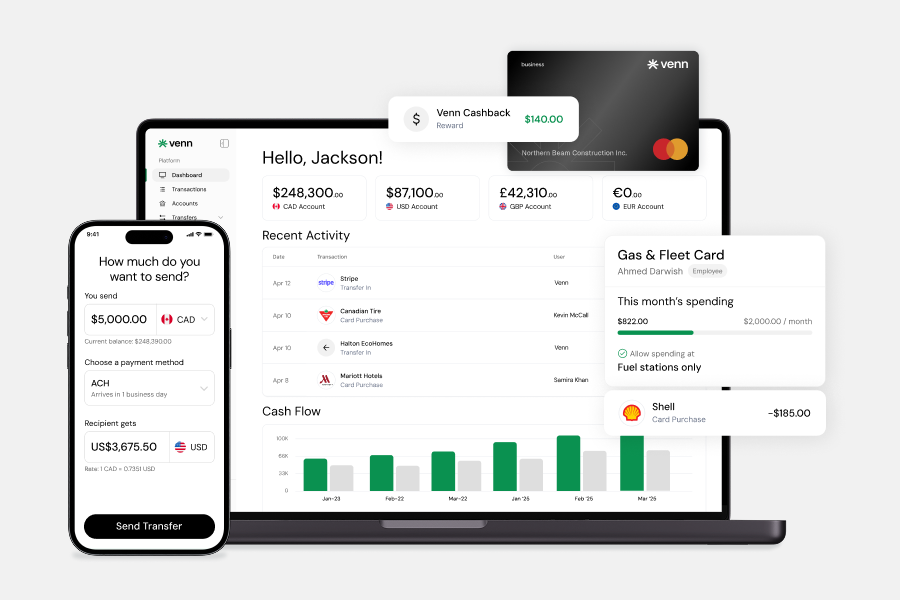
Local CAD and USD accounts, corporate cards with cashback, the lowest FX rates in Canada, free local transfers, and more.
Starting a consulting business in Canada has never been more accessible. The barriers that once kept talented professionals tied to corporate roles have crumbled. Remote work is standard. Digital tools handle the heavy lifting. Clients care about results, not office addresses.
Yet most new consultants hit the same two walls. First, credibility. Without a track record, prospects hesitate. Second, pipeline. Without consistent outreach, even great consultants starve between projects.
This guide tackles both problems head-on. You will get a Canada-specific setup checklist covering business structure, registration, GST/HST, and compliance. You will also get a concrete system for landing your first 10 customers, complete with activity targets, scripts, and templates.
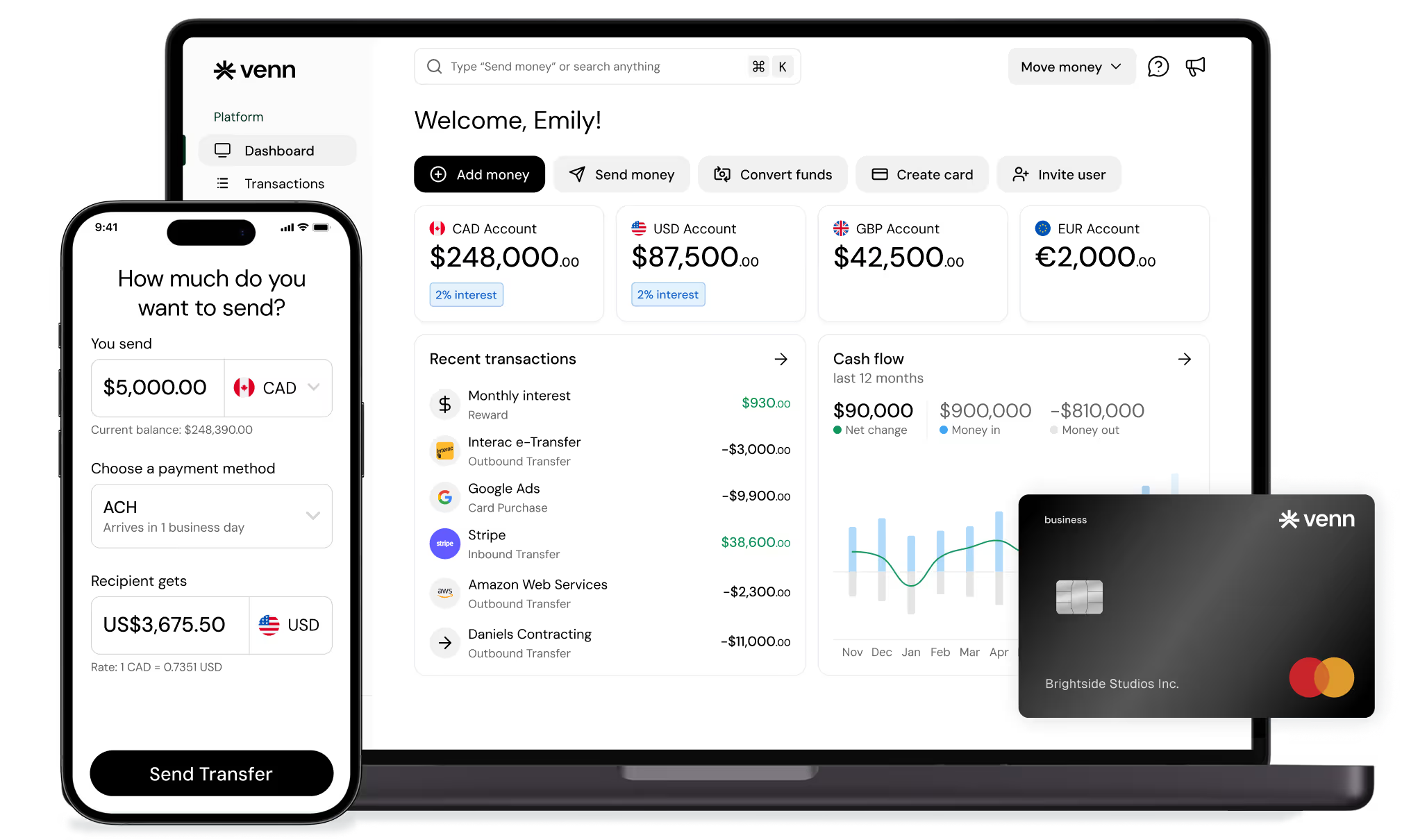
One operational decision deserves attention early: your financial stack. Modern consultants need a business banking platform built for getting paid, paying vendors, and staying organized. A personal chequing account creates headaches at tax time and looks unprofessional on invoices. Venn provides Canadian consultants with CAD and USD accounts, a corporate card with 1% cashback, and direct QuickBooks and Xero integrations, giving you a financial foundation that scales with your practice.
Quick Start Checklist
Before diving into details, here is your roadmap:
• Choose your niche and define your core offer
• Pick a business structure (sole proprietorship vs corporation)
• Register your business name and obtain a CRA Business Number if needed
• Decide on GST/HST registration timing
• Set up business banking and bookkeeping (Venn + QuickBooks or Xero)
• Build a simple pipeline and outreach plan
• Close your first 1 to 3 projects, convert them into proof, and repeat to reach 10 customers
Choose Your Consulting Niche and Offer
Generalist consultants struggle to stand out. Specialists get hired faster because they speak directly to specific problems.
Define Who, What, and Outcome
Start with three questions. Who is your ideal client? What painful problem do you solve? What measurable outcome do you deliver?
Your ideal customer profile should include industry, company size, and the role of your buyer. A marketing consultant might target B2B SaaS companies with 20 to 100 employees where the VP of Marketing makes buying decisions.
Your positioning statement follows a simple template: "I help [specific audience] achieve [measurable outcome] through [your method or approach]."
Package Your Offer
Make it easy for prospects to say yes by offering clear packages rather than vague hourly consulting.
Consider three starter packages:
Audit or Assessment (fixed scope): A diagnostic engagement that identifies problems and recommends solutions. Deliverables include a findings report and prioritized action plan. Typical duration is 2 to 4 weeks.
Implementation Sprint (project-based): Hands-on work to solve a specific problem. Clear deliverables, defined timeline of 4 to 8 weeks, and a fixed fee.
Retainer (ongoing): Monthly hours dedicated to strategy, execution support, or advisory. Works best after proving value through a project.
Starting with an audit or sprint reduces risk for both parties and creates natural opportunities to expand the relationship.
Set Up the Business (Canada-Specific, 2026-Ready)
Choose a Business Structure
Most Canadian consultants choose between sole proprietorship and incorporation. Each has trade-offs.
Sole proprietorship offers simplicity. Registration is straightforward, and you report business income on your personal tax return. The downside is unlimited personal liability and limited tax planning options.
Incorporation creates a separate legal entity. You gain liability protection and tax planning flexibility, especially as income grows. The trade-offs include higher setup costs, annual filings, and more complex bookkeeping.
If you are testing consulting on the side or expect modest income in year one, sole proprietorship makes sense. If you are signing contracts with enterprise clients or expect to earn over $100,000 annually, speak with an accountant and lawyer about incorporation.
Register Your Business and Get a CRA Business Number
Registration requirements vary by province. Visit your provincial business registry to register your business name. In most provinces, this process is now entirely online.
A CRA Business Number (BN) is your identifier for federal programs including GST/HST, payroll, and corporate income tax if incorporated. You can register for a BN through CRA's Business Registration Online portal. Note that phone registration ended in November 2025, so plan to complete this online.
Understand GST/HST Without Getting Stuck
Canada's small supplier rule lets you avoid GST/HST collection until your revenue exceeds $30,000 in a single calendar quarter or over four consecutive quarters.
Consultants often hit this threshold faster than expected. A few good projects can push you over the limit mid-year.
Practical approach: Set a monthly calendar reminder to check your trailing four-quarter revenue. Register voluntarily if you are approaching the threshold or if your clients are businesses that can claim input tax credits anyway.
Many consultants open a dedicated tax set-aside account and transfer a percentage of every invoice the day payment arrives. Venn makes it straightforward to separate business funds and track spending alongside your bookkeeping software.
Build Your Consulting Financial Stack
What Good Looks Like
A well-designed financial stack for a solo or small-team consultancy includes:
• Complete separation of business and personal finances
• Clear visibility into client payments and operating expenses
• Automatic receipt capture and expense categorization
• Minimal time spent on month-end bookkeeping
Recommended Stack
Venn serves as your business banking platform layer. You get CAD and USD accounts, payment capabilities, a corporate card with expense management, and receipt capture built in.
QuickBooks or Xero handles accounting, tax preparation, and financial reporting. Both integrate directly with Venn for automated bank feeds and transaction matching.
Lightweight CRM or spreadsheet tracks your outreach pipeline, follow-ups, and deal stages.
Proposal and e-sign tool streamlines client agreements. Options include PandaDoc, Proposify, or even Google Docs with a simple e-signature solution.
Why Venn Fits Consultants
Consultants face specific financial challenges that Venn addresses directly.
1% cashback on card spend turns unavoidable operating costs into recovered revenue. Software subscriptions, advertising, travel, client meals, and coworking memberships all earn cashback that offsets your overhead.
Multi-currency capability matters because consultants often pay for US-based tools or work with international contractors. Venn's multi-currency accounts help you avoid unnecessary conversion fees on routine transactions.
Real local US account with ACH solves a common pain point. US clients often prefer paying via ACH rather than international wire. Venn provides a US account that receives ACH payments directly, making you easier to pay.
Free unlimited Interac e-Transfer® works perfectly for paying Canadian subcontractors quickly without transaction fees eating into project margins.
QuickBooks and Xero automation reduces the time you spend categorizing transactions and matching receipts. Bank feeds sync automatically, and expense data flows into your accounting software without manual entry.
Consultant Cash Flow System
Organize your finances with three mental buckets:
Operating: Monthly fixed costs including software, insurance, and professional memberships.
Tax set-aside: Transfer 25 to 30 percent of every payment received to cover income tax and GST/HST remittances.
Contractor and project delivery: Funds earmarked for subcontractors, project-specific expenses, and variable costs.
Schedule 15 minutes weekly to review transactions, categorize expenses, and confirm your tax set-aside is on track. This small habit prevents month-end scrambles and tax-time surprises.
Create Proof Fast
New consultants face a chicken-and-egg problem. Clients want proof of results, but you need clients to create proof.
Pick a Credibility Path
Pilot project with testimonial: Offer a reduced-scope engagement to one ideal client at a lower price point. In exchange, request a detailed testimonial and permission to use the project as a case study.
Narrow case study from employment: Draw on relevant experience from your corporate career. Focus on problems you solved and outcomes you achieved, without sharing confidential information or proprietary details.
Outcome-based workshop: Host a focused session that delivers immediate value. A marketing consultant might run a "messaging audit workshop" that identifies three quick wins. Participants experience your expertise firsthand.
Build a Simple Portfolio
You can create a credible portfolio in a weekend:
• One-page offer page describing your services, ideal client, and how to get started
• Two short case narratives following problem, process, and result structure
• A basic intake form to qualify interested prospects
LinkedIn's featured section works well for hosting these assets if you do not want to build a website immediately.
Getting Your First 10 Customers in Canada
The Math Behind Your Pipeline
Client acquisition is a numbers game. Understanding the math removes the mystery.
Illustrative example for a B2B consultant:
• 50 new outreaches per week
• 10 replies (20% response rate)
• 4 discovery calls booked
• 1 new client closed (25% close rate)
Your numbers will vary based on niche, offer clarity, and outreach quality. Track your inputs weekly. Inputs are controllable. Outcomes follow.
Channel 1: Warm Outreach
Your fastest path to clients runs through people who already know and trust you.
Start with former colleagues, past clients from employment, vendors you have worked with, and community connections. Send a simple message:
"I have started consulting and am helping [type of company] with [specific outcome]. Do you know anyone who might benefit from a conversation?"
Follow up with: "Who else should I talk to about this?"
Warm outreach typically generates your first 2 to 4 clients and builds momentum for other channels.
Channel 2: LinkedIn
LinkedIn combines authority building with direct outreach.
Profile optimization: Your headline should state who you help and what outcome you deliver. Feature your case studies and offer page. Include a clear call to action.
Posting cadence: Two posts per week works well. Alternate between case insights showing your thinking and practical tips your audience can apply immediately.
Comment strategy: Leave 10 thoughtful comments daily on posts from your ideal clients. This builds visibility and relationships without feeling salesy.
Channel 3: Cold Email and Cold DMs
Cold outreach works in Canada, but you must follow CASL (Canada's Anti-Spam Legislation) requirements.
Key guardrails: Identify yourself clearly. Include your business contact information. Provide an easy unsubscribe mechanism. Maintain records of consent where required.
A simple outreach template:
"Subject: Quick question about [specific challenge]
Hi [Name],
I noticed [specific observation about their company]. Many [their role] I work with struggle with [specific problem].
I help [type of company] achieve [outcome] through [brief method].
Would a 15-minute call make sense to see if I can help?
[Your name]"
Follow up twice at 3 to 4 day intervals. After three attempts with no response, move on.
This is not legal advice. Review CASL requirements at crtc.gc.ca and maintain proper consent records.
Channel 4: Partnerships
Agencies, accountants, and technology implementers often need specialized expertise they do not have in-house.
Approach potential partners with a specific offer: "When your clients face [problem], I can handle [solution] so you can focus on [their core service]."
Structure options include referral fees, revenue sharing, or co-delivery arrangements. Start with one partnership and refine your approach before scaling.
Channel 5: Marketplaces and Local Procurement
Some consultants win early work through vendor registries and RFP responses. Government procurement portals, industry association directories, and platforms like Upwork or Toptal can generate leads. These channels require more effort per opportunity but can produce larger contracts.
Close the Deal: Discovery Calls, Proposals, and Scope Control
Discovery Call Agenda
A 30-minute discovery call should cover:
• Problem clarification: What is happening, and why does it matter?
• Desired outcome: What does success look like?
• Constraints and stakeholders: Who else is involved, and what limitations exist?
• Timeline and budget range: When do they need results, and what investment makes sense?
• Next step: Agree on proposal delivery or decline gracefully
Proposal Template
Keep proposals to 1 to 2 pages:
Scope and deliverables: What you will do and what you will produce
Timeline: Key milestones and completion date
Fees and payment schedule: Total investment and payment terms (consider 50% upfront, 50% on completion for projects)
Assumptions and exclusions: What is not included and what you are assuming to be true
Next steps: How to proceed and signature line
Statement of Work Basics
A Statement of Work protects both parties by documenting exactly what was agreed. Include a scope-change process that requires written approval for additions. This prevents scope creep from eroding your profitability.
Professional invoicing and clean payment flows make you easier to hire and easier to keep. Clients notice when working with you feels organized and professional.
Deliver Great Work and Build a Referral Engine
Excellent delivery turns 10 customers into a sustainable practice.
Onboarding: Send a welcome email confirming scope, timeline, and communication preferences. Establish a shared folder or workspace.
Weekly updates: Brief status reports keep clients informed and prevent surprises. A simple format: what we accomplished, what is next, and any blockers.
Testimonials and referrals: Request testimonials at project milestones when satisfaction is high. Ask for referrals: "Who else in your network faces similar challenges?"
Project to retainer: After delivering strong results, propose ongoing support. Many clients prefer continuing with someone who already understands their business.
What to Double-Check in 2026
Regulations and thresholds change. Verify current requirements at these official sources:
• GST/HST registration and small supplier threshold: canada.ca/gst-hst
• Business registration by province: canada.ca/start-business
• CASL compliance requirements: crtc.gc.ca/eng/internet/anti.htm
• CRA Business Registration Online: canada.ca/en/revenue-agency/services/tax/businesses
Conclusion
Starting a consulting business in Canada in 2026 follows a clear sequence: define your niche, complete the legal setup, build your financial stack, create proof, and execute consistent outreach.
The consultants who succeed are not necessarily the most talented. They are the ones who commit to a pipeline system and stick with it. Choose one outreach channel, set weekly activity targets, and maintain discipline for 30 days. Results follow consistency.
Your financial foundation matters from day one. Sign up for a Venn account to keep business finances organized, especially if you plan to work with US clients or want to earn cashback on your operating expenses. A clean financial stack saves hours every month and positions you as a professional from your first invoice.
FAQ
Q: Do I need to register for GST/HST as a new consultant in Canada?
A: You become required to register once your revenue exceeds $30,000 in a single calendar quarter or over four consecutive quarters. Track your trailing revenue monthly and verify current thresholds at canada.ca/gst-hst.
Q: When should I incorporate my consulting business in Canada?
A: Consider incorporation when you expect consistent income above $100,000, need liability protection for larger contracts, or want more tax planning flexibility. Consult an accountant and lawyer before making this decision.
Q: What should I charge for consulting services in Canada?
A: Pricing depends on your niche, client size, and value delivered. Common models include hourly rates ($100 to $400+ depending on specialization), project fees, and monthly retainers. Anchor your pricing to the value of outcomes rather than time spent.
Q: How do I get my first consulting client fast?
A: Warm outreach to former colleagues and professional contacts produces the fastest results. Combine this with a low-risk pilot offer that makes saying yes easy.
Q: Can I cold email businesses in Canada to sell consulting services?
A: Yes, with important restrictions under CASL. You must identify yourself clearly, include contact information, provide an unsubscribe mechanism, and maintain consent records. Review requirements at crtc.gc.ca and consider consulting a lawyer for compliance guidance.
This article provides general information and is not legal, tax, or accounting advice. Consult qualified professionals for guidance specific to your situation.
Venn is a Canadian business banking platform. Funds are covered under CDIC insurance protection.
Interac e-Transfer® is a registered trademark.
---
**Disclaimer:** This publication is provided for general information purposes and does not constitute legal, tax or other professional advice from Venn Software Inc or its subsidiaries and its affiliates, and it is not intended as a substitute for obtaining advice from a financial advisor or any other professional. We make no representations, warranties or guarantees, whether expressed or implied, that the content in the publication is accurate, complete or up to date.
This publication is provided for general information purposes only and does not constitute legal, tax, financial, or other professional advice from Venn Software Inc., its subsidiaries, or its affiliates, and is not a substitute for advice from a qualified professional. All comparisons and competitor information reflect publicly available information believed accurate as of May 7, 2026; features, pricing, rates, and terms referenced are subject to change and may differ at the time you read this. All product names, logos, and brands referenced are the property of their respective owners; their mention does not imply affiliation with or endorsement by Venn. Any comparative statements reflect Venn's views and are provided to help readers evaluate options. We make no representations, warranties, or guarantees, express or implied, that the content is accurate, complete, or up to date.

Venn is all-in-one business banking built for Canada
From free local CAD/USD accounts and team cards to the cheapest FX and global payments—Venn gives Canadian businesses everything they need to move money smarter. Join 15,000+ businesses today.
Frequently asked questions
Everything you need to know about the product and billing.
Join 15,000+ businesses banking with Venn today
Streamline your business banking and save on your spend and transfers today
No personal credit check or guarantee.