20 ways to cut costs for your business in 2026
20 ways to cut costs for your business in 2026, from auditing banking fees and FX to optimizing cards, subscriptions, and accounting workflows for Canadian teams.

.png)
Trusted by 15,000+ Canadian businesses
Business banking for Canada
Local CAD and USD accounts, corporate cards with cashback, the lowest FX rates in Canada, free local transfers, and more.
In 2026, cutting costs means more than trimming budgets. It means designing a lower-friction operating system for your entire business. Every transaction, every currency conversion, every manual reconciliation represents potential savings waiting to be captured.
Canadian businesses face a unique set of challenges this year. Higher operating costs, tighter credit conditions, and increased cross-border complexity demand smarter financial operations. The good news? Many of the biggest savings opportunities hide in plain sight within your financial stack, where banking, cards, and accounting workflows quietly leak money through fees, FX spreads, and manual work.
This guide delivers 20 concrete tactics you can implement now. Each tactic includes what it is, why it saves money, and exactly how to do it. We've prioritized them by impact and effort so you can focus on what moves the needle fastest.
Quick-Start: Prioritize These First
If you only do three things this month, focus on these high-impact, low-effort wins:
Banking, Payments, and FX (High-Leverage Cost Cuts)
1. Audit Banking Fees and Eliminate "Silent" Charges
Traditional business bank accounts often include monthly maintenance fees, incoming wire charges, paper statement fees, and per-transaction costs that accumulate quietly. A single audit can reveal hundreds of dollars in avoidable expenses.
How to implement:
• Download your last 12 months of bank statements
• Highlight every fee line item and categorize by type
• Compare total fees against modern alternatives
• Switch to fee-free or low-fee business banking options
2. Reduce FX Costs by Using Multi-Currency Accounts
Every time you convert currency by default, you lose money to spreads and fees. Holding funds in the currency you receive and paying out in the currency your vendors accept eliminates unnecessary conversions entirely.
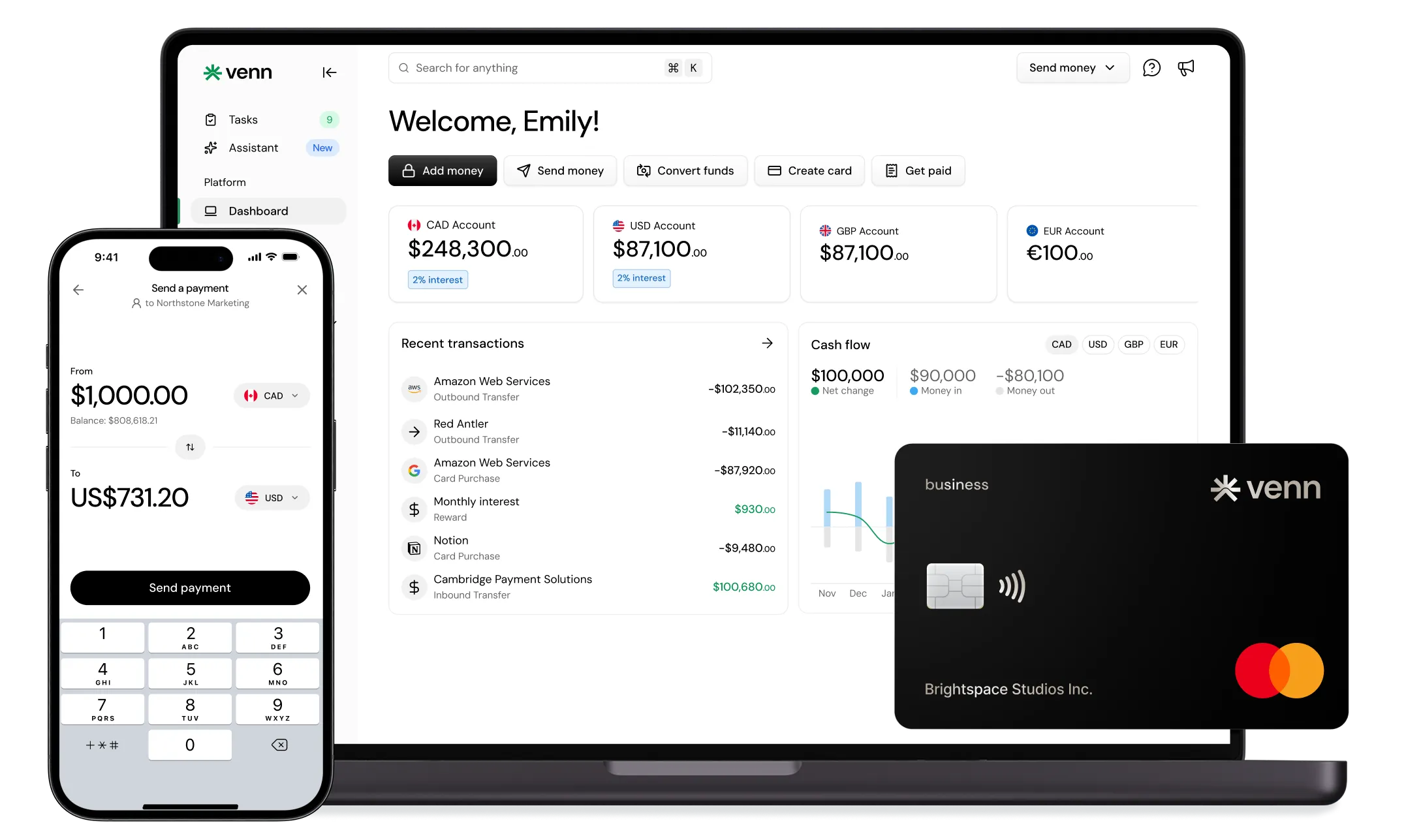
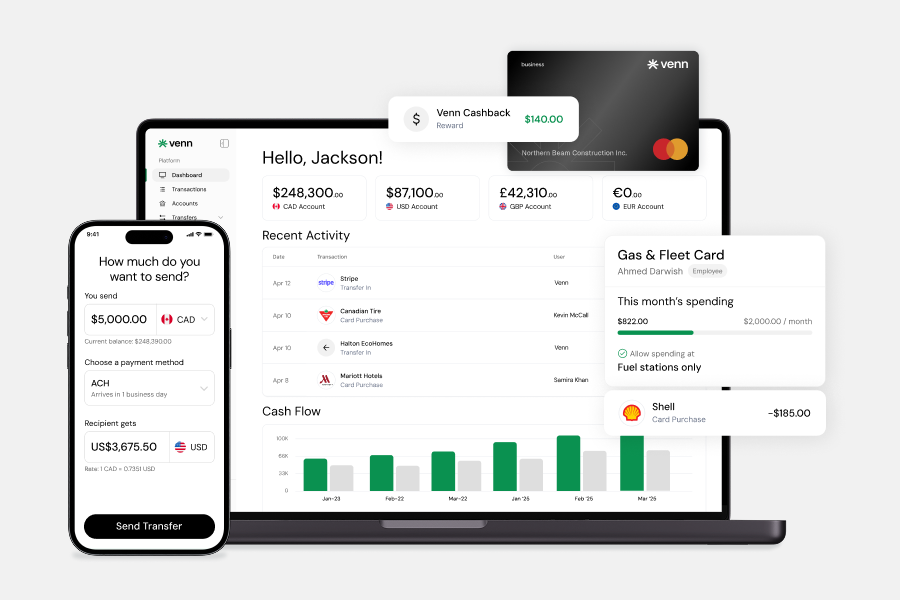
Venn offers multi-currency business accounts supporting CAD, USD, EUR, and GBP. Instead of converting US client payments to CAD and then back to USD for American suppliers, you hold and pay in the same currency. This approach can reduce FX leakage significantly for businesses with international operations.
How to implement:
• Map your incoming and outgoing currency flows
• Open dedicated currency accounts for your most common currencies
• Route payments to match currencies where possible
• Convert only what you need for domestic operations
3. Use Local Transfers Instead of Wires for Routine Payments
Wire transfers cost $15 to $50 per transaction. Local transfers like EFT in Canada or ACH in the United States cost a fraction of that amount. For routine vendor payments, the savings compound quickly.
Venn supports local transfer capabilities that move money faster and cheaper than legacy wire-heavy workflows. For a business making 50 vendor payments monthly, switching from wires to local transfers can save thousands annually.
How to implement:
• Identify which vendors can accept local transfers
• Update payment instructions in your accounting system
• Reserve wires only for urgent or international payments requiring them
• Track savings monthly to measure impact
4. Cut Cross-Border Payment Friction with a Local USD Account
Canadian businesses paying US vendors through international wires face SWIFT fees, intermediary bank charges, and delays. A local US account with ACH capabilities lets you pay American suppliers as if you were a domestic business.
Venn provides local US account details that can send and receive ACH payments. This eliminates the "international pretending to be domestic" problem that costs Canadian businesses thousands in unnecessary wire fees and administrative time.
How to implement:
• Open a USD account with local US banking details
• Request ACH payment instructions from US vendors
• Update your AP process to route US payments through local rails
• Negotiate better terms with vendors who appreciate faster payment
Example: A Vancouver-based agency billing US clients and paying American contractors can receive USD via ACH, hold it in a USD account, and pay contractors via ACH. No conversions, no wire fees, no delays.
5. Lower Card Processing Fees by Optimizing Your Payment Setup
Merchant processing fees eat into margins, especially for high-volume businesses. Strategic optimization reduces these costs without changing your sales volume.
How to implement:
• Negotiate rates annually with your processor using competing quotes
• Encourage lower-cost payment methods for large invoices (EFT, direct debit)
• Reduce chargebacks through clear billing descriptors and responsive support
• Consider interchange-plus pricing for transparency
Watch out for: Avoid processors with hidden fees or long-term contracts that prevent switching.
Spend Controls, Cards, and Employee Expenses
6. Put Card Spend on a Rewards Strategy Without Sacrificing Controls
Every dollar spent on unavoidable business expenses can return value through rewards. The key is finding a card that offers meaningful returns without complex category restrictions.
Venn's 1% unlimited cashback card provides straightforward returns on all business spending. No category tracking, no caps, no complicated redemption. Combined with built-in expense policy controls and real-time visibility, finance teams maintain oversight while capturing value on every transaction.
How to implement:
• Calculate your annual card spend across all categories
• Compare rewards programs (points, miles, cashback)
• Prioritize simplicity and unrestricted earning
• Route maximum eligible spend through your rewards card
7. Consolidate Tools by Using One System for Cards, Expense Capture, and Reconciliation
Running separate systems for corporate cards, expense reporting, and bookkeeping creates manual work, errors, and delays. Consolidation saves time and reduces mistakes.
Venn combines card issuance, OCR receipt capture, and invoice matching in one platform. Employees snap photos of receipts, the system extracts details automatically, and transactions sync to your accounting software. Month-end closes faster with less manual intervention.
How to implement:
• Audit your current expense workflow and count the tools involved
• Calculate hours spent on manual data entry and reconciliation
• Evaluate platforms that combine cards, expenses, and accounting integration
• Migrate in phases, starting with highest-volume expense categories
8. Reduce Subscription Creep with a Quarterly Software Review
SaaS subscriptions accumulate silently. Unused seats, forgotten trials that converted to paid, and redundant tools drain budgets without delivering value.
How to implement:
• Export all recurring charges from your card and bank statements
• Survey team leads about actual software usage
• Cancel unused subscriptions and downgrade underutilized tiers
• Schedule quarterly reviews on your calendar
9. Create Role-Based Budgets and Approval Flows for Recurring Spend
Uncontrolled spending authority leads to budget overruns. Clear limits and approval workflows prevent problems before they happen.
How to implement:
• Set department and role-based spending caps
• Configure merchant category restrictions where appropriate
• Implement simple approval rules for purchases above thresholds
• Review spending patterns monthly and adjust limits
10. Move Employee Reimbursements to Controlled Card Spend
Reimbursements create administrative burden, fraud risk, and policy disputes. Controlled corporate cards eliminate these issues while giving employees purchasing power.
How to implement:
• Identify your highest-volume reimbursement categories
• Issue controlled cards with appropriate limits and restrictions
• Train employees on card policies and receipt requirements
• Phase out reimbursements as card adoption increases
Example: A construction company issuing job-site cards to foremen eliminates hundreds of monthly reimbursement requests. Each card has project-specific limits and merchant restrictions, reducing both admin time and unauthorized purchases.
Accounting and Finance Ops
11. Automate Payables and Bookkeeping Workflows with Accounting Integrations
Manual data entry between banking and accounting systems wastes hours weekly. Direct integrations eliminate this work entirely.
Venn integrates with QuickBooks and Xero to streamline reconciliation. Transactions flow automatically, categorization rules apply consistently, and month-end labor drops significantly. For businesses spending 10+ hours monthly on manual reconciliation, integration pays for itself immediately.
How to implement:
• Connect your banking platform directly to your accounting software
• Configure categorization rules for recurring transactions
• Set up automatic bank feeds and reconciliation
• Train your team on exception handling only
12. Standardize Your Chart of Accounts and Vendor Naming Rules
Inconsistent naming creates duplicate vendors, miscategorized expenses, and reporting errors. Standardization prevents these issues.
How to implement:
• Audit your current chart of accounts for redundancies
• Create naming conventions for vendors and expense categories
• Clean up existing records before implementing new rules
• Document standards and train all team members who enter data
13. Implement Simple Cash Flow Forecasting
Surprise shortfalls lead to emergency financing, missed remittances, and late payment penalties. A 13-week rolling forecast provides visibility to prevent these costly situations.
How to implement:
• Map all recurring inflows and outflows by week
• Add known one-time payments (taxes, large invoices)
• Update weekly with actuals and adjust projections
• Flag potential shortfalls at least four weeks in advance
14. Tighten AR: Reduce DSO with Better Invoicing Terms
Slow-paying customers tie up working capital. Faster collection improves cash flow without additional financing costs.
How to implement:
• Require deposits on large projects or new customers
• Implement milestone billing for extended engagements
• Set up automatic payment reminders before and after due dates
• Offer early payment incentives (1-2% discount for payment within 10 days)
15. Review Tax and Payroll Remittance Processes
Late remittances trigger penalties and interest that compound quickly. Streamlined processes prevent these avoidable costs.
Venn supports business payment workflows that help manage bills, taxes, and payroll processes more efficiently. Scheduling remittances in advance and maintaining clear visibility into upcoming obligations reduces the risk of missed deadlines.
How to implement:
• Calendar all remittance deadlines with advance warnings
• Set up scheduled payments for predictable amounts
• Maintain a dedicated account balance for tax obligations
• Review CRA notices immediately and respond within deadlines
Vendors, Procurement, and Operating Costs
16. Renegotiate Top 10 Vendor Contracts
Your largest vendors offer the biggest savings opportunities. A 10% reduction on a major contract outweighs dozens of micro-optimizations.
How to implement:
• Rank vendors by annual spend
• Gather competing quotes for your top 10
• Schedule renegotiation calls with specific targets
• Document agreements and calendar renewal dates
17. Shift from One-Off Purchases to Preferred Vendor Catalogs
Ad-hoc purchasing leads to inconsistent pricing, rush shipping charges, and unpredictable spending. Preferred vendor relationships solve these problems.
How to implement:
• Identify your most common purchase categories
• Negotiate preferred pricing with selected vendors
• Create internal catalogs with pre-approved items
• Route purchases through the catalog to capture discounts
18. Reduce Shipping and Fulfillment Costs
For ecommerce and retail businesses, shipping represents a major cost category with significant optimization potential.
How to implement:
• Audit dimensional weight charges and right-size packaging
• Review returns policies to reduce reverse logistics costs
• Negotiate zone-based discounts with carriers
• Consider regional fulfillment to reduce shipping distances
19. Cut Energy and Occupancy Costs
Utility and facility costs offer savings opportunities that compound over time.
How to implement:
• Audit utility usage and identify waste patterns
• Install timers and sensors for lighting and HVAC
• Renegotiate lease terms at renewal or explore subleasing
• Consider hybrid work arrangements to reduce space requirements
20. Reduce Labor Waste Without Layoffs
Inefficiency costs more than salaries. Better processes, clear SOPs, and targeted automation improve output without headcount changes.
How to implement:
• Identify repetitive tasks consuming significant time
• Create checklists and templates for common workflows
• Automate data entry, reporting, and routine communications
• Measure productivity improvements and reallocate saved time
Example: A retail importer spending hours weekly on manual inventory updates implements automated syncing between their supplier portal and inventory system. Staff time redirects to customer service and sales support.
Build a Lean Financial Stack
Many cost-cutting efforts fail because finance operations remain fragmented. Your banking, cards, and accounting systems should work together, not create additional manual work.
A modern financial stack looks like this:
Business banking layer: Venn provides multi-currency accounts, local transfers, and competitive FX rates. Your banking platform should reduce fees, not create them.
Corporate cards and expense management: Venn's 1% unlimited cashback card combined with built-in expense workflows captures value on spending while maintaining control.
Accounting system: QuickBooks or Xero connected directly to your banking and card platforms through native integrations.
This structure eliminates manual data entry between systems, provides real-time visibility into cash position, and captures savings automatically through better rates and rewards.
Conclusion
Cost reduction in 2026 requires systematic thinking, not just budget cuts. The highest-leverage opportunities exist in your financial stack: banking fees, FX costs, payment processing, and manual reconciliation work.
Start with three actions this month: audit your banking fees, evaluate multi-currency account options, and route card spend through a rewards program. These changes require minimal effort but deliver immediate, measurable savings.
Build your financial stack intentionally. When banking, cards, and accounting work together, cost reduction becomes automatic rather than effortful.
FAQ
Q: What are the fastest ways to cut business costs in 2026?
Audit banking fees, reduce unnecessary FX conversions by using multi-currency accounts, and apply a cashback strategy on card spend. These changes require minimal operational effort and often deliver immediate, measurable savings.
Q: How do I cut costs without laying off employees?
Focus on efficiency rather than headcount. Automating repetitive finance tasks, tightening approval workflows, and improving internal processes can reduce operating costs while maintaining or even increasing team productivity.
Q: What business expenses are easiest to reduce immediately?
Banking fees, unused software subscriptions, and hidden FX costs are the fastest wins. A short review of bank statements and SaaS subscriptions often uncovers hundreds of dollars per month in avoidable spend.
Q: How can Canadian businesses reduce FX fees legally and safely?
Hold and spend funds in the same currency using multi-currency accounts to avoid repeated conversions. Platforms like Venn offer CAD, USD, EUR, and GBP accounts with competitive FX rates, while safeguarding funds under CDIC insurance protection.
Q: What’s the best way to control employee spending?
Use corporate cards with built-in controls. Setting limits by amount, merchant category, or role—combined with real-time transaction visibility—prevents overspending without slowing down day-to-day operations.
Q: How do QuickBooks and Xero integrations actually save money?
Direct integrations eliminate manual data entry and reduce accounting errors. Transactions sync automatically, reconciliation takes minutes instead of hours, and month-end close happens faster with fewer corrections required.
---
**Disclaimer:** This publication is provided for general information purposes and does not constitute legal, tax or other professional advice from Venn Software Inc or its subsidiaries and its affiliates, and it is not intended as a substitute for obtaining advice from a financial advisor or any other professional. We make no representations, warranties or guarantees, whether expressed or implied, that the content in the publication is accurate, complete or up to date.

Venn is all-in-one business banking built for Canada
From free local CAD/USD accounts and team cards to the cheapest FX and global payments—Venn gives Canadian businesses everything they need to move money smarter. Join 15,000+ businesses today.
Frequently asked questions
Everything you need to know about the product and billing.
Join 15,000+ businesses banking with Venn today
Streamline your business banking and save on your spend and transfers today
No personal credit check or guarantee.