What are fleet cards and how to choose for your business
What are fleet cards and how to choose for your business: compare acceptance networks, fees, controls, and reporting to simplify fuel spend in Canada.

Ahmed Shafik
Co-founder

Trusted by 15,000+ Canadian businesses
Business banking for Canada
Local CAD and USD accounts, corporate cards with cashback, the lowest FX rates in Canada, free local transfers, and more.
Fuel spend gets messy when it runs through multiple drivers, vehicles, routes, and job sites. Receipts go missing, card charges lack context, and finance teams have to chase down who bought what, for which vehicle, and for which customer or project. For many Canadian businesses, the question is not only what are fleet cards, but how to choose for your business in a way that improves control without adding unnecessary complexity.
Fleet cards can help fuel-heavy companies track driver and vehicle spending, apply purchase rules, and simplify reporting. They often make sense for delivery teams, trades, field services, construction crews, and other businesses with recurring fuel costs across several vehicles. But the right option depends on your fleet size, how concentrated your fuel spend is, the quality of fleet card reporting, the acceptance network your drivers need, and whether fuel is only one part of a broader spend management challenge.
What Are Fleet Cards?
Fleet cards are payment cards designed to help businesses manage vehicle-related expenses, especially fuel. If you are asking “what are fleet cards” or “what is a fleet card,” the simplest answer is this: they give companies a dedicated way to pay for and track costs tied to business vehicles.
Many fleet fuel cards and business fuel cards focus primarily on gasoline, diesel, or EV charging, depending on the provider and acceptance network. Some programs limit purchases to fuel only. Others may allow approved vehicle expenses, such as maintenance, repairs, car washes, or roadside services, based on the card rules.
Fleet cards often include reporting and expense visibility that goes beyond a standard credit card. A business can usually track spending by driver, vehicle, card, location, or transaction type, which helps finance and operations teams understand where vehicle costs occur. For Canadian businesses with multiple drivers or service routes, that added structure can make fuel and vehicle spending easier to review, reconcile, and manage.
How Do Fleet Cards Work?
A business typically sets up cards by driver, vehicle, or department, depending on how it wants to track spending. A plumbing company might assign one card to each van, while a construction firm may assign cards to supervisors who fuel multiple vehicles. Employees then use the cards at eligible fuel stations or vehicle-related merchants, such as maintenance providers, if the program allows those purchases.
At the pump or point of sale, the card may prompt the employee to enter a driver ID, vehicle number, or odometer reading. These prompts support fleet card reporting by connecting each purchase to a specific person or vehicle. The transaction then flows into the provider’s billing and reporting system, where finance teams can review activity, match purchases to routes or jobs, and reconcile expenses.
Most programs include fleet card controls such as fuel-only restrictions, per-transaction limits, daily or weekly limits, merchant-category restrictions, driver ID prompts, odometer prompts, and lost-card controls that let administrators suspend or replace a card quickly. Acceptance varies by provider and network, so Canadian businesses should confirm where drivers can actually use the cards.
For example, a Toronto-area HVAC business with five vans could use fleet fuel cards for weekly fuel purchases, then reconcile activity by vehicle each month using the odometer and transaction data.
Who Should Use A Fleet Card?
Fleet cards fit Canadian businesses that treat driving as a core operating activity, not an occasional expense. Delivery fleets, courier companies, field service teams, construction and trades businesses, landscaping crews, property services firms, and mobile sales teams often benefit because vehicles move daily and fuel purchases repeat across multiple locations.
The common pattern is easy to spot: recurring fuel spend, several drivers making purchases away from the office, and a finance or operations team that needs accountability by driver or vehicle. In these cases, fleet fuel cards can simplify expense tracking and make it easier to understand where fuel costs come from across routes, job sites, or territories.
A fleet card may be less necessary for a two-person team that drives only occasionally or buys fuel infrequently. It may also be too narrow for businesses that need visibility across fuel, repairs, travel, software, supplies, and vendor payments. In that case, comparing fleet card vs credit card options can help clarify the better fit.
Benefits Of Fleet Cards
Fleet card benefits usually start with clearer fuel visibility. Instead of sorting through card statements and loose receipts, finance teams can review fuel purchases by driver, vehicle, location, and date, depending on the provider’s fleet card reporting tools. That detail helps managers spot unusual spending patterns, compare vehicle costs, and budget with fewer assumptions.
Operational accountability also improves. When a business connects spending activity to a specific driver or vehicle, it becomes easier to answer practical questions: which routes cost more, which vehicles consume more fuel, and where policy reminders may be needed. This can support better coaching and maintenance decisions without adding unnecessary admin work.
Fleet card expense tracking can also reduce the time spent collecting, matching, and storing paper receipts. Cleaner records help bookkeeping teams reconcile fuel costs faster and give operations leaders a more current view of transportation expenses.
Some programs offer fuel discounts or rebates, though the actual value depends on the card provider, station network, fees, and where your drivers already fuel. Fleet card security features may also help reduce misuse or fraud by making exceptions easier to detect and review. The strongest results come when the program matches your real driving patterns, not just the advertised savings.
Potential Drawbacks And Fees To Watch
A fleet card can look attractive on paper, but the economics depend on how your team actually fuels, drives, and reconciles expenses. Start with the fleet card acceptance network. Some cards work only at specific station brands or partner networks, which can create friction for drivers in rural routes, cross-province travel, or jobs where the nearest approved station is out of the way.
Review fleet card fees against the rebate structure. Monthly card fees, annual fees, program fees, transaction fees, replacement card fees, and late payment fees can reduce or outweigh advertised savings. A small rebate matters less if your team pays extra charges on low-volume usage or misses billing deadlines.
Restrictions also deserve scrutiny. Fuel-only rules, merchant category limits, or product-level controls can support policy compliance, but they can also reduce flexibility when drivers need maintenance, parking, tolls, or emergency supplies. If the program requires too many exceptions, finance teams may face more admin work, not less.
The larger risk is strategic. A fuel card may solve a narrow vehicle-spend problem while leaving the company with limited visibility across repairs, travel, software, subcontractors, and other operating expenses. For Canadian businesses with mixed spend, that gap can make month-end reporting harder to manage.
Fleet Card Vs Business Credit Card Or Corporate Charge Card
A dedicated fleet card solves a specific operating problem: controlling and tracking vehicle-related spend. For companies with multiple drivers, fuel-heavy routes, or strict vehicle policies, fleet fuel cards can offer practical advantages such as driver-level rules, fuel card spending limits, odometer prompts, and fleet card reporting by vehicle or location. Some dedicated fleet cards may also provide stronger station-specific discounts, branded fuel programs, or tighter controls at the pump.
A traditional business credit card usually gives more flexibility. It can support fuel, repairs, office supplies, travel, software, and other day-to-day purchases through a broader merchant acceptance network. That flexibility can matter for Canadian businesses where fuel is only one part of operating spend. The trade-off is control depth. A standard business card may not provide the same fuel-only restrictions, vehicle prompts, or fleet card expense tracking that a fuel management card can.
Corporate charge cards sit between card access and spend discipline. They often suit companies that want centralized controls, employee cards, and clearer monthly accountability without treating fuel as the only category that needs oversight. They can work well when finance teams care about policy enforcement across departments, not just drivers.
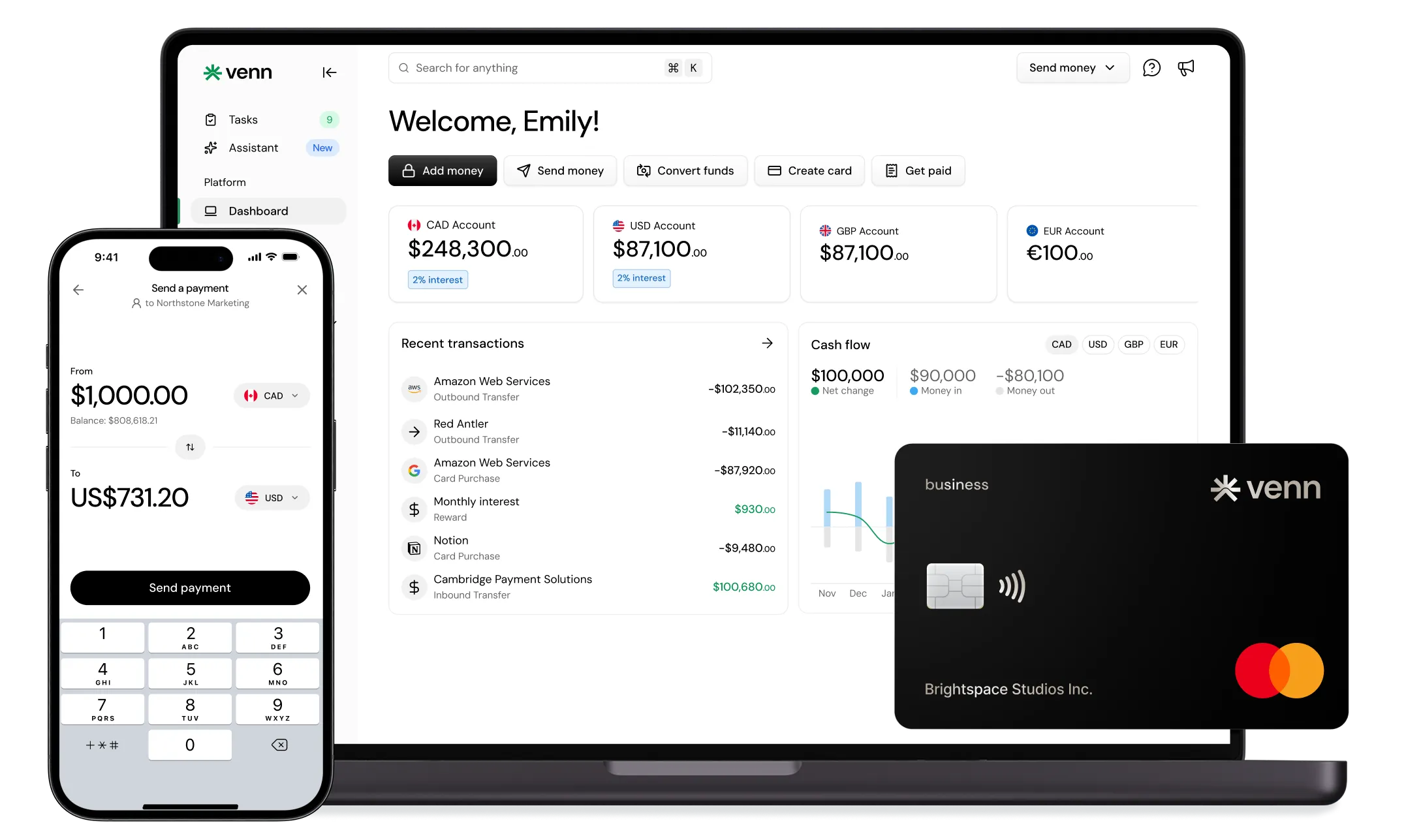
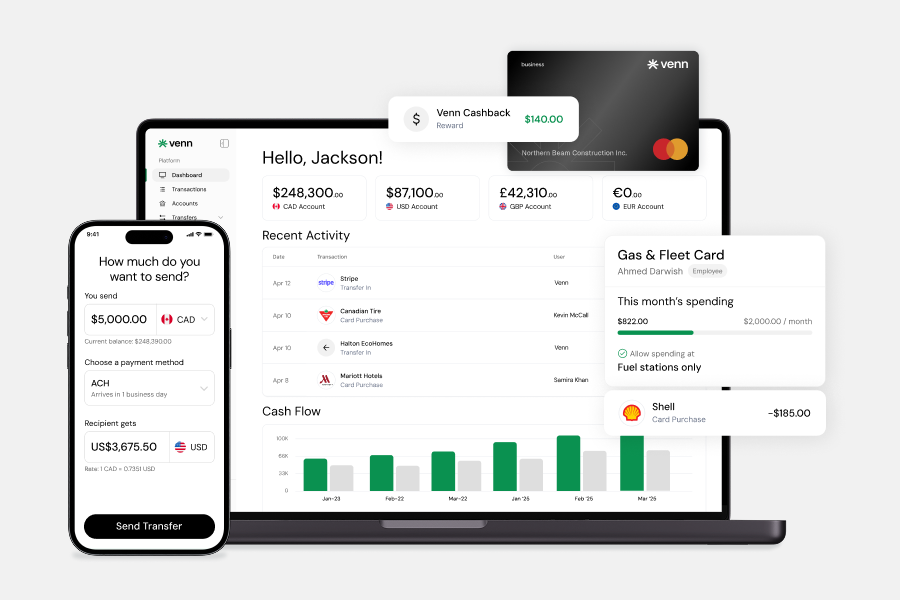
Broader business banking and expense-management platforms extend the comparison further. Venn, for example, is a business banking platform with a corporate charge card and expense management capabilities for companies that need more than fuel controls. This type of platform may fit when a business wants to manage fuel alongside travel, subscriptions, vendor spend, and operating expenses in one workflow, while still comparing dedicated fleet cards for fuel-specific rules and branded station programs.
How To Choose A Fleet Card For Your Business
Start with the operating problem, then match the card to that problem. The best answer to “what are fleet cards and how to choose for your business” depends less on the card itself and more on how your company buys fuel, assigns vehicles, manages receipts, and closes the books each month.
1. Map Your Fuel Spend And Fleet Size
Review the last three to six months of fuel purchases. Look at total monthly spend, average transaction size, number of drivers, number of vehicles, and how often employees pay out of pocket. A business with two local vans has different needs than a contractor with 25 trucks moving between job sites across Ontario, Alberta, and British Columbia.
Ask whether fuel is the main issue or only one category among many. If fuel dominates your operating spend, fleet fuel cards may provide useful control and reporting. If your team also needs to manage maintenance, travel, supplies, subscriptions, and vendor payments, compare fleet card vs credit card options and broader expense platforms.
2. Test Acceptance Against Real Routes
A fuel discount has limited value if drivers cannot use the card where they actually stop. Compare brand-specific programs with broader fleet card acceptance network options. Urban teams may have many nearby stations, while rural or remote routes may require wider coverage. Cross-province travel also matters, especially for delivery, field service, construction, and sales teams that refuel outside their home region.
3. Compare Fees To Net Savings
Do the math before choosing based on rebates. Estimate savings after fleet card fees, billing terms, potential interest, and any program charges. A card with a smaller discount but better acceptance, cleaner reporting, or fewer administrative steps may create more value than a higher advertised rebate that drivers struggle to use.
4. Evaluate Controls, Security, And Workflow Fit
Focus on the controls your business will actually enforce. Common decision points include driver or vehicle assignment, fuel card spending limits, purchase restrictions, alerts, and lost-card workflows. Then assess fleet card reporting quality. Finance teams should be able to review spending by driver, vehicle, location, and period without rebuilding reports manually.
Accounting workflow matters as much as card policy. Check whether exports, receipt capture, and fleet card integrations fit your bookkeeping process and accounting tools. If reconciliation still requires spreadsheet cleanup every month, the program may shift work rather than reduce it.
Quick Decision Rubric
• Choose dedicated business fuel cards when: fuel spend is high, drivers control purchases, vehicle-level reporting matters, and routes fit the acceptance network.
• Compare broader card or platform options when: fuel is one of several major spend categories, finance wants consolidated reporting, or teams need flexible operating expense management.
• Prioritize cash flow when: billing cycles, prepaid funding, charge terms, or credit access affect weekly working capital.
• Add cross-border review when: the business buys outside Canada, pays international suppliers, travels to the U.S., or operates across currencies.
As a rule of thumb, fuel-heavy, driver-controlled operations may fit dedicated fleet cards, while mixed operational spend may justify broader business card or platform options.
Noteworthy Options For Canadian Businesses
Canadian teams comparing fleet fuel cards, business fuel cards, and broader expense tools can use these option types to assess fit, acceptance, fleet card controls, reporting, and workflow needs.
How To Decide What Is Best For Your Business
Start with the operating problem you need to solve. A contractor with three vans and simple routes may value easy acceptance and straightforward fuel card expense tracking. A delivery company with 40 drivers may need tighter fleet card controls, vehicle-level reporting, and clear fuel card spending limits. A firm with sales travel, software subscriptions, supplier payments, and cross-border purchasing may need a wider finance setup.
When evaluating what are fleet cards and how to choose for your business, weigh fleet size, fuel concentration, control requirements, reporting needs, acceptance network, billing cycle, and cash-flow preferences. Also consider how much complexity your finance team already manages across cards, accounts, payments, and bookkeeping.
If fuel is the main issue, dedicated fleet fuel cards may fit well. If fuel is one part of broader operating spend, compare them with business card and expense platforms. Businesses that need broader expense controls, multi-currency support, payments, and accounting workflows may want to evaluate platforms like Venn alongside dedicated fleet cards, including options for corporate cards, business accounts, and expense management.
FAQ
Q: What is the difference between a fleet card and a business credit card?
A: A fleet card usually focuses on vehicle-related spending, especially fuel, with controls such as driver IDs, fuel card spending limits, and reporting by vehicle or driver. A business credit card typically offers broader merchant acceptance across travel, supplies, software, and other operating expenses. See the comparison table above for how fleet card vs. credit card options differ by use case.
Q: Are fleet cards only for large companies?
A: No. Small Canadian businesses with several vehicles, regular fuel purchases, or multiple drivers can benefit from fleet fuel cards if they need tighter controls and clearer fuel reporting. The right fit depends more on spending patterns and administrative needs than company size.
Q: Can fleet cards be used for maintenance and repairs?
A: Some fleet cards allow maintenance, repairs, car washes, or other approved vehicle expenses, while others work mainly as business fuel cards. Check merchant acceptance, purchase restrictions, and any fleet card fees before choosing a program.
Q: Do fleet cards help with expense tracking?
A: Yes. Fleet card reporting can reduce manual receipt collection and help finance teams track fuel purchases by driver, vehicle, date, location, and amount. For stronger fleet card expense tracking, look for exports or integrations that match your bookkeeping workflow.
Q: When might a broader business card or expense platform be a better fit?
A: A broader option may fit better when fuel is only one part of your company’s spending. If your team also manages travel, subscriptions, vendor payments, or multi-currency purchases, compare dedicated fleet cards with the broader platforms outlined above.
Legal / Disclosure Notes
This guide provides general information for Canadian businesses evaluating fleet cards, business fuel cards, and related spend-management options. It does not provide financial, tax, legal, or accounting advice. Product availability, fees, acceptance networks, billing terms, controls, integrations, rebates, and eligibility can change. Review each provider’s current terms before applying.
Where CDIC coverage is referenced, eligible Venn funds are covered under CDIC insurance protection.
Venn Mastercard Charge Card is issued by Peoples Trust Company under licence from Mastercard International Incorporated. Mastercard is a registered trademark, and the circles design is a trademark of Mastercard International Incorporated.
---
**Disclaimer:** This publication is provided for general information purposes only and does not constitute legal, tax, financial, or other professional advice from Venn Software Inc., its subsidiaries, or its affiliates, and is not a substitute for advice from a qualified professional. All comparisons and competitor information reflect publicly available information believed accurate as of June 1, 2026; features, pricing, rates, and terms referenced are subject to change and may differ at the time you read this. All product names, logos, and brands referenced are the property of their respective owners; their mention does not imply affiliation with or endorsement by Venn. Any comparative statements reflect Venn's views and are provided to help readers evaluate options. We make no representations, warranties, or guarantees, express or implied, that the content is accurate, complete, or up to date.

Venn is all-in-one business banking built for Canada
From free local CAD/USD accounts and team cards to the cheapest FX and global payments—Venn gives Canadian businesses everything they need to move money smarter. Join 15,000+ businesses today.
Frequently asked questions
Everything you need to know about the product and billing.
Join 15,000+ businesses banking with Venn today
Streamline your business banking and save on your spend and transfers today
No personal credit check or guarantee.