Restaurant Cash Flow Management in Canada for 2025
Restaurant Cash Flow Management in Canada: How to Survive Slow Months, Rising Costs, and Supplier Payment Pressure Build a 13-week forecast and plan GST.

Trusted by 10,000+ Canadian businesses
Business banking for Canada
Local CAD and USD accounts, corporate cards with cashback, the lowest FX rates in Canada, free local transfers, and more.
Canadian restaurants are facing a financial reckoning. As of mid-2025, 41% of restaurants are operating at a loss or barely breaking even. Three in four Canadians have cut back on dining out, citing the high cost of living as their primary reason.
The pressure compounds from every direction. Food costs, labor, insurance, and utilities have climbed by double digits since 2023. Meanwhile, consumer spending at restaurants has dropped below pre-pandemic levels. Canadians now spend roughly $1,035 per capita at full-service restaurants, down from $1,165 in 2019.
Here's the uncomfortable truth: 30% of new restaurants fail within their first year, and cash flow problems sit at the center of most closures. Profitability on paper means nothing if you can't cover payroll on Friday.
This guide provides a Canada-specific framework for managing restaurant cash flow. You'll learn how to build a 13-week forecast, control labor costs, negotiate supplier terms, plan for GST/HST remittances, and access the right financing when you need it.
Why Cash Flow Management Is Critical for Canadian Restaurants in 2025
Restaurant bankruptcies in Canada surged by 30% in 2024. That statistic reflects a fundamental shift in how restaurants must operate. Payroll pressures, vendor price hikes, and cash flow swings have become the new normal.
The cost squeeze is real. Between 2023 and 2025, restaurants absorbed double-digit increases across nearly every expense category. Food prices climbed. Minimum wages rose. Insurance premiums jumped. Utility bills expanded. Each increase chips away at already thin margins.
Consumer behavior has shifted permanently. Per capita spending at quick-service restaurants dropped from $1,150 in 2019 to $1,135 today. Full-service restaurants saw an even steeper decline. Diners visit less frequently and spend more cautiously when they do.
Many restaurant owners confuse profitability with cash flow. Your profit and loss statement might show positive numbers while your bank account runs dry. A profitable month means nothing if your receivables are delayed, your inventory is overstocked, or your GST/HST remittance is due before your biggest weekend.
Cash flow measures the actual money moving through your business. It determines whether you can pay suppliers on time, meet payroll obligations, and keep the doors open during January's inevitable slowdown.
How to Create a 13-Week Cash Flow Forecast for Your Restaurant
A 13-week cash flow forecast projects all expected cash inflows and outflows over a rolling quarter. This timeframe offers the right balance between short-term precision and medium-term planning. Weekly granularity reveals patterns that monthly forecasts miss entirely. A business might appear solvent monthly while facing mid-month liquidity crises.
Step 1: Gather Historical Data
Start with your past sales data. Pull last year's numbers and adjust for changes like menu updates, price increases, or new service offerings. Look for weekly patterns, not just monthly totals.
Step 2: Map Cash Inflows
Identify every source of incoming cash. This includes daily sales, catering orders, event bookings, and gift card redemptions. Review each revenue stream's timing. Credit card processors typically deposit funds within 1-2 business days. Catering deposits might arrive weeks before events.
Step 3: Map Cash Outflows
List every use of cash, separating variable costs from fixed costs. Variable costs include inventory purchases and hourly labor. Fixed costs cover rent, utilities, insurance, software subscriptions, and loan payments. Note the exact day each payment is due.
Step 4: Calculate Weekly Ending Balance
Apply this formula for each week: Beginning Cash + Inflows - Outflows = Ending Cash. Your ending balance becomes next week's beginning balance.
Step 5: Update Weekly
Your forecast should be a living document. Update it weekly to reflect actual cash flows and changing business assumptions. Compare projections against actuals to improve accuracy over time.
Accuracy Targets by Week:
Forecast PeriodTarget AccuracyWeeks 1-490-95%Weeks 5-880-90%Weeks 9-1370-85%
Accuracy naturally decreases the further out you forecast. Focus your energy on perfecting the near-term weeks where precision matters most.
Managing Seasonal Cash Flow Gaps in Your Restaurant
Every restaurant faces predictable slow periods. January and February drag after holiday spending. Post-Easter brings a lull. Summer weekends empty out urban locations. Your survival depends on planning for these gaps before they arrive.
Build Reserves During Peak Season
Set aside a percentage of peak-season profits specifically to cover slow months. If Easter week always brings extra diners, save part of March's profits to cover April's inevitable drop. Treat this transfer as a fixed expense, not an optional decision.
Create Separate Seasonal Budgets
Develop distinct budgets for peak and slow seasons with adjusted expense expectations. Your January staffing plan should look different from your December plan. Your inventory orders should shrink before predictable slowdowns.
Watch for Warning Signs
Red flags appear before cash crises hit. Maxed-out credit cards, delayed payroll, and consistently late supplier payments signal trouble. Address these warnings immediately rather than hoping next month improves.
Shift to Weekly Reviews
Top-performing restaurants review weekly projections rather than waiting for month-end reports. Weekly visibility allows faster adjustments. You can cut hours, delay orders, or push promotions before problems compound.
Controlling Labor Costs Without Sacrificing Service
Labor typically represents your largest controllable expense. The target percentage varies by restaurant type, but staying within benchmarks determines whether you survive or thrive.
Restaurant TypeTarget Labor Cost %Quick Service25%Casual Dining25-30%Fine Dining30-35%
Quick-service restaurants with less specialized labor and faster transactions should target 25%. Fine dining establishments with higher service expectations naturally run 30-35%. Know your category's benchmark and track against it weekly.
Prime Cost Target
Your prime cost combines labor and cost of goods sold. Keeping prime cost under 60% of sales is the benchmark for sustainable operations. If your combined labor and food costs exceed this threshold, you're operating on borrowed time.
Optimization Strategies
Cross-train staff to handle multiple positions. A server who can expedite food or a cook who can prep desserts gives you scheduling flexibility without additional hires.
Use split shifts during slow periods. Rather than paying someone to stand idle between lunch and dinner, schedule them for peak hours only.
Leverage scheduling software. Seventy-eight percent of Canadian restaurant leaders plan to spend more time managing finances and cash flow this year. Technology that automates scheduling based on forecasted demand pays for itself quickly.
Optimizing Inventory and Supplier Payment Terms
Inventory ties up cash. Every dollar sitting in your walk-in cooler is a dollar unavailable for payroll or rent. Effective inventory management directly improves cash flow.
Inventory Best Practices
Follow the First-In, First-Out (FIFO) principle. Rotate inventory regularly to minimize waste and ensure freshness. Spoiled product represents pure cash loss.
Count your perishables weekly, or daily for high-use items. Even though counting feels tedious, it prevents waste and reveals theft or over-ordering patterns. Thirty-nine percent of Canadian restaurants now rely on inventory management software to track stock levels and automate reordering.
Negotiating Supplier Terms
If a supplier expects net-30 payment, ask for net-45 during slow periods. Delaying payables even slightly improves short-term cash position. Just honor any new agreement. Broken promises destroy trust and eliminate future flexibility.
Consider the reverse approach too. Offer to pay some bills early if the supplier provides a price break. Every dollar saved on ingredients goes straight to your cash flow. A 2% early payment discount on a $10,000 monthly order saves $2,400 annually.
GST/HST Remittance Planning for Canadian Restaurants
GST/HST obligations create significant cash flow pressure when not planned properly. The money you collect belongs to the CRA, not your operating account.
Filing Frequency Based on Revenue:
Annual RevenueFiling FrequencyDeadlineUnder $1,500,000Annual3 months after fiscal year end$1,500,000 - $6,000,000Quarterly1 month after quarter endOver $6,000,000Monthly1 month after period end
Cash Set-Aside Strategy
Transfer GST/HST collected to a separate account immediately. Don't commingle tax obligations with operating funds. This simple practice eliminates remittance surprises and prevents the temptation to "borrow" from tax funds during slow weeks.
Instalment Requirements
If your business files annually and your net tax for the previous fiscal year exceeded $3,000, you must pay quarterly instalments in the current year. Plan for these payments in your 13-week forecast.
Financing Options for Seasonal Cash Flow Gaps
Financing can bridge temporary gaps, but use it strategically rather than habitually. Every dollar borrowed costs more than a dollar repaid.
Financing TypeBest ForConsiderationsLine of CreditShort-term gaps, payroll coverageFlexible, interest only on amount usedTerm LoanEquipment, renovationsFixed payments, longer commitmentEquipment LeasingKitchen upgradesPreserves cash, may include maintenance
Credit Caution
It might be tempting to put everything on a business card or loan during slow periods. The interest charges add up fast. If you use credit to cover seasonal gaps, prioritize paying it off quickly. Relying on debt means future profits get diverted to interest instead of reinvestment in your business.
How Venn Helps Canadian Restaurants Manage Cash Flow
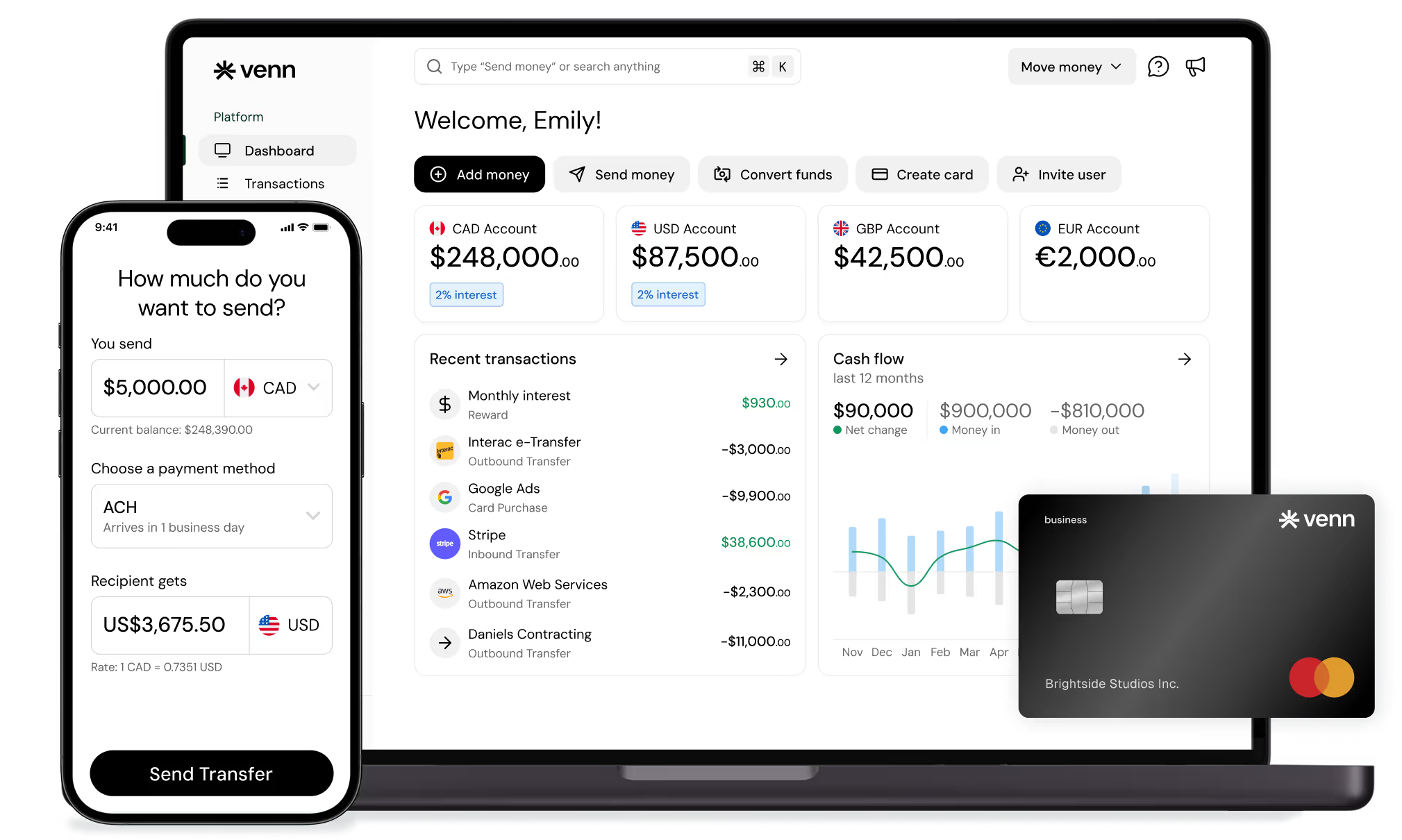
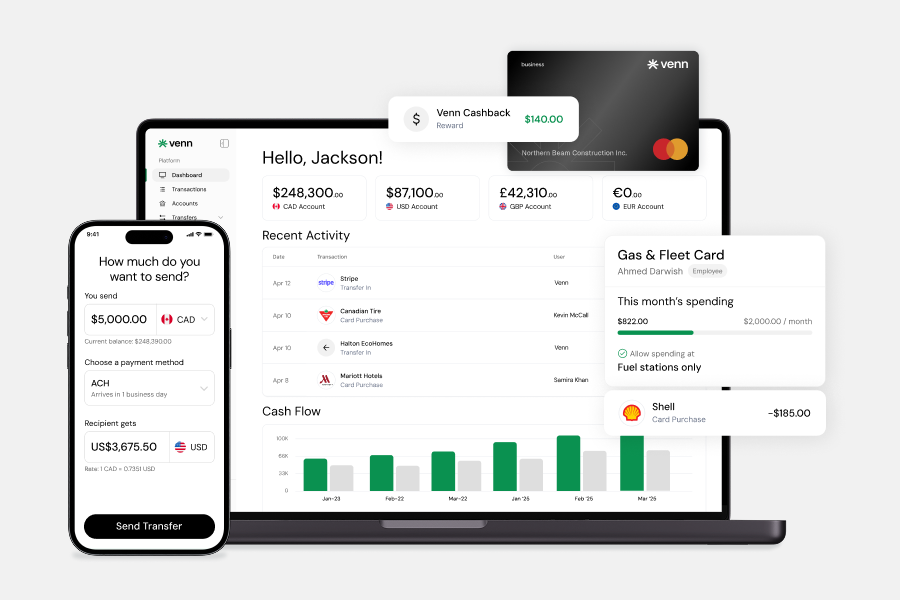
Venn provides the financial infrastructure Canadian restaurants need to manage cash flow effectively.
Free, unlimited Interac e-Transfer® eliminates transfer fees when paying suppliers or receiving payments. Those fees add up across hundreds of monthly transactions.
Multi-currency accounts benefit restaurants importing specialty ingredients. Access real CAD and USD accounts to avoid foreign exchange fees that erode margins on international purchases.
2% interest on balances lets your cash reserves work for you while maintaining full liquidity. Your seasonal reserve fund earns money instead of sitting idle.
Automated accounting integration connects with QuickBooks or Xero to automate payables tracking and maintain real-time visibility into your cash position.
Same or next business day payments ensure suppliers receive payments quickly, maintaining relationships and preserving your negotiating position.
Funds are covered under CDIC insurance protection, providing the security your business requires.
Weekly Cash Flow Monitoring Checklist
Weekly Tasks:
• Review actual vs. forecasted cash position
• Update 13-week forecast with actuals
• Check accounts receivable aging
• Review upcoming payables due dates
• Monitor inventory levels against sales projections
• Track labor cost percentage against target
• Set aside GST/HST collected
Monthly Tasks:
• Compare labor cost % to benchmark (target under 30%)
• Review prime cost (target under 60%)
• Assess supplier payment terms
• Update seasonal budget projections
Conclusion
Cash flow management separates restaurants that survive from those that thrive. The 30% of restaurants that fail in their first year often had profitable concepts. They simply ran out of cash.
Start with a 13-week forecast. Update it weekly. Set labor cost targets appropriate for your restaurant type. Build cash reserves during peak seasons rather than spending every dollar earned. Negotiate supplier terms before you need them desperately.
The restaurants succeeding in 2025 aren't waiting for conditions to improve. They're managing cash proactively, monitoring weekly, and using the right financial tools to maintain control.
Frequently Asked Questions
Q: What is a healthy cash flow for a restaurant?
A: A healthy restaurant maintains positive cash flow where daily sales consistently cover daily costs. Target a prime cost (labor + COGS) under 60% of sales and labor costs between 25-35% depending on your restaurant type.
Q: How much cash reserve should a restaurant have?
A: Most financial advisors recommend restaurants maintain 3-6 months of operating expenses in reserve. This provides a buffer for slow seasons and unexpected expenses.
Q: How often should I update my cash flow forecast?
A: Update your 13-week cash flow forecast weekly. This allows you to compare projections against actuals and adjust for changing business conditions.
Q: What are the biggest cash flow mistakes restaurants make?
A: Common mistakes include confusing profitability with cash flow, not planning for GST/HST remittances, overstocking inventory, and failing to negotiate supplier payment terms during slow periods.
Q: How can I improve cash flow during slow months?
A: Build reserves during peak seasons, negotiate extended payment terms with suppliers, reduce labor hours strategically, and consider a line of credit as a backup for temporary gaps.
---
**Disclaimer:** This publication is provided for general information purposes and does not constitute legal, tax or other professional advice from Venn Software Inc or its subsidiaries and its affiliates, and it is not intended as a substitute for obtaining advice from a financial advisor or any other professional. We make no representations, warranties or guarantees, whether expressed or implied, that the content in the publication is accurate, complete or up to date.

Venn is all-in-one business banking built for Canada
From free local CAD/USD accounts and team cards to the cheapest FX and global payments—Venn gives Canadian businesses everything they need to move money smarter. Join 10,000+ businesses today.
Frequently asked questions
Everything you need to know about the product and billing.
Join 10,000+ businesses banking with Venn today
Streamline your business banking and save on your spend and transfers today
No personal credit check or guarantee.