No Credit Check Cards for Canadian Businesses Guide
What are some no credit check cards for Canadian businesses? Compare 6 realistic paths charge, debit and secured options plus key tradeoffs and controls.


Trusted by 15,000+ Canadian businesses
Business banking for Canada
Local CAD and USD accounts, corporate cards with cashback, the lowest FX rates in Canada, free local transfers, and more.
If you searched for no credit check business cards in Canada, you likely want practical options without sorting through vague product pages. The challenge is that the Canadian market is narrower than many results suggest. A product labelled as a business card may not be a traditional revolving business credit card, and the approval path may still involve business underwriting, an owner guarantee, or a deposit-backed alternative.
That distinction matters for founders, operators, and finance teams trying to protect personal credit while keeping company spending organized. Some businesses need actual credit. Others need employee cards, spend visibility, or a simpler way to manage purchases without relying on a personal file.
This guide compares six realistic paths and separates true no-personal-credit-check options from alternatives that involve guarantees, underwriting, or secured approval.
No Credit Check Cards for Canadian Businesses: The Short Answer
The practical answer is: yes, options exist, but they rarely look like a classic revolving business credit card from a bank. In Canada, the more realistic paths are usually corporate charge-card style alternatives, debit expense cards, or secured card options.
That distinction matters. Traditional bank business credit cards often use the owner's personal credit, a guarantor, or similar underwriting signals to assess risk. TD, for example, says personal credit is checked for business credit cards. American Express says applicants need a Canadian credit file.
Start with the business problem you need to solve. If you need revolving credit, a secured or traditional card path may fit better. If you mainly need team spend controls, a charge-card style option may be enough. If your company pays suppliers or travels across currencies, prioritize multi-currency operating spend. If your credit history is thin, look for a bridge while you build business credit.
What No Credit Check Actually Means
Before comparing products, it helps to separate similar-sounding terms. They affect your approval path, your personal risk, and how the card works day to day.
No personal credit check means the provider does not assess the owner's personal credit file as part of the card application. That does not mean the business avoids review entirely — providers may still assess revenue, cash flow, incorporation status, bank activity, or other business information.
No personal guarantee means the owner does not personally promise to repay the business's balance if the company cannot. This is a separate question from whether a credit check occurs. A card can avoid a personal credit check but still require repayment from the business.
Soft inquiry means a credit-file review that usually does not affect your personal credit score. Hard inquiry means a formal credit check that may affect your score and appear on your credit report.
A secured card uses a deposit or collateral to reduce the issuer's risk. It can help businesses with limited history, but it is not the same as guaranteed approval. A charge card typically requires the balance to be paid in full on a regular cycle, rather than carried month to month. A debit expense card pulls from available funds, supporting controlled spending without providing credit.
Founders searching for no credit check business cards in Canada may really want to protect personal credit, avoid a personal guarantee, manage employee spending, support cross-border purchases, or keep business liability separate from personal finances. Those goals overlap, but they are not identical.
Quick Comparison of Card Options
Start by separating true no-personal-credit-check style options from lower-friction alternatives. Some cards reduce owner-level underwriting, while others still rely on personal guarantees, secured deposits, or standard eligibility review.
Venn
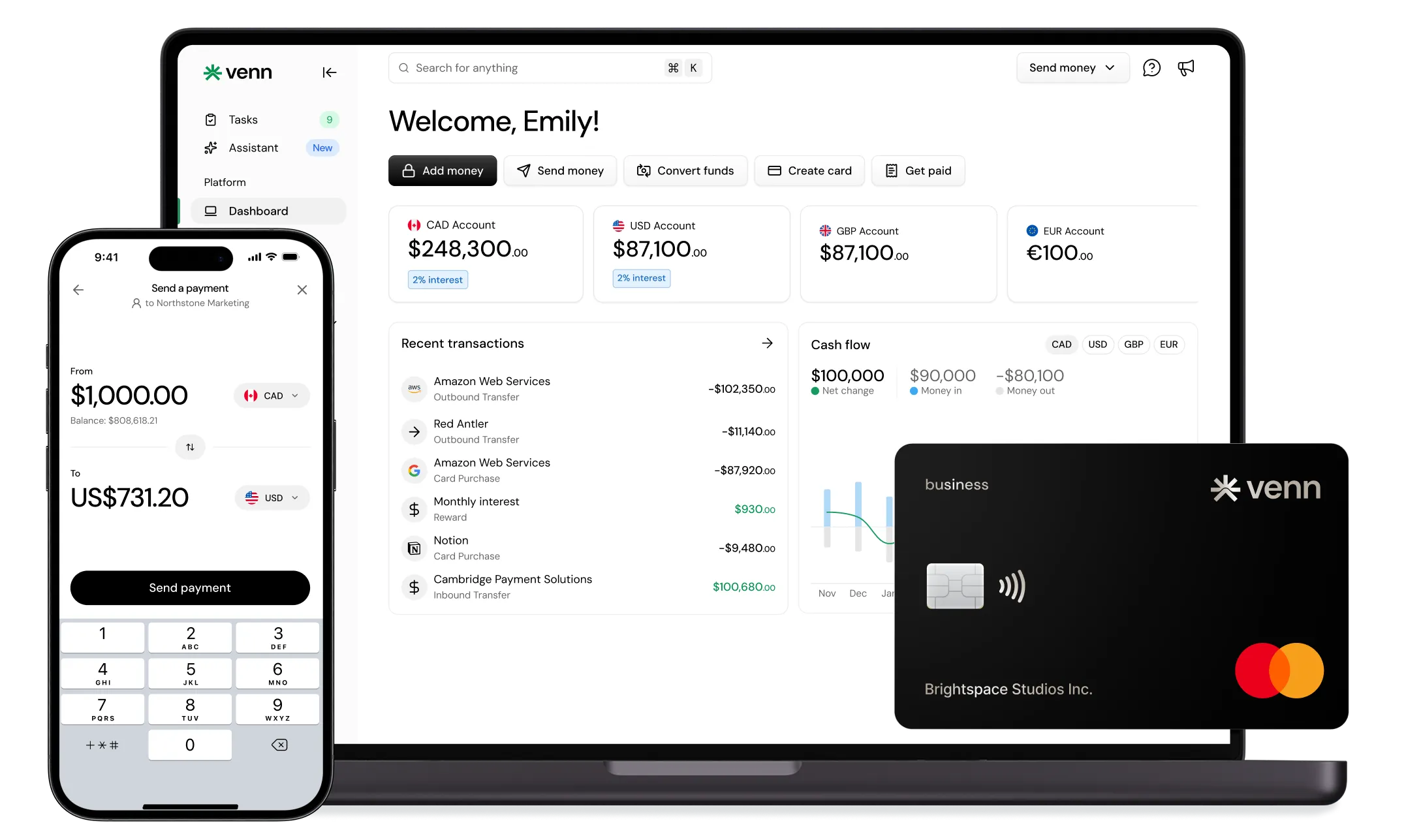
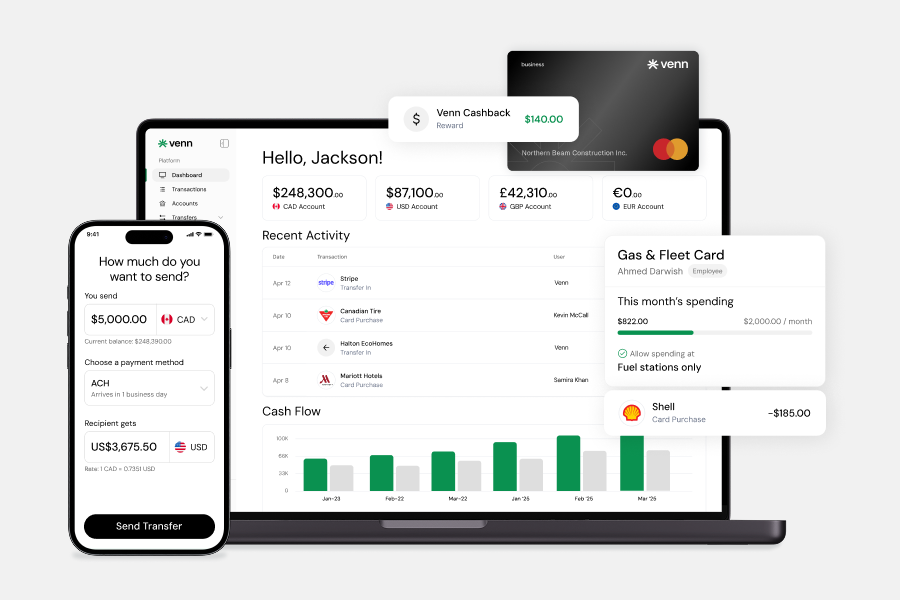
Venn is best for Canadian businesses that want a no-personal-credit-check corporate charge card paired with operating account features and stronger control over team spend and finance workflows.
Venn's positioning is direct: no personal credit check and no personal guarantee. The card sits inside a broader operating-finance platform, so teams can manage spend alongside CAD and USD accounts, with GBP and EUR accounts available for international operations. For cross-border payments, Venn offers competitive plan-tiered FX rates.
On rewards, Venn offers 1% cashback from the first dollar. Essentials and Plus plans include monthly cashback caps, while Pro and Custom offer unlimited cashback. Expense management controls let you set limits and policies for employees, and OCR receipt capture supports a cleaner month-end close. Venn also integrates directly with QuickBooks and Xero, which means less manual reconciliation for your finance team.
Vendor payments fit into the same workflow through free unlimited Interac e-Transfer®, and eligible deposits are covered under CDIC insurance protection.
The main tradeoff is scope: Venn is a charge-card and operating-finance platform, not a revolving business credit card.
Wise Business Debit Card
Wise Business Debit Card is best for businesses that mainly need international debit spending and virtual cards rather than credit. In Canada, Wise's business card is a debit card — not a revolving credit card or corporate credit line.
If your team pays overseas suppliers, travels for work, or spends across markets, Wise offers practical global payment coverage. The card works in 160+ countries and supports spending in 40+ currencies, with foreign exchange positioned around the mid-market rate. For multi-currency spend, that makes it a clear option to evaluate.
For team use, Wise supports team cards and spending controls, helping finance leads set boundaries before employees make purchases. Virtual cards give businesses a way to separate online subscriptions, vendor payments, or project-specific spend without issuing a physical card each time.
The tradeoff is straightforward: debit access does not provide a credit line. If you need revolving credit, Wise is not a direct replacement for a business credit card.
Loop Corporate Card
Loop Corporate Card is best for more established companies that want a corporate card structure and can meet the associated underwriting requirements.
Loop positions its card as corporate rather than personal, which may appeal to incorporated businesses looking beyond traditional bank products. Its FAQ also notes that it does not require cash collateral — a meaningful distinction for companies that do not want to tie card access to a secured deposit.
The key caveat is eligibility. Loop says companies with less than $10M in gross profit require a personal guarantee. For many SMBs, that requirement creates personal exposure even though the card itself is framed as a corporate product. If your main goal is to avoid a personal guarantee or personal credit check, Loop warrants careful review before you treat it as a fit.
This makes Loop a potential path for larger or more established teams, rather than a pure no-credit-check option for smaller businesses.
Keep Business Credit Mastercard
Keep Business Credit Mastercard is best for businesses that want a modern application experience and understand that no impact during offer review is not the same as no credit check ever.
Keep sits in the lower-friction category rather than the guaranteed no-check category. Applying and reviewing an offer does not impact your personal credit score, which can make the initial evaluation feel less risky for founders who want to understand their options before committing.
The key tradeoff appears at acceptance. Keep says accepting an offer may result in a hard inquiry, so businesses should treat it as an application path with a potential personal-credit step — not a true no-personal-credit-check card.
For companies with cross-border operating needs, Keep's business account agreement also references multi-currency account functionality, which may appeal to teams managing more than one currency, provided they are comfortable with the credit review implications before accepting an offer.
American Express Business and Corporate Charge Card Path
Best for established businesses — especially travel-heavy companies or teams running employee-card programs — this path suits finance leads who want charge-card style cash-flow management and can meet standard eligibility requirements.
Amex provides useful context for what a mature business or corporate card program can look like. Applicants need to be Canadian residents with a Canadian credit file, which makes this a different path from business cards with no personal credit check in Canada. That eligibility detail matters if the owner's personal credit profile is the issue you are trying to avoid.
For qualified companies, Amex highlights cash-flow benefits tied to charge cards, along with corporate-card expense tools that can support employee spending programs. This can be a strong benchmark for established-card programs, but it is not a no-credit-check answer.
Secured Bank or Credit Union Business Card Path
Secured bank or credit union paths are best for owners who need a stepping-stone option and are willing to use a security deposit, guarantor, or more traditional approval process.
For many searches around business credit cards for bad credit in Canada, this route can feel like the most familiar fallback. It gives applicants a way to stay within the bank or credit union system when a standard approval path may be difficult. TD says personal credit is checked for business credit cards, so this route should not be treated as a true no-credit-check product. TD also notes that secured cards can help applicants without personal credit history, and a guarantor may further support approval.
That makes the secured path realistic for owners who want a structured way to move forward — but it still sits closer to traditional underwriting than to true no-personal-credit-check options.
The operational tradeoff is worth noting: these paths can take longer, involve more paperwork, and offer fewer modern finance tools for global spending or software integration. For teams that mainly need approval support, they can still serve a practical purpose.
How to Choose the Right Option for Your Business
Start with the problem you need the card to solve.
If your main goal is to separate business spending from personal credit, look first at charge-card or operating-finance platforms. This path suits incorporated companies and growing teams that need employee cards, approval workflows, and cleaner month-end reconciliation. Venn fits this profile for businesses that want the no-personal-credit-check approach, along with cashback on spend, multi-currency operations, accounting connectivity, and a broader finance stack in one place.
If you need revolving credit, make that the deciding factor. Many no credit check business cards in Canada are not revolving credit products, so they may help you manage spend without giving you the ability to carry a balance. For inventory purchases, seasonal cash gaps, or project financing, a traditional business credit card or business line of credit may be more appropriate if you can meet standard eligibility requirements.
Choose a debit expense card when cross-border purchasing matters more than credit. This works well for software subscriptions, supplier payments, travel, and teams that already keep enough cash in the account to fund spend.
Consider a secured business credit card path if your company needs a bridge — this often makes sense for newer owners, businesses rebuilding credit, or applicants that cannot qualify elsewhere.
Your legal structure also matters. Sole proprietors may face more personal underwriting because the business and owner are closely linked. Incorporated businesses may have more room to separate company liability, controls, and finance operations, especially as revenue, team size, and accounting complexity grow.
Conclusion
True no-credit-check business card options do exist in Canada, but the category is narrower than many search results suggest. The more useful question is what type of card structure fits your operating needs.
If your company needs revolving credit, a traditional or secured path may make more sense. If you mainly want tighter employee spending oversight, a charge card or debit expense card could be a better fit. For businesses paying suppliers, contractors, or software vendors across borders, international operating flexibility may matter more than access to a credit line. Some teams may also need a bridge while they build a stronger business credit profile.
Use the comparison table above to narrow the options, then match each path to your cash flow, risk tolerance, and day-to-day finance workflow.
Frequently Asked Questions
Q: Are there no credit check business cards available in Canada?
A: Yes, but true no credit check business cards in Canada are limited. Many options that avoid a personal credit check are structured as charge cards or debit expense cards rather than traditional revolving credit cards. Start with the comparison table and confirm each provider's current underwriting criteria before applying.
Q: Does no personal credit check mean no personal guarantee?
A: No. "No personal credit check" describes how the provider assesses your application, while "no personal guarantee" describes whether you personally back the business's repayment obligation. A provider may avoid one but still require the other, so review both terms carefully.
Q: What is the difference between a charge card and a business credit card?
A: A charge card typically requires full repayment by the statement due date and does not operate like a revolving credit line. A business credit card may let you carry a balance, usually with interest. For many Canadian businesses, charge cards can still support team spending and expense controls.
Q: Can debit expense cards help businesses with bad credit in Canada?
A: Yes, if your main goal is controlled spending rather than borrowing. Debit expense cards use available business funds, so they can help teams issue cards and manage expenses without relying on revolving credit approval. They can be a practical option for businesses comparing business credit cards for bad credit in Canada.
Q: Which type of business card is the best fit for my business?
A: The strongest fit depends on whether your business needs debit, charge-card functionality, or broader operating-finance tools. If you mainly want prepaid or debit-style international spending, consider a debit card option. If you need charge-card controls or a broader finance platform, compare the relevant providers and features before applying.
Q: Can sole proprietors get business cards without a personal credit check in Canada?
A: Sometimes, but eligibility varies by provider and business structure. Some platforms focus on incorporated businesses, while others may support sole proprietors under specific criteria. Check each provider's current requirements before starting an application.
---
**Disclaimer:** This publication is provided for general information purposes only and does not constitute legal, tax, financial, or other professional advice from Venn Software Inc., its subsidiaries, or its affiliates, and is not a substitute for advice from a qualified professional. All comparisons and competitor information reflect publicly available information believed accurate as of June 1, 2026; features, pricing, rates, and terms referenced are subject to change and may differ at the time you read this. All product names, logos, and brands referenced are the property of their respective owners; their mention does not imply affiliation with or endorsement by Venn. Any comparative statements reflect Venn's views and are provided to help readers evaluate options. We make no representations, warranties, or guarantees, express or implied, that the content is accurate, complete, or up to date.

Venn is all-in-one business banking built for Canada
From free local CAD/USD accounts and team cards to the cheapest FX and global payments—Venn gives Canadian businesses everything they need to move money smarter. Join 15,000+ businesses today.
Frequently asked questions
Everything you need to know about the product and billing.
Join 15,000+ businesses banking with Venn today
Streamline your business banking and save on your spend and transfers today
No personal credit check or guarantee.