How to track ad spend by client as a marketing agency
How to track ad spend by client as a marketing agency with client IDs, dedicated cards, FX tracking, and monthly reconciliation to stop billing disputes.
Trusted by 10,000+ Canadian businesses
Business banking for Canada
Local CAD and USD accounts, corporate cards with cashback, the lowest FX rates in Canada, free local transfers, and more.
How To Track Ad Spend By Client As A Marketing Agency
Managing ad spend across multiple clients, platforms, and currencies is one of the most operationally complex challenges Canadian marketing agencies face. When spend is scattered across personal cards, shared ad accounts, and inconsistent naming conventions, the consequences compound quickly: inaccurate client profitability calculations, billing disputes, delayed invoicing, and forecasting that feels more like guesswork than strategy.
The solution is not another dashboard or analytics tool. Tracking ad spend by client requires a system that spans both analytics and finance operations. Your banking setup, card infrastructure, and reconciliation workflows are just as critical to accurate tracking as your UTM parameters and conversion pixels.
This guide delivers a repeatable framework to track, validate, and report ad spend by client. You will learn how to structure client tracking, centralize payment methods, reconcile platform charges to banking transactions, and build reporting that clients trust. The templates and checklists included can be implemented in a single afternoon.
Step 1: Define "Ad Spend" Clearly
Before tracking anything, your team needs a shared definition of what counts as ad spend and what does not. Ambiguity here creates reconciliation headaches later.
Include in Ad Spend:
• Platform media spend (Google Ads, Meta, LinkedIn, TikTok)
• Ad credits and promotional balances (track separately for accurate cost analysis)
• Taxes charged by platforms (GST/HST on Meta spend, for example)
• FX impact when paying in non-CAD currencies
Exclude or Track Separately:
• Agency management fees (these are your invoice line items)
• Creative production costs
• Software subscriptions (unless explicitly billed through to clients)
| Category | Include in Ad Spend? | Notes |
|---|---|---|
| Platform media charges | Yes | Core spend metric |
| Platform taxes (GST/HST) | Yes | Track separately for accuracy |
| Ad credits and promos | Yes, tracked separately | Affects true cost calculations |
| FX costs on USD charges | Yes | Impacts client profitability |
| Agency retainer fees | No | Your revenue, not pass-through |
| Creative production | No | Separate cost category |
Document these definitions and share them with your team. Consistency prevents disputes when clients question invoices.
Step 2: Set Up a Client Tracking Structure
Every client needs a unique identifier that flows through your ad accounts, banking transactions, and accounting system. Without this, you are manually piecing together data from multiple sources.
Create a Client ID Convention:
• Format: CL-CLIENTNAME-001
• Example: CL-ACME-001, CL-NORTHSTAR-002
Map Ownership for Each Client:
• Who approves spend changes and budget increases
• Who has admin access to ad accounts
• Who reconciles billing monthly
• Who owns the client relationship for billing questions
Minimum Required Access Checklist:
• Ad account admin access (not just analyst)
• Billing settings visibility
• Invoice and payment method access
• Conversion tracking verification access
This structure becomes your single source of truth. When a charge appears on a card statement, you can trace it back to a specific client, campaign, and approval.
Step 3: Choose a Tracking Method That Matches How You Bill
Your billing model determines how you should structure tracking. Each approach has distinct implications for reconciliation and cash flow.
Model 1: Client Pays Platforms Directly
The client owns the ad account and payment method. Your agency manages campaigns but never touches the money.
• Pros: Simplest agency books, maximum transparency for clients
• Cons: Harder to validate spend quickly unless you have full access
Model 2: Agency Pays, Then Invoices Client (Pass-Through)
Your agency pays all platform charges, then invoices clients for media spend plus fees.
• Pros: Full control over execution, faster campaign launches
• Cons: Requires disciplined reconciliation and clear invoicing
Model 3: Hybrid
Some clients pay directly, others go through your agency. Common in practice, but highest risk for confusion.
• Pros: Flexibility for different client preferences
• Cons: Requires clear documentation and separate workflows
If your agency pays on behalf of clients, the cleanest approach is centralizing spend through a modern business banking platform with corporate cards, then reconciling to your accounting system monthly.
Step 4: Centralize Spend by Client Using Dedicated Payment Methods
This is the operational core of client-level tracking. The principle is simple: one client, one funding source whenever possible.
Option A: Separate Card Per Client
Issue a dedicated corporate card for each client's ad spend. Every charge on that card belongs to one client.
Option B: Separate Account Per Client
Create a sub-account or dedicated account for each client, then fund a card from that account.
Option C: Separate Card Per Channel (Advanced)
For high-spend clients, issue separate cards for Google, Meta, and other platforms. Maximum granularity, but more cards to manage.
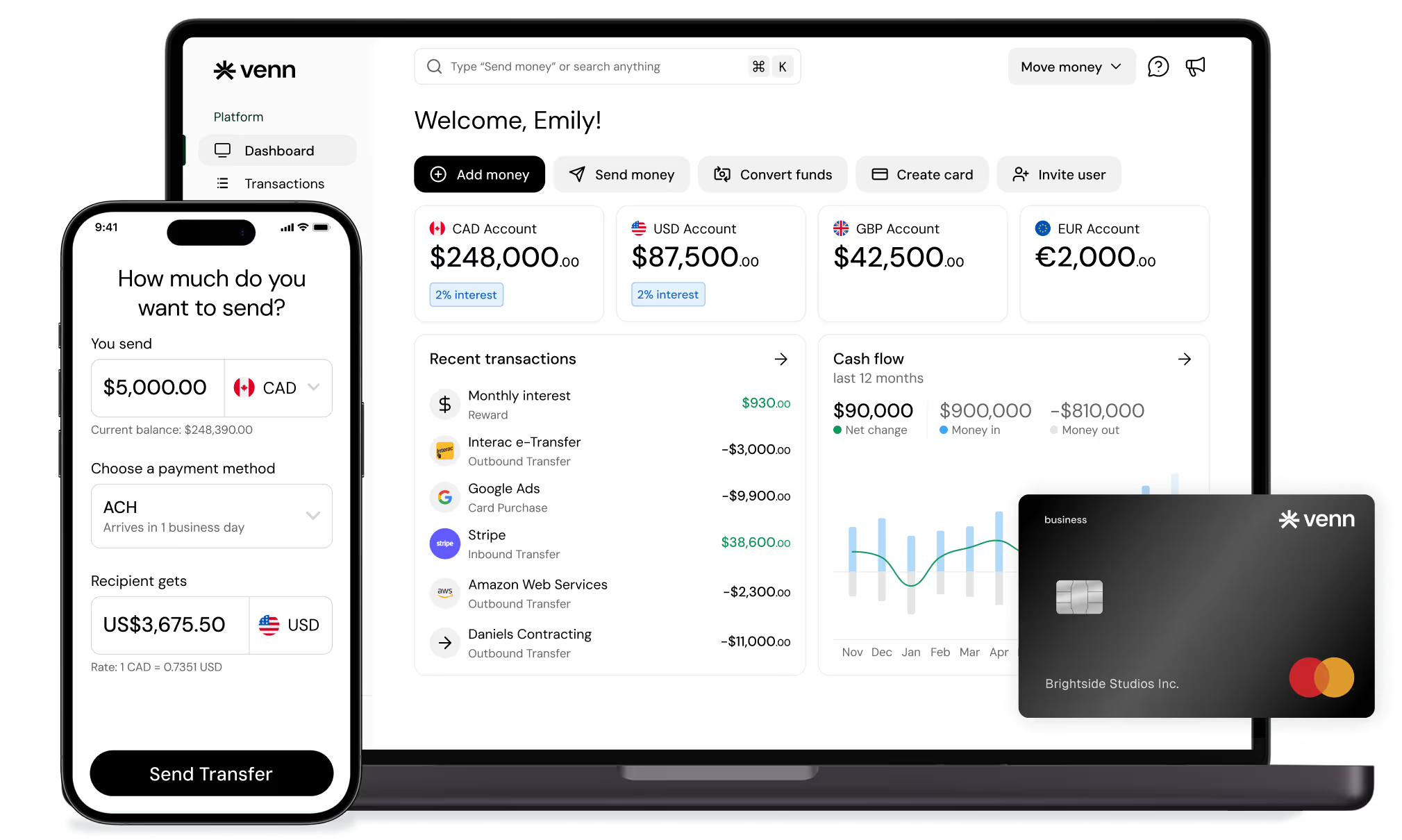
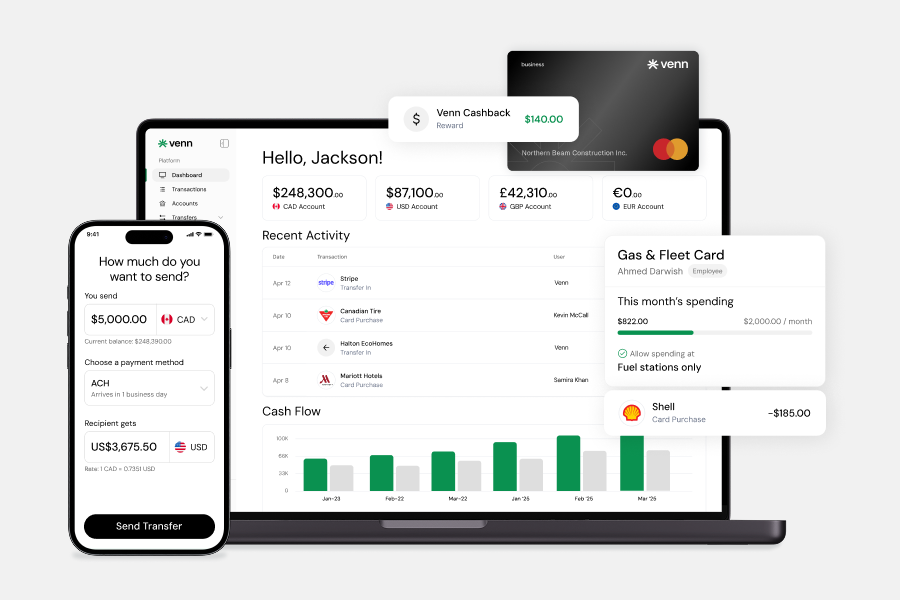
Venn's business banking platform makes this structure practical. With Venn, you can issue corporate cards with built-in expense management to keep client spend categorized and supported with receipts. Ad spend is often one of the largest agency cost lines, so routing eligible spend through Venn's cards can improve margins through cashback rewards.
For agencies paying USD vendors, tools, or ad platforms, Venn's multi-currency accounts reduce friction. You can hold and spend in USD without conversion fees eating into client profitability. When your banking infrastructure supports client-level separation, tracking becomes automatic rather than manual.
Step 5: Build a UTM and Naming System That Ties Spend to Outcomes
UTM parameters connect ad spend to campaign outcomes. They do not replace billing reconciliation, but they are essential for performance reporting.
What UTMs Do Well:
• Attribute website traffic and conversions to specific campaigns
• Enable cross-platform performance comparison
• Support client-level ROI analysis in GA4
What UTMs Cannot Do:
• Validate billing accuracy
• Track refunds, credits, or FX impacts
• Replace bank statement reconciliation
Recommended UTM Taxonomy:
| Parameter | Purpose | Example |
|---|---|---|
| utm_source | Platform | google, meta, linkedin |
| utm_medium | Channel type | cpc, paid-social, display |
| utm_campaign | Campaign identifier | CL-ACME-001_spring-promo_2026-Q1 |
| utm_content | Creative variant | video-a, carousel-b |
| utm_term | Keyword or audience | brand-terms, lookalike-1pct |
Naming Convention Template:
utm_campaign=[ClientID]_[CampaignName]_[DateOrQuarter]
Example: CL-ACME-001_spring-sale_2026-Q2
Include your Client ID in every campaign name. This creates a traceable thread from ad platform to analytics to accounting.
Step 6: Implement Conversion Tracking and QA
ROI reporting only holds up if your conversion tracking is accurate. A misconfigured pixel can inflate results and erode client trust.
GA4 Event-Based Tracking Basics:
• Define conversions per client (lead form submit, purchase, booked call)
• Document each conversion definition in your tracking plan
• Set up custom events for client-specific goals
Tagging and QA Checklist:
• Verify tags fire correctly in Google Tag Manager preview mode
• Test conversions end-to-end before launching campaigns
• Check for cross-domain tracking if clients use multiple domains
• Confirm thank-you page views are not counting refreshes as new conversions
Trust But Verify:
• Are conversions inflating due to duplicate events?
• Do conversion counts match client CRM data?
• Are you counting page refreshes as new leads?
Document your conversion definitions and QA process. When clients question results, you can show exactly how conversions are measured.
Step 7: Reconcile Ad Platform Spend to Banking Transactions
This is the non-negotiable step that separates professional agencies from those that guess at profitability. If you cannot tie ad platform spend to bank and card transactions, you do not have trustworthy reporting.
Monthly Reconciliation Workflow:
•
Export platform spend by date range from each ad account
•
Export bank and card transactions for the same period
•
Match charges, accounting for:
• Platform charge dates versus bank posting dates (often 1-3 days different)
• Partial refunds and credits
• FX impact if charges are in USD
•
Flag discrepancies and investigate before closing the books
•
Document any adjustments in your reconciliation notes
When spend runs through a unified business banking platform, reconciliation becomes faster and cleaner. Venn's direct integrations with QuickBooks and Xero automate transaction coding and reduce manual entry. Instead of downloading CSVs and manually matching rows, your accounting software receives categorized transactions automatically.
Step 8: Track Profitability by Client
ROAS tells you how campaigns perform. Profitability tells you whether the client relationship makes business sense.
What to Track Per Client:
• Media spend (pass-through costs)
• Agency fees (retainer, project, performance bonuses)
• Cost of delivery (contractors, creative production)
• FX costs for international tools and vendors
• Net margin
| Client | Media Spend | Agency Fees | Delivery Costs | Gross Margin | Notes |
|---|---|---|---|---|---|
| CL-ACME-001 | $12,500 | $3,500 | $800 | $2,700 | USD FX added $120 |
| CL-NORTHSTAR-002 | $8,200 | $2,500 | $400 | $2,100 | On track |
FX costs deserve special attention. If you are paying Google Ads in USD and not tracking the conversion impact, your profitability calculations are wrong. Multi-currency accounts let you hold USD and pay in USD, eliminating hidden conversion fees that erode margins.
Step 9: Create a Client Reporting Pack That Drives Decisions
Your reporting should help clients make decisions, not overwhelm them with metrics they do not understand.
Recommended Structure:
• Executive summary: What happened, why it happened, what to do next
• Spend pacing: Current spend versus monthly budget
• Performance versus target KPIs: Conversions, CPA, ROAS
• Experiments and next steps: What you are testing and why
• Appendix: Tracking notes, anomalies, credits, refunds
What Not to Include:
• Raw data exports without context
• Metrics clients have not agreed to track
• Technical implementation details unless requested
Keep the main report focused on outcomes and recommendations. Save the technical details for appendices or separate documentation.
Templates and Checklists
Client Spend Tracking Plan (One Page)
Client ID: CL-_______-___
Primary KPIs: _______________
Conversion Events: _______________
Platforms: [ ] Google [ ] Meta [ ] LinkedIn [ ] TikTok [ ] Other
Billing Model: [ ] Client pays direct [ ] Agency pass-through [ ] Hybrid
Reconciliation Owner: _______________
Reporting Cadence: [ ] Weekly [ ] Monthly
UTM Naming Convention
utm_source: [platform] (google, meta, linkedin, tiktok)
utm_medium: [channel-type] (cpc, paid-social, display)
utm_campaign: [ClientID]_[campaign-name]_[date-or-quarter]
utm_content: [creative-variant]
utm_term: [keyword-or-audience]
Month-End Reconciliation Checklist
• [ ] Export spend from all ad platforms for the billing period
• [ ] Export card and bank transactions for the same period
• [ ] Match platform charges to banking transactions
• [ ] Flag and investigate discrepancies over $50
• [ ] Document credits, refunds, and FX adjustments
• [ ] Update client profitability tracker
• [ ] Prepare client-facing spend summary
• [ ] Archive reconciliation documentation
Common Mistakes When Tracking Ad Spend by Client
Multiple clients on one card with no rules. Without client-level separation, you are manually sorting every transaction.
Mixing tool subscriptions into ad spend. Semrush, Canva, and other tools are not media spend. Track them separately.
Ignoring FX and thinking ROAS is wrong. When you pay in USD but report in CAD, FX fluctuations affect your numbers. Track conversion costs explicitly.
No documented conversion definitions. If your team cannot explain exactly what counts as a conversion, your ROI reporting is unreliable.
Reporting before reconciliation. Never send a client report until you have validated platform spend against banking transactions.
Failing to capture credits and refunds. Ad platforms issue credits for policy violations, billing errors, and promotions. Track these or your cost calculations will be wrong.
Conclusion
Tracking ad spend by client is not just an analytics challenge. It is a finance operations discipline that requires alignment between your ad platforms, banking infrastructure, and accounting system.
Start by standardizing client IDs across every system. Centralize spend through dedicated payment methods that create automatic client-level separation. Reconcile monthly before reporting anything to clients. Build reporting packs that drive decisions rather than overwhelm with data.
Modernizing your agency's financial stack reduces the manual effort required to track and reconcile spend. When your banking platform, corporate cards, and accounting software work together, tracking becomes a system rather than a monthly scramble.
Ready to simplify your agency's financial operations? Sign up for a Venn account at venn.ca and centralize your client spend tracking with modern business banking.
FAQ
Q: Should the agency or the client pay ad platforms directly? A: It depends on your service model and client relationship. Client-direct payment offers maximum transparency and simpler agency books. Agency pass-through gives you more control and faster execution but requires disciplined reconciliation. Choose based on client preferences and your operational capacity.
Q: How do I track ad spend when platforms bill in USD? A: Separate FX costs from campaign performance by tracking the CAD equivalent at the time of charge. Multi-currency accounts let you hold and spend USD directly, eliminating conversion fees. Without this separation, FX fluctuations will distort your profitability analysis.
Q: How often should I reconcile ad spend by client? A: Monthly at minimum. For clients spending over $25,000 per month, weekly reconciliation catches issues before they compound. High-frequency reconciliation also makes month-end close faster.
Q: Can UTMs replace reconciliation? A: No. UTMs measure campaign outcomes and attribution. Reconciliation validates billing accuracy. You need both. UTMs tell you which campaigns drove conversions. Reconciliation confirms you were charged correctly for that spend.
Q: What is the simplest setup for a small agency with 5 to 10 clients? A: Issue one corporate card per client for ad spend. Use a consistent Client ID in all campaign names and UTM parameters. Reconcile monthly using a simple spreadsheet that matches platform charges to card transactions. As you scale, add automation through accounting integrations.
Venn Mastercard Charge Card is issued by Peoples Trust Company under licence from Mastercard International Incorporated. Mastercard is a registered trademark, and the circles design is a trademark of Mastercard International Incorporated.
--- **Disclaimer:** This publication is provided for general information purposes and does not constitute legal, tax or other professional advice from Venn Software Inc or its subsidiaries and its affiliates, and it is not intended as a substitute for obtaining advice from a financial advisor or any other professional. We make no representations, warranties or guarantees, whether expressed or implied, that the content in the publication is accurate, complete or up to date.
Venn is all-in-one business banking built for Canada
From free local CAD/USD accounts and team cards to the cheapest FX and global payments—Venn gives Canadian businesses everything they need to move money smarter. Join 10,000+ businesses today.
Frequently asked questions
Everything you need to know about the product and billing.
Join 10,000+ businesses banking with Venn today
Streamline your business banking and save on your spend and transfers today
No personal credit check or guarantee.