How to Start a Side Business in Canada 2026 Checklist
How to start a side business in Canada with a 2026 checklist: validate demand, choose structure, register GST/HST, and set up clean bookkeeping from day one.

Ahmed Shafik
Co-founder
.png)
Trusted by 15,000+ Canadian businesses
Business banking for Canada
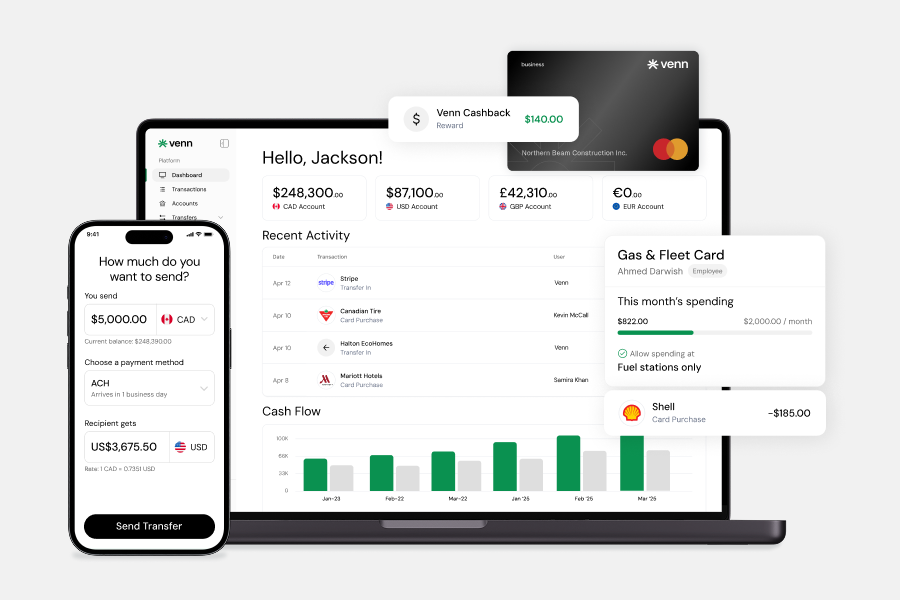
Local CAD and USD accounts, corporate cards with cashback, the lowest FX rates in Canada, free local transfers, and more.
Starting a side business in Canada brings two persistent worries: "Am I doing this legally?" and "How do I avoid tax chaos when April rolls around?"
These concerns are valid. The difference between a profitable side hustle and a stressful mess often comes down to the systems you build from day one. Most Canadians who launch side businesses while employed discover that compliance and bookkeeping cause more headaches than finding customers.
This guide walks you through every step, from validating your idea to making your first sale, while staying compliant with CRA requirements. You will learn how to choose the right business structure, register properly, set up a financial stack that makes tax time painless, and avoid the common traps that derail new entrepreneurs.
The flow is straightforward: validate your idea, choose your structure, register with the right authorities, separate your finances, and launch with systems that scale.
Start Here: A Quick Decision Tree
Before diving into registration forms and tax accounts, answer three foundational questions.
Hobby or business? CRA looks at whether you have a reasonable expectation of profit. If you sell handmade crafts occasionally at cost or below, that might be a hobby. If you price for profit, market actively, and track expenses, you are running a business. When in doubt, consult an accountant.
Sole proprietorship or corporation? Most side businesses start as sole proprietorships because setup is fast and reporting flows through your personal tax return. Incorporation makes sense when liability protection matters, you are retaining significant profits in the business, or you are raising capital. The administrative burden increases substantially with incorporation.
GST/HST registration? If your worldwide taxable revenue stays below $30,000 over four consecutive calendar quarters, you qualify as a small supplier and do not need to register. Once you cross that threshold, registration becomes mandatory. We will cover this in detail later.
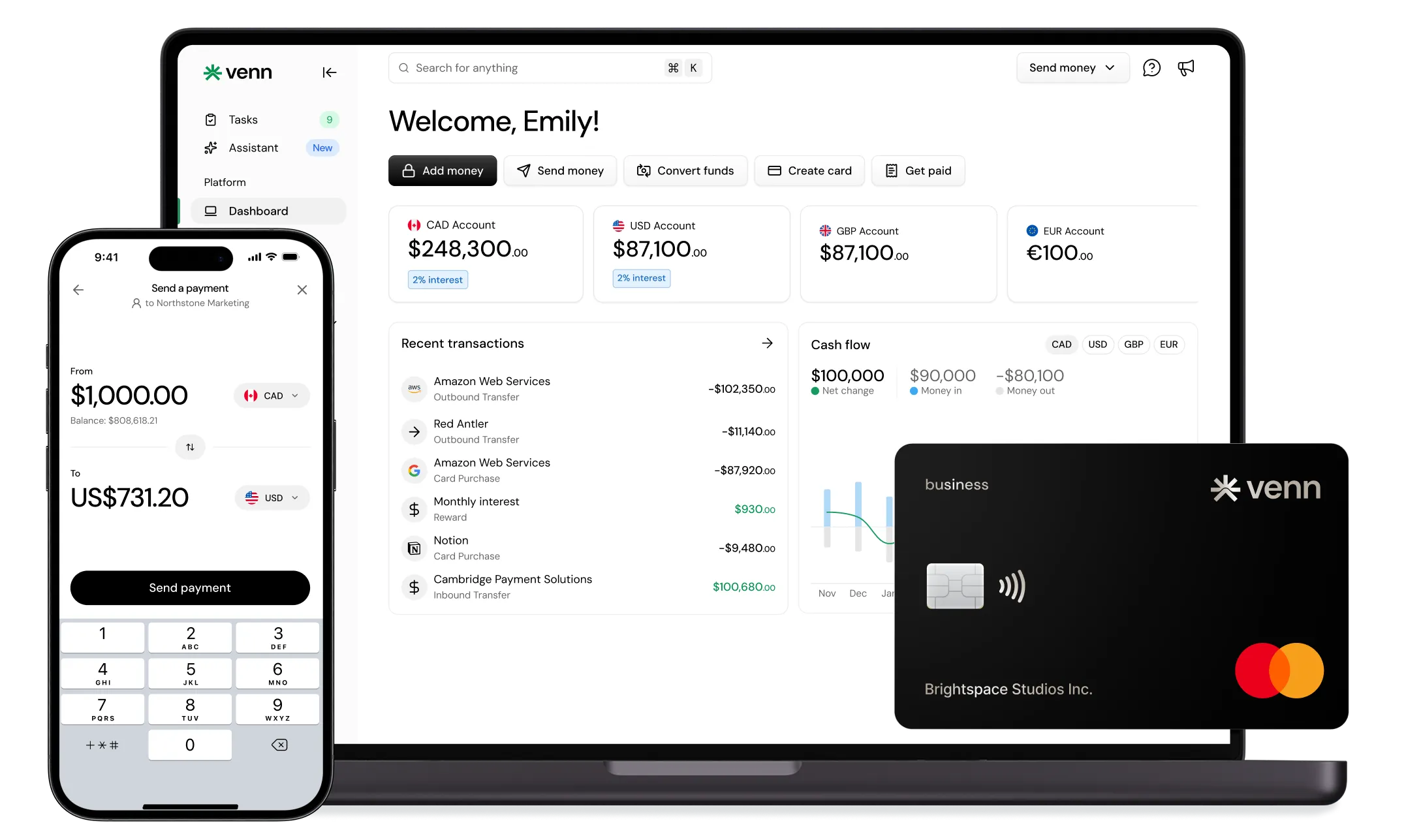
Day-one finance move: Even before formal registration, separating your business transactions from personal spending makes compliance and bookkeeping dramatically easier. Venn provides a dedicated business banking platform that creates this separation from your first dollar of revenue.
Step 1: Choose a Side Business Model You Can Execute in 30 Days
The best side business for someone with a full-time job is one that fits into evenings and weekends without requiring massive upfront investment.
Service businesses offer the fastest path to revenue. Consulting, freelance writing, bookkeeping, design work, tutoring, and coaching require minimal startup costs and can generate income within days of launching.
Product businesses require inventory investment and logistics but can scale beyond your time. Consider dropshipping or print-on-demand to minimize upfront risk.
Digital products like courses, templates, or software combine the scalability of products with the low overhead of services.
Pick one offer, one niche, and one channel. Trying to serve everyone through every platform guarantees you will serve no one effectively.
For pricing, research three to five competitors, calculate your costs including time, and test what customers will actually pay. Start slightly higher than feels comfortable because lowering prices is easy while raising them requires justification.
Define your minimum viable schedule. Can you commit to 10 hours per week? Five? Block that time on your calendar and protect it.
A freelancer who invoices clients in both CAD and USD benefits from holding both currencies without forced conversions. Venn's multi-currency accounts let you receive payment in the client's preferred currency and pay suppliers from the matching balance, avoiding unnecessary exchange fees.
Step 2: Validate Demand With a Simple, Low-Risk Test
Before investing heavily in branding, equipment, or inventory, confirm that people will pay for what you are offering.
Pre-sell your offer. Create a simple landing page describing your service or product, set a price, and collect payment before you build anything. If nobody buys, you have learned something valuable without significant loss.
Run paid discovery calls. Charge a small fee for consultations. People who pay attention differently than those who accept free advice.
Find your first five customers. Reach out to your network, post in relevant communities, and ask for referrals. Document what resonates and what falls flat.
Build a one-page offer that clearly states who you help, what problem you solve, and what they get. Pair it with a basic invoice or checkout process.
Keep clean records from your first dollar. If you are testing multiple channels or receiving payments in different currencies, routing payouts to dedicated accounts prevents confusion when tax time arrives.
Step 3: Pick a Business Structure in Canada
Your choice of business structure affects liability, taxes, and administrative requirements. Most side businesses start with one of two options.
Sole Proprietorship
This is the most common structure for Canadian side businesses. You and the business are legally the same entity, which means simple setup but personal liability for business debts.
Registration requirements vary by province. In some provinces, you can operate under your legal name without registration. Using a trade name typically requires registration with your provincial business registry.
Tax filing flows through your personal return. Business income and expenses are reported on Form T2125, Statement of Business or Professional Activities. Your business profit adds to your other income and is taxed at your marginal rate.
Corporation
Incorporating creates a separate legal entity with its own tax obligations. Benefits include limited liability protection, potential tax advantages at higher income levels, and easier capital raising.
However, corporations require annual filings, separate tax returns, and ongoing compliance costs. Professional fees for accounting and legal support increase substantially.
If you are unsure which structure fits your situation, consult an accountant and lawyer before incorporating. The decision involves tax planning, liability considerations, and long-term business goals that require professional guidance.
Financial stack fit: Regardless of structure, having a dedicated business platform for accounts, cards, and bookkeeping automation reduces month-end and tax-time friction. Venn integrates with QuickBooks and Xero, making transaction categorization and reconciliation straightforward whether you operate as a sole proprietor or corporation.
Step 4: Choose a Business Name and Handle Registration Basics
Your business name appears on invoices, contracts, and marketing materials. Choose something you can live with for years.
If you operate under your personal legal name, many provinces do not require business name registration. Using any other name typically requires registering with your provincial business registry.
Before committing to a name, check domain availability, social media handles, and trademark databases. Consistency across platforms builds recognition.
Operational tip: Your business name choice impacts invoicing, receipts, and payee names. Aligning your name early prevents confusion in your bookkeeping and ensures clients know exactly who they are paying.
Step 5: Register With CRA When Needed
What Is a CRA Business Number?
A Business Number (BN) is a nine-digit identifier that CRA uses to track your business. Program accounts for GST/HST, payroll, import/export, and corporate income tax attach to your BN.
Not every side business needs a BN immediately. If you operate as a sole proprietor below the GST/HST threshold with no employees and no importing, you may not need one until your business grows.
How to Register
CRA no longer accepts BN and program account registrations by phone as of November 3, 2025. Use the online registration system to apply for your BN and any program accounts you need.
When to Register for GST/HST
The small supplier threshold sits at $30,000 in worldwide taxable revenue over four consecutive calendar quarters. Stay below this amount and registration remains optional.
Once you exceed $30,000, you must register and begin charging GST/HST on taxable supplies. CRA provides detailed guidance on when to register and charge.
Common mistake: Many side business owners lose track of their rolling revenue and miss the registration deadline. Track your taxable revenue monthly and set a reminder when you approach $25,000.
Systems callout: Separating business inflows and outflows into dedicated accounts makes monitoring taxable revenue straightforward. Venn's real CAD account with EFT/PAD capability gives you clear visibility into business revenue without scrolling through personal transactions.
Step 6: Permits, Licences, and Insurance
Requirements vary dramatically by location and industry. A home-based consulting business faces different rules than a food truck or a contracting company.
Start with BizPaL, which aggregates permit and licence requirements across federal, provincial, and municipal jurisdictions. Enter your business type and location to see what applies.
Insurance deserves serious consideration:
• General liability protects against third-party injury or property damage claims
• Professional liability (E&O) covers claims arising from your professional advice or services
• Product liability applies if you manufacture or sell physical products
• Cyber liability becomes relevant if you handle client data
Insurance premiums, software subscriptions, and permit fees are easier to substantiate when paid from a dedicated business account and categorized consistently. This documentation matters if CRA ever reviews your returns.
Step 7: Set Up Your Business Financial Stack
This is where most side hustles go wrong. Mixing personal and business transactions creates bookkeeping nightmares, missed deductions, and tax-time panic.
The Goal: Clean Separation and Real-Time Visibility
Separate money, separate cards, separate records. This principle applies whether you earn $500 or $50,000 from your side business.
Consider a simple "money buckets" approach:
• Operating funds for day-to-day expenses
• Tax reserve (set aside 25-30% of profit for income tax and GST/HST)
• Owner pay for regular draws
• Reinvestment for growth expenses
Banking and Payments Layer
Your business banking platform should handle Canadian payments, international transactions, and expense management without requiring multiple tools.
Venn's real US ACH capability matters if you have US clients, sell on US marketplaces, or pay US contractors. Receiving USD into a US-domiciled account and paying out via ACH avoids the conversion fees that traditional Canadian banks charge.
The multi-currency card automatically matches your spending currency to your account balances, reducing unnecessary FX conversions when you pay international suppliers.
Free, unlimited Interac e-Transfer® handles Canadian vendor payments and customer refunds without per-transaction fees eating into your margins.
The 1% cashback on card spend adds up quickly when you centralize business expenses. Those returns flow back into your operating funds while your transactions sync automatically to your accounting software. Sign up for a Venn account
Accounting Layer: QuickBooks or Xero
Pick one and stick with it. Both integrate with Venn for automatic transaction imports and categorization.
Start with basic expense categories:
• Advertising and marketing
• Professional services (accounting, legal)
• Software and subscriptions
• Office supplies and equipment
• Travel and meals (business portion)
• Home office expenses
Build the receipt capture habit immediately. Photograph every business receipt and attach it to the transaction in your accounting software. Monthly reconciliation takes 30 minutes when you stay current but hours when you fall behind.
Step 8: Bookkeeping and CRA Recordkeeping Basics
CRA requires you to keep business records for at least six years. This includes income records, expense receipts, invoices, contracts, and bank statements.
Track everything:
• All business income by source
• Every deductible expense with receipts
• Vehicle mileage for business use
• Home office expenses if applicable
CRA provides guidance on allowable business expenses and how certain deductions work. Review this before making assumptions about what you can claim.
For most unincorporated side businesses, Form T2125 is where you report business income and expenses on your personal tax return.
Common mistake: Under-tracking expenses costs you money. That $50 software subscription, $30 domain renewal, and $200 in office supplies add up to real deductions you lose without receipts.
Concrete workflow:
• Receive payment into your Venn CAD or USD account
• Use your Venn card for business expenses and capture receipts
• Transactions sync to QuickBooks or Xero automatically
• Review and categorize monthly
• Transfer tax reserve to a separate bucket
Step 9: Launch Checklist
Day 1
• Finalize your offer and pricing
• Create a simple website or landing page
• Set up payment acceptance (invoice template or checkout)
• Open your Venn business account
Week 1
• Reach out to your first five potential customers
• Make your first sale
• Collect a testimonial
• Refine pricing based on feedback
Month 1
• Establish consistent bookkeeping habits
• Set aside tax reserves from every payment
• Confirm your GST/HST registration status
• Track revenue against the small supplier threshold
Months 2-3
• Systemize your fulfillment process
• Review profitability by service or product
• Consider incorporation triggers if revenue grows substantially
• Evaluate which marketing channels deliver results
Scale-ready note: Once volume grows, multi-currency accounts and automated bookkeeping become leverage rather than nice-to-haves. Building these systems early means growth does not create chaos.
Starting a Side Business While Employed
Running a side business while employed full-time is legal in Canada, but you need to navigate employer expectations carefully.
Review your employment agreement. Look for non-compete clauses, intellectual property assignments, and policies about outside business activities. Some employers require disclosure of side businesses even without explicit restrictions.
Avoid conflicts of interest. Do not compete directly with your employer, solicit their clients, or use proprietary information in your side business.
Maintain clear separation:
• Use personal devices for side business work
• Work on your business outside paid hours
• Keep separate email accounts and calendars
• Never use employer resources for personal business
Common mistake: Using your employer's laptop or working on side projects during office hours creates legitimate grounds for termination, even if your side business does not compete with your employer.
A dedicated business platform reduces accidental commingling. When all your side business transactions flow through Venn and all personal finances stay in your personal accounts, you maintain the separation that protects both your employment and your business.
Conclusion
Starting a side business in Canada does not require complex legal structures or expensive advisors. Start small, stay compliant, separate your finances from day one, and build systems that scale with your growth.
Your next step: pick your offer, validate it with real customers, and set up your financial stack before the transactions start flowing. The businesses that thrive are the ones that treat bookkeeping and compliance as foundations rather than afterthoughts. Sign up for a Venn account
FAQ
Q: Do I need to register my side business in Canada right away?
A: Not necessarily. If you operate as a sole proprietor under your legal name and stay below the GST/HST threshold, you can often start operating before formal registration. However, you should track income and expenses carefully from day one. Check your provincial requirements, as trade name registration rules vary.
Q: When do I need to charge GST/HST?
A: Once your worldwide taxable revenue exceeds $30,000 over four consecutive calendar quarters, you must register and begin charging GST/HST. Below this threshold, registration is optional.
Q: What is a CRA Business Number, and do I need one?
A: A Business Number (BN) is the CRA’s nine-digit identifier for your business. Program accounts like GST/HST attach to your BN. You need one when registering for GST/HST, opening a payroll account, or importing goods.
Q: Can I run a side business while employed full-time?
A: Yes, in most cases. Review your employment agreement for restrictions, avoid conflicts of interest, do not use employer resources, and work on your business outside paid hours. Many employers have no issue with side businesses that do not compete with their operations.
Q: Should I open a separate business account for a side hustle?
A: Yes. Separation makes bookkeeping, tax tracking, and professionalism dramatically easier. Venn provides a modern business banking platform with multi-currency accounts, QuickBooks and Xero integration, and 1% cashback that helps side businesses stay organized from day one.
Q: What tax form do I use for self-employed side business income?
A: Most unincorporated side businesses report income and expenses on Form T2125, Statement of Business or Professional Activities, which is filed with your personal T1 tax return.
This article provides general information only and does not constitute legal, tax, or financial advice. Consult qualified professionals for guidance specific to your situation.
Funds held with Venn are eligible for CDIC insurance protection.
Venn Mastercard Charge Card is issued by Peoples Trust Company under licence from Mastercard International Incorporated. Mastercard is a registered trademark, and the circles design is a trademark of Mastercard International Incorporated.
---
**Disclaimer:** This publication is provided for general information purposes and does not constitute legal, tax or other professional advice from Venn Software Inc or its subsidiaries and its affiliates, and it is not intended as a substitute for obtaining advice from a financial advisor or any other professional. We make no representations, warranties or guarantees, whether expressed or implied, that the content in the publication is accurate, complete or up to date.
This publication is provided for general information purposes only and does not constitute legal, tax, financial, or other professional advice from Venn Software Inc., its subsidiaries, or its affiliates, and is not a substitute for advice from a qualified professional. All comparisons and competitor information reflect publicly available information believed accurate as of May 25, 2026; features, pricing, rates, and terms referenced are subject to change and may differ at the time you read this. All product names, logos, and brands referenced are the property of their respective owners; their mention does not imply affiliation with or endorsement by Venn. Any comparative statements reflect Venn's views and are provided to help readers evaluate options. We make no representations, warranties, or guarantees, express or implied, that the content is accurate, complete, or up to date.

Venn is all-in-one business banking built for Canada
From free local CAD/USD accounts and team cards to the cheapest FX and global payments—Venn gives Canadian businesses everything they need to move money smarter. Join 15,000+ businesses today.
Frequently asked questions
Everything you need to know about the product and billing.
Join 15,000+ businesses banking with Venn today
Streamline your business banking and save on your spend and transfers today
No personal credit check or guarantee.