GL Codes Materials Supplies and Services 502xxx 5030xx Guide
Use GL Codes Materials Supplies and Services 502xxx 5030xx accounts with clear tables, definitions, and decision rules to code expenses accurately every time

.png)
Trusted by 15,000+ Canadian businesses
Business banking for Canada
Local CAD and USD accounts, corporate cards with cashback, the lowest FX rates in Canada, free local transfers, and more.
GL Codes: Materials, Supplies and Services (502xxx, 5030xx Accounts) - Complete Reference Guide
Properly coding expenses seems straightforward until you're staring at an invoice for cleaning chemicals wondering whether it belongs under materials, supplies, or services. This classification challenge trips up finance professionals daily, and the consequences extend far beyond administrative inconvenience.
Every transaction flowing through your general ledger carries a unique GL code that determines how that expense appears in financial reports, affects tax calculations, and influences business decisions. Misclassifying a $500 purchase might seem minor. Do it consistently across hundreds of transactions, and you're looking at distorted financial statements, audit complications, and potentially missed deductions.
This reference guide provides complete code tables for the 502xxx and 5030xx ranges, clear definitions that eliminate guesswork, and practical decision rules for those ambiguous purchases that don't fit neatly into one category. Whether you're setting up your chart of accounts for the first time or troubleshooting classification inconsistencies, you'll find the answers you need here.
Understanding GL Account Code Structure
GL codes follow a logical numbering system where each digit conveys specific information about the transaction type. In a standard six-digit structure, the first digit identifies the transaction category: revenue postings typically start with 4, while expense postings start with 5.
Each subsequent digit adds specificity. Consider GL code 531100: the 5 indicates an expense transaction, 53xxxx designates operating supplies, 531xxx narrows to general supplies, and 531100 specifies office supplies.
Example Breakdown:
Understanding this structure helps you navigate unfamiliar codes and identify where new expense types should be classified within your chart of accounts.
Materials vs. Supplies vs. Services: Key Distinctions
The distinctions between these three categories determine not just where transactions land in your ledger, but how they affect your financial statements and tax obligations. Getting this wrong creates cascading errors that compound over time.
Materials (Raw Materials)
Materials, often called raw or direct materials, are essential to production and classified as inventory on the balance sheet until used. Once incorporated into a product, their cost moves to the cost of goods sold (COGS) on the income statement. This follows accrual accounting principles, ensuring expenses align with the revenue they generate.
For a furniture manufacturer, lumber and hardware are materials. For a bakery, flour and sugar qualify. The defining characteristic: these items become part of what you sell to customers.
Supplies (Consumables)
Supplies support your operations but never transfer to the customer. Because supplies are consumed quickly, they're normally treated as an expense rather than an asset, even though technically all supplies and raw materials have value.
The capitalization threshold matters here. Supplies and materials that don't meet the criteria for capital equipment (value of $5,000 or more and useful life of one year or more) get expensed immediately. Office supplies, cleaning products, and small tools all fall into this category.
Services (Purchased Services)
Services represent work performed by external parties rather than goods purchased. When you hire a consultant, sign a maintenance contract, or bring in temporary staff through an agency, you're purchasing services.
The key distinction: if you're paying for someone's time and expertise rather than a physical product, it's a service. Having brochures bound for you is a service. Buying the paper used to print those brochures is a supply.
502xxx Account Codes: Materials and Supplies Reference Table
The 502xxx range covers physical goods purchased for operations or production. These accounts record costs that don't meet capital equipment thresholds but still represent significant operational expenses.
When coding to this range, remember that cost of capital assets (equipment $5,000 or more) must be coded to an account in the 507xxx range instead. If the cost falls under $5,000 per item including GST, delivery, and installation costs, use an account in the 502341-502347 range.
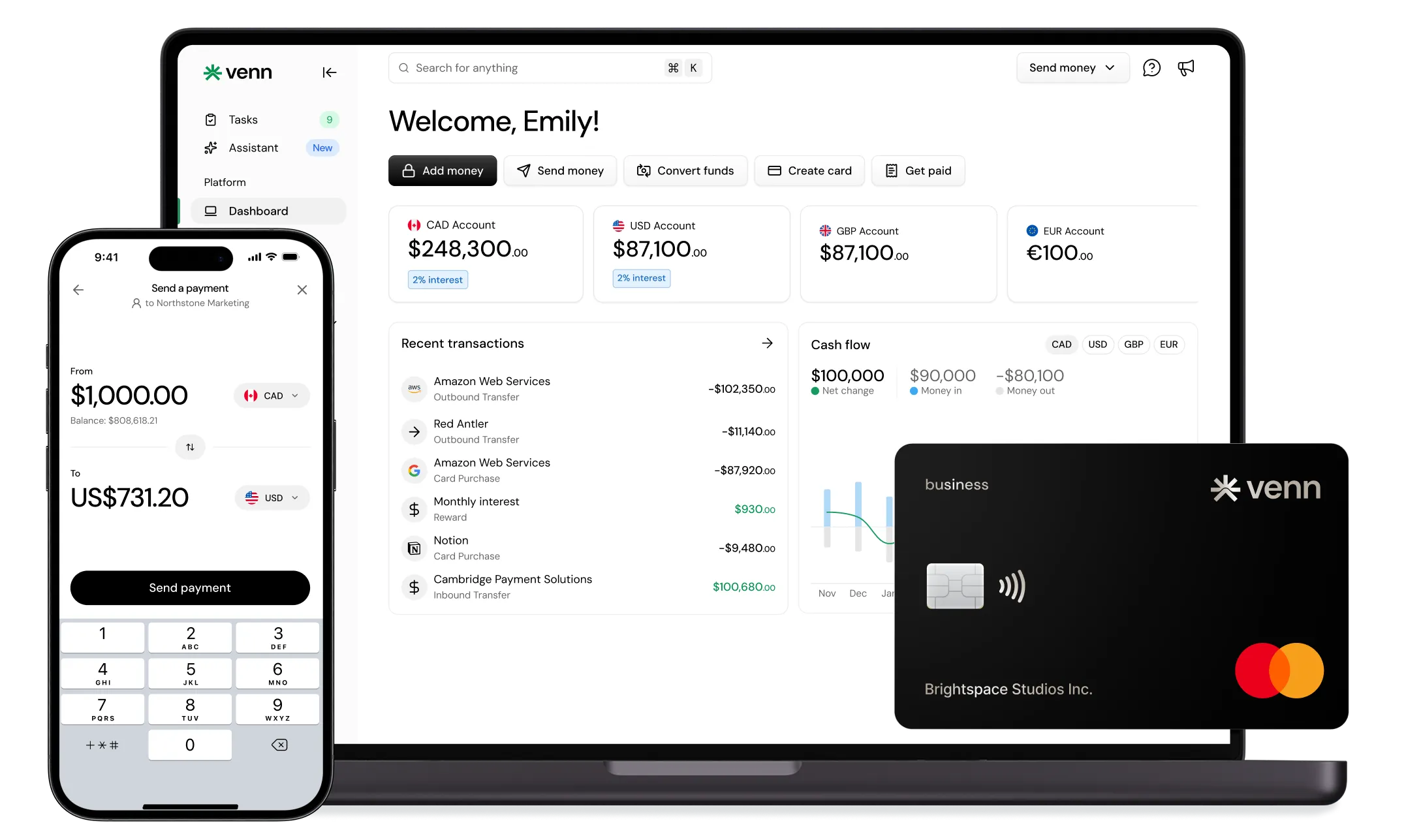
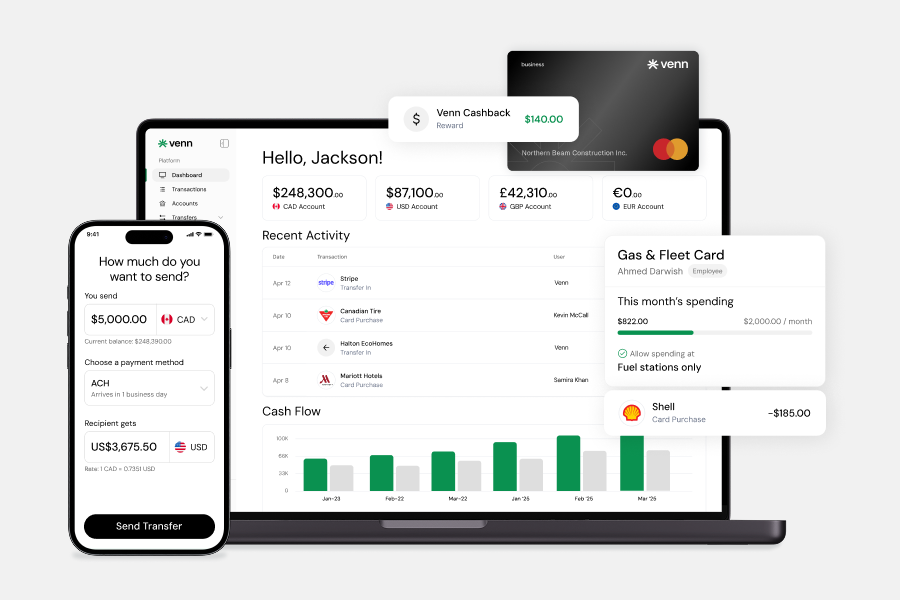
For businesses managing multiple expense categories across materials and supplies, automated categorization becomes essential. Venn's corporate cards with 1% unlimited cashback automatically capture transaction data at the point of purchase, reducing manual coding errors and creating a clear audit trail. The OCR receipt capture feature matches documentation to transactions, ensuring every supplies purchase has proper supporting records.
5030xx Account Codes: Services and Contracted Work Reference Table
The 5030xx range covers purchased services, which is work performed by external parties rather than physical goods. If you're paying for someone's expertise, time, or labor rather than receiving a tangible product, it belongs in this range.
Rentals of linens, uniforms, tools, and non-capital equipment should also be recorded using the appropriate services account, not supplies, since you're paying for temporary use rather than ownership.
For businesses paying international service providers, proper coding is only half the challenge. Venn provides real local USD, CAD, GBP, and EUR accounts, eliminating costly FX conversions when paying vendors abroad. Global wire transfers cost only $6-10 depending on your plan, with recipients receiving payments same or next business day. This compares favorably to competitors where transfers typically take 3-5 business days.
Common Misclassifications and How to Avoid Them
Understanding the differences ensures accurate financial statements and compliance with tax regulations. Misclassifying expenses leads to reporting errors, audit issues, and missed deductions that accumulate over time.
Materials vs. Supplies Confusion
The most common error occurs when businesses can't determine whether an item supports production or operations. Here's the decision rule: if the item becomes part of what you sell to customers, it's materials (COGS). If it supports your operations but doesn't transfer to the customer, it's supplies (expense).
Consider a painting contractor. Paint becomes part of the finished product the customer receives, making it COGS. Brushes, tape, and drop cloths support the work but aren't sold to the customer, making them supplies.
Supplies vs. Equipment Confusion
Supplies are generally items expected to be used within 12 months and are deductible as ordinary expenses. Equipment is a capital asset providing value beyond a single year. The $5,000 threshold serves as a practical dividing line, but useful life matters too.
A $200 calculator used daily for three years is still a supply because of its low value. A $6,000 printer is equipment regardless of how quickly it might wear out.
Services vs. Supplies Confusion
When you receive something tangible, it's typically supplies. When you pay for work performed, it's services. The confusion arises with bundled transactions.
If a repair technician replaces a part, the part might be supplies while the labor is services. Some businesses simplify by coding the entire invoice to services if labor represents the majority of the cost, but separating components provides better expense visibility.
Decision Framework:
• Does this item become part of what we sell? → Materials (COGS)
• Is this a physical item we consume in operations? → Supplies (502xxx)
• Are we paying for someone's work or expertise? → Services (5030xx)
• Does it cost $5,000+ with 1+ year useful life? → Capital Equipment (507xxx)
Streamlining Expense Classification with Modern Financial Tools
Manual GL coding creates bottlenecks and introduces errors. When every receipt requires someone to determine the correct code, look it up, and enter it manually, mistakes become inevitable.
Canadian businesses managing multiple expense categories need banking, accounting, and expense management working together seamlessly. Venn serves as the essential banking layer in this financial stack, offering capabilities that directly address classification challenges.
Automated expense categorization through Venn's corporate cards captures transaction data at the source. The direct integration with QuickBooks and Xero means expenses flow automatically to the correct GL codes based on vendor and transaction patterns you establish. Once you've coded a purchase from a particular supplier, similar transactions follow the same path.
For businesses importing materials or paying international service providers, multi-currency capabilities eliminate a common classification complication. When you maintain real local currency accounts, you're not dealing with conversion fees that need separate coding or reconciliation.
Unlike competitors that charge per user, Venn pricing is per account, not per user, making it cost-effective for growing finance teams. The platform also offers free, unlimited Interac e-Transfer® on all plans, the only fintech in Canada to do so, simplifying vendor payments while maintaining clear transaction records.
Best Practices for GL Code Management
Consistent classification requires more than knowing the rules. It requires systems and habits that make correct coding the default.
Document your chart of accounts. Create a reference document specific to your business with examples drawn from actual transactions. Generic definitions help less than seeing "the monthly cleaning supply order from CleanCo goes to 502120."
Train your team. Everyone processing expenses needs to understand classification rules. A 30-minute training session prevents months of correction work.
Review regularly. Monthly review of expense classifications catches errors before they compound. Look for unusual patterns: supplies expense suddenly doubling might indicate misclassified equipment purchases.
Use technology strategically. Expense management tools that auto-categorize based on vendor and transaction type eliminate the most common errors. Venn allows businesses to create recipients without requiring an invoice first, supporting various payment workflows while maintaining proper documentation.
Consult professionals when needed. When in doubt about a significant or recurring expense, work with your accountant to establish clear policies. The cost of professional guidance is far less than the cost of systematic misclassification.
Where a particular purchase may fit more than one definition, select the most precise account. Specificity in your chart of accounts pays dividends in reporting clarity and budget management.
Frequently Asked Questions
Q: What is the difference between 502xxx and 5030xx account codes?
A: The 502xxx range typically covers materials and supplies, meaning physical goods purchased for operations or production. The 5030xx range is used for purchased services, which includes work performed by external parties. The key distinction is whether you are buying a tangible item or paying for labour and expertise.
Q: How do I know if an expense is materials or supplies?
A: The correct category depends on how the item is used. Materials that become part of inventory for resale or production are capitalized and later recovered through cost of goods sold under inventory accounting rules. Materials used for general business operations are expensed as supplies.
Q: Where do contracted services go in the chart of accounts?
A: Contracted services belong in the 5030xx range under purchased services. This includes consulting fees, maintenance contracts, temporary staffing, professional services, and any work performed by non-employees. If you are paying primarily for someone’s time and expertise rather than a physical product, it should be coded as a service.
Q: What’s the capitalization threshold for equipment versus supplies?
A: Items with a value of $5,000 or more and a useful life of at least one year are typically treated as capital equipment and coded to the 507xxx range. Items under $5,000 with a useful life of less than one year are usually expensed as supplies in the 502xxx range.
Q: How can I reduce GL coding errors in my business?
A: Reducing errors starts with using clear account definitions and consistent rules. Standardize coding guidelines, use approval workflows for unusual transactions, and review expense patterns monthly. When possible, rely on accounting software rules and vendor-based automation to assign accounts consistently.
Q: Do I need separate accounts for different types of supplies?
A: Using specific sub-accounts such as office supplies, cleaning supplies, and maintenance supplies improves visibility into spending trends and simplifies budgeting. When a purchase could reasonably fit more than one category, always select the most precise account available in your chart of accounts.
---
**Disclaimer:** This publication is provided for general information purposes and does not constitute legal, tax or other professional advice from Venn Software Inc or its subsidiaries and its affiliates, and it is not intended as a substitute for obtaining advice from a financial advisor or any other professional. We make no representations, warranties or guarantees, whether expressed or implied, that the content in the publication is accurate, complete or up to date.

Venn is all-in-one business banking built for Canada
From free local CAD/USD accounts and team cards to the cheapest FX and global payments—Venn gives Canadian businesses everything they need to move money smarter. Join 15,000+ businesses today.
Frequently asked questions
Everything you need to know about the product and billing.
Join 15,000+ businesses banking with Venn today
Streamline your business banking and save on your spend and transfers today
No personal credit check or guarantee.