Best Expense Management Tools for Law Firms in Canada
Compare Best Expense Management Tools for Law Firms in Canada. See Clio, CosmoLex, Smokeball, Actionstep and Venn for billing, trust and spend control.

Ahmed Shafik
Co-founder
.png)

Trusted by 15,000+ Canadian businesses
Business banking for Canada
Local CAD and USD accounts, corporate cards with cashback, the lowest FX rates in Canada, free local transfers, and more.
Law firm expense management carries obligations that most business accounting tools were never designed to handle. Canadian firms must track expenses by matter, recover disbursements accurately, maintain audit-ready records, and keep operating expenses cleanly separated from client-fund workflows. A receipt capture app solves only a fraction of that problem.
The right setup depends on where your firm's biggest friction actually sits. Is it matter-level disbursement tracking? Billing realization and client bill-backs? Trust accounting compliance under provincial law society requirements? Approval workflows for operating spend? Or cross-border vendor payments and multi-currency accounts?
This guide evaluates five tools across those criteria: matter-level expense and disbursement tracking, timekeeping and billing, trust accounting considerations, approval workflows, accounting integrations, reporting, and Canadian relevance. No single platform wins across every category. The goal here is to help your firm identify the right fit for its size, billing model, and financial complexity.
Comparison Table
Each tool addresses a distinct layer of law firm financial operations. Legal practice management platforms handle matter-level disbursements, billing, and trust-adjacent workflows. Venn sits at the operating-expense layer, giving firms spend controls, multi-currency accounts, and accounting connectivity for day-to-day vendor payments, travel, and software subscriptions. Most Canadian firms benefit from evaluating both layers separately before selecting a final stack.
How We Evaluated The Best Expense Management Tools For Law Firms
Every tool in this guide was assessed through a legal-operations lens, not a generic small-business finance lens. That distinction matters because law firms carry compliance obligations that most businesses do not.
The evaluation criteria covered seven core areas:
• Matter-level expense and disbursement tracking: Can the tool assign hard costs and soft costs to specific matters and support accurate client bill-backs?
• Timekeeping and billing: Does the platform capture time reliably and convert it into clean, billable invoices?
• Trust accounting and trust-aware workflows: Provincial law societies across Canada require strict separation of client trust funds and detailed trust reporting. Tools that handle or connect to trust accounting received additional weight here.
• Approval workflows and reporting: Can firms control who spends what, and does the reporting give finance leads clear visibility?
• Accounting integrations: How well does the tool connect to QuickBooks, Xero, or a firm's existing general ledger?
• Ease of use and onboarding: A tool that takes months to implement creates its own operational risk.
• Canadian relevance: This includes CAD pricing, local support, multi-currency capabilities, and compliance fit for Canadian firms.
This article also evaluates both legal practice management software and operating-expense infrastructure. Many firms need both layers: one system for matter management, billing, and trust-adjacent workflows, and a separate layer for company cards, vendor payments, and day-to-day operating spend.
The Best Expense Management Tools For Law Firms
No single platform wins for every firm. The right fit depends on where your biggest operational pain sits: matter-level disbursement tracking, billing and trust accounting, automatic time capture, workflow customization, or day-to-day operating spend.
Most Canadian law firms also need two distinct layers working together. The first covers legal practice management, billing, and trust-aware accounting, where matter-centric expense tracking, client bill-backs, and compliance with provincial law society requirements shape every decision. The second covers operating expenses: company cards, approval workflows, vendor payments, and accounting connectivity for costs that run the firm itself.
The sections below evaluate five platforms with that two-layer framework in mind. Clio, CosmoLex, Smokeball, and Actionstep each address the legal practice management and billing side from different angles. Venn addresses the operating-expense and business banking layer. Each platform receives balanced coverage focused on where it genuinely fits, and where it falls short, so you can build a stack that matches your firm's size, billing model, and finance complexity.
Clio
Clio is the strongest choice for Canadian firms that want a single cloud platform covering practice management, billing, and client-facing workflows. Built with Canadian firms in mind, it offers Canadian pricing in CAD, Canadian data storage, and in-house Canadian support, which matters when your team needs help during business hours without routing through international call centres.
On the finance and billing side, Clio handles time tracking, expense entry at the matter level, and legal billing. Higher-tier plans add multi-currency billing, which is useful for firms with international clients. Because everything sits in one platform, disbursements and client bill-backs connect directly to the billing workflow rather than requiring manual reconciliation across separate systems.
Clio fits solo lawyers and small-to-midsize firms that want to consolidate practice management, billing, and client communication without managing multiple software subscriptions. Firms with more complex accounting requirements, significant operating spend, or cross-border vendor payments may find that Clio handles the legal billing layer well but still need a separate finance stack to manage company cards, approvals, and multi-currency operating expenses.
CosmoLex
CosmoLex suits firms that want trust accounting, business accounting, billing, and practice management consolidated into a single legal-specific platform, rather than stitched together across separate tools.
The platform combines trust and general accounting, time tracking, billing, email and document management, and calendaring in one system. Firms can record soft costs and other expense entries directly against matters, which keeps disbursement records clean and supports accurate client bill-backs. CosmoLex's official pages reference Canada-specific compliance considerations and payment setup, making it a credible option for Canadian firms navigating provincial law society recordkeeping requirements.
The core appeal is fewer handoffs. When billing, accounting, and matter management live in the same system, there is less risk of data falling through the gaps between platforms. That matters for firms where the person managing files is also reconciling trust accounts.
The main limitation is pricing transparency. CosmoLex does not publish detailed plan pricing publicly, so firms should request a demo to assess total cost, onboarding complexity, and whether the platform fits their specific size and workflow before committing.
Smokeball
Smokeball is best suited for firms that lose billable value because time, expenses, or matter activity are captured inconsistently. If your team regularly underreports hours or forgets to log disbursements, Smokeball's automatic time tracking addresses that problem directly by recording activity as work happens, rather than relying on manual entry after the fact.
Beyond time capture, Smokeball includes billing workflows, trust accounting, and matter-level expense entry, which means fee earners can attach costs to the correct matter without switching between systems. That tight connection between activity and billing supports stronger realization rates over time.
On pricing, Smokeball's official site positions its "Bill" plan as the billing-focused tier starting from $149 per month. However, firms should verify current pricing, confirm whether figures are in Canadian dollars, and assess Canadian implementation support before committing. Smokeball addresses specific billing and time-capture pain points well, but firms with broader accounting or workflow needs may still require additional tools alongside it.
Actionstep
Actionstep is best suited for midsize firms that need customizable workflows alongside a full legal accounting stack. Where lighter platforms handle billing and basic expense tracking, Actionstep goes further by letting firms configure matter management processes, approval workflows, and reporting structures to match how their practice actually operates.
Its legal accounting product covers trust accounting, general ledger, banking, accounts payable, revenue recognition, and custom reporting. That breadth makes it a strong fit for firms with structured billing cycles, multiple practice groups, or compliance reporting requirements that demand more than a standard chart of accounts.
Growing firms with operational complexity tend to get the most from Actionstep. The platform supports the kind of process discipline that helps firms scale without losing visibility into matter-level costs, disbursements, or financial performance.
The main consideration is implementation weight. Pricing is quote-based, and onboarding is implementation-led, which means the setup process requires meaningful time and resource commitment. Solo practitioners or very small firms with straightforward needs will likely find that overhead disproportionate to what they require.
Venn
Venn functions as an operating-expense and business finance layer for law firms, not a legal practice management platform. It does not replace trust accounting or legal accounting systems, and firms should continue using purpose-built legal software for those workflows.
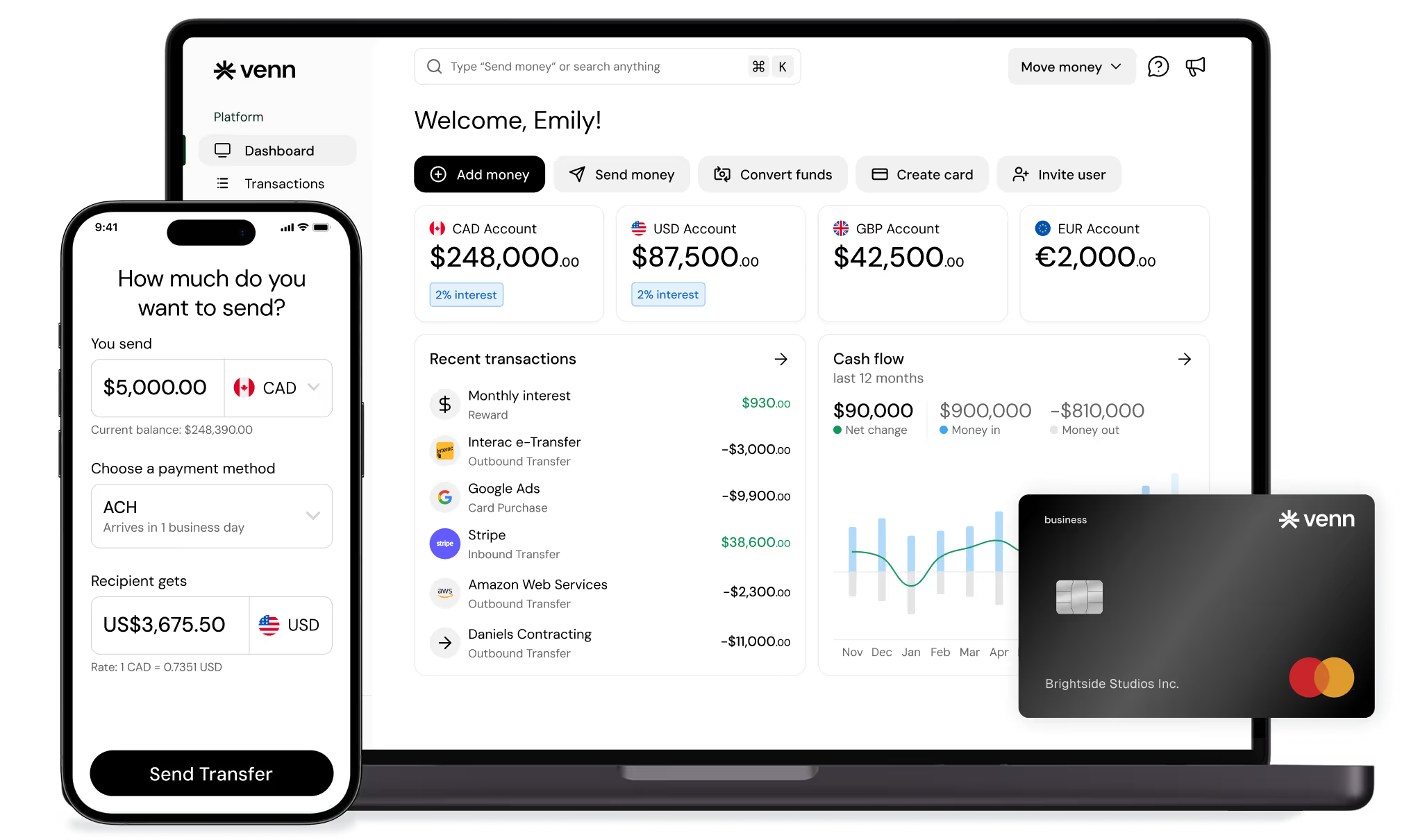
Where Venn adds value is on the operating side: company card spend, vendor payments, and cross-border transactions. Firms can issue virtual and physical cards with built-in spend controls and approval workflows, capture receipts via OCR, and sync directly with QuickBooks or Xero. Through the mobile app, firms can view available funds, send transfers, and create cards directly from their phones. Local accounts in CAD, USD, GBP, and EUR let firms pay expert witnesses, foreign vendors, or international service providers without unnecessary conversion friction. Free unlimited Interac e-Transfer® is available for domestic vendor payments.
Venn's plans are publicly priced at $0, $40, and $100 per month, with FX rates from 0.45% down to 0.25% depending on plan. The Venn card earns 1% cashback, with unlimited cashback on the Pro plan. Eligible deposits are covered by CDIC insurance protection, subject to applicable limits and rules.
For law firms managing software subscriptions, travel, marketing vendors, or cross-border operations, Venn fits cleanly alongside existing legal software rather than competing with it.
How To Choose The Right Expense Management Tool For Your Firm
Start by identifying your firm's primary pain point, because that single factor narrows the shortlist faster than any feature checklist.
If matter-level disbursement tracking and client bill-backs are the core problem, a legal practice management platform with built-in expense entry belongs at the top of your list. If billing realization is suffering because time and costs go uncaptured, prioritize automatic time capture. If trust-aware accounting and compliance reporting are the constraint, choose a tool built specifically for legal accounting workflows. If your firm has grown to the point where workflow customization and deeper reporting matter, look for a platform that supports that operational complexity.
Firm size and billing model shape the decision further. Solo and small firms generally benefit from simpler, all-in-one legal systems. Midsize firms with multiple practice areas often need more configurable platforms. Firms billing on contingency face different disbursement-recovery pressures than those billing hourly.
Many firms find that no single tool covers every layer cleanly. A legal practice management platform handles matters, billing, and trust-related workflows. A separate operating-expense layer handles company cards, approval controls, vendor payments, software subscriptions, and accounting sync. Where operating spend, multi-currency payments, and accounting connectivity are the gap, that second layer becomes a meaningful part of the stack.
Map your firm's compliance complexity, finance operations, and billing model to the right shortlist before evaluating pricing or features.
For Solo And Small Firms
Solo lawyers and small firms should prioritize simplicity, accurate billing, and clean matter expense recovery without overcomplicating implementation. Clio suits firms that want a broad cloud practice management platform with integrated billing and time tracking. CosmoLex fits firms that prefer legal accounting and trust workflows built into a single system. Either way, get the billing and disbursement layer right first. Firms that later develop meaningful employee card spend, vendor payments, or cross-border operating expenses can add a separate operating-expense layer at that point, but overbuilding early creates unnecessary overhead for a lean team.
For Firms Losing Billable Time
Firms that consistently miss billable work need tools built around automatic time capture, matter-level expense entry, and clear billing visibility. Manual follow-up to recover unbilled disbursements costs real revenue.
Smokeball is likely the strongest fit here. Its core value proposition centers on automatic time tracking and billing realization, which directly addresses the problem of expenses and time slipping through the cracks. Firms should verify Canadian pricing, currency setup, and accounting integrations before committing.
For Midsize Firms With Complex Workflows
Midsize firms should prioritize workflow customization, role-based approval processes, detailed reporting, and a legal accounting structure that scales with operational complexity. Implementation support matters too, since a poorly configured system creates more friction than it solves.
Actionstep is the likely strongest fit here. Its platform combines customizable matter workflows with legal accounting capabilities including trust accounting, general ledger, accounts payable, and custom reporting. For managing partners and finance leads comparing scalable systems in 2026, that depth is meaningful. The trade-off is real: pricing is quote-based, onboarding is implementation-led, and internal change management takes time and planning. Operations teams should budget for both.
For Firms With High Operating Spend Or Cross-Border Payments
Firms with higher operating budgets should prioritize card controls, approval workflows, OCR receipt capture, vendor payments, and accounting sync from the start. Multi-currency accounts, FX costs, and cross-border payment friction matter especially for firms paying foreign expert witnesses, international vendors, or overseas counsel.
Venn fits well as part of this broader stack, typically alongside legal practice management software for matters, billing, and trust-aware accounting. Venn connects directly with QuickBooks and Xero, supports free unlimited Interac e-Transfer® for vendor payments, and provides local CAD, USD, GBP, and EUR accounts. FX rates vary by plan, and the Venn card earns 1% cashback subject to plan limits. For firms with meaningful operating spend and cross-border payment needs, that combination adds up.
When Law Firms Need More Than Practice Management Software
Legal practice management platforms handle the core of a firm's operations well: matter management, billing, disbursements, trust-related reporting, calendaring, and client workflows. That coverage is essential, and no operating-expense tool replaces it.
What those platforms typically do not cover is the firm's own day-to-day spending. Company cards, employee spend controls, software subscriptions, travel, vendor payments, and cross-border transactions sit outside the matter-billing workflow and need a separate layer of financial infrastructure.
Venn is one example of that second layer. For law firms, its relevant strengths include approval workflows, OCR receipt capture, direct QuickBooks and Xero connectivity, local CAD, USD, GBP, and EUR accounts, Interac e-Transfer® vendor payments, and a corporate card with 1% cashback subject to plan limits.
That operating-expense layer complements legal practice management and trust accounting software. It does not replace either. Firms that recognize this distinction build a cleaner, more auditable financial stack, with each tool doing the job it was designed for.
Conclusion
No single tool wins across every firm type. The right setup depends on where your biggest operational friction lives.
Clio fits Canadian firms that want a broad cloud practice management platform with billing and time tracking built in. CosmoLex fits firms that want legal accounting, trust workflows, and practice management in one system. Smokeball fits firms that need automatic time capture and stronger billing realization. Actionstep fits growing or operationally complex firms that require customizable workflows and deeper accounting structure. Venn fits firms that need a dedicated operating expense layer, including company cards, approval controls, receipt capture, vendor payments, multi-currency accounts, and QuickBooks or Xero connectivity.
Many firms end up using two layers: a legal practice management system for matter-level tracking, billing, and trust-account-related workflows, and a separate banking and expense platform for day-to-day operating spend. Evaluate your shortlist against firm size, billing model, disbursement workflow, trust account requirements, and the complexity of your operating finances before committing.
FAQ
Q: What Is The Difference Between Expense Management Software And Legal Practice Management Software?
A: Expense management software focuses on company spending, approval workflows, receipt collection, employee reimbursements, and card controls. Legal practice management software covers a broader set of functions, including matters, billing, trust accounting, calendaring, and client workflows. Most law firms benefit from both layers working together rather than relying on one tool to handle everything.
Q: Do Law Firms Need Trust Accounting Features In An Expense Tool?
A: Not necessarily in the expense tool itself, but the firm's overall software stack must support compliant trust-account handling and accurate audit trails. Provincial law societies across Canada set specific recordkeeping requirements, so firms need at least one system in their stack that meets those standards. An expense or banking tool that syncs cleanly with legal accounting software can support that goal without replacing it.
Q: What Is The Best Expense Management Tool For A Small Law Firm In Canada?
A: The right choice depends on whether the firm's primary pain point is billing, matter expense recovery, or day-to-day operating spend. Small firms often prefer a simpler all-in-one legal system such as Clio or CosmoLex that handles billing and expense tracking together. Firms with more complex operating spend or cross-border vendor payments may add a separate business finance layer alongside their legal software.
Q: Can A Law Firm Use More Than One Tool For Expense Management?
A: Yes, and many firms do. A common setup pairs legal practice management software for matter tracking, billing, and trust-related workflows with a separate business banking and card platform for operating expenses, approvals, and accounting integrations. This two-layer approach lets each tool handle what it does best without forcing either system beyond its intended scope.
---
**Disclaimer:** This publication is provided for general information purposes and does not constitute legal, tax or other professional advice from Venn Software Inc or its subsidiaries and its affiliates, and it is not intended as a substitute for obtaining advice from a financial advisor or any other professional. We make no representations, warranties or guarantees, whether expressed or implied, that the content in the publication is accurate, complete or up to date.

Venn is all-in-one business banking built for Canada
From free local CAD/USD accounts and team cards to the cheapest FX and global payments—Venn gives Canadian businesses everything they need to move money smarter. Join 15,000+ businesses today.
Frequently asked questions
Everything you need to know about the product and billing.
Join 15,000+ businesses banking with Venn today
Streamline your business banking and save on your spend and transfers today
No personal credit check or guarantee.