How to Register a Trademark for Your Business in Canada 2026
Learn how to register a trademark for your business in Canada. Protect your brand, avoid common mistakes, and secure exclusive rights with this step-by-step guide.


Trusted by 5,000+ Canadian businesses
Business banking for Canada
Local CAD and USD accounts, corporate cards with cashback, the lowest FX rates in Canada, free local transfers, and more.
Protecting your brand through trademark registration gives your business exclusive rights to use your name, logo, or slogan across Canada. This legal protection prevents competitors from copying your brand identity and helps build customer trust and recognition. For Canadian businesses serious about growth, trademark registration represents a critical investment in long-term success.
While the trademark registration process involves multiple steps and government procedures, understanding the requirements makes it manageable for any business owner. This guide walks you through everything you need to know about registering a trademark in Canada: from conducting searches and filing applications to understanding costs and timelines.
What Is a Trademark and Why Does It Matter?
A trademark serves as the legal foundation for protecting your brand identity in the Canadian marketplace. Understanding what trademarks protect and how they differ from other business registrations helps you make informed decisions about intellectual property protection.
Understanding Trademarks in Canada
A trademark is any combination of words, designs, sounds, or symbols that distinguishes your business's goods or services from those of competitors. This includes business names, logos, slogans, unique packaging designs, and even distinctive sounds or colours when used in specific contexts. Trademarks protect the brand elements that customers recognize and associate with your business's quality and reputation.
Canadian trademark registration provides exclusive rights to use your mark throughout Canada. This territorial protection means your Canadian trademark registration protects you within Canada's borders but doesn't extend to other countries. Businesses expanding internationally need separate trademark registrations in each target market.
The value of trademark protection extends beyond preventing copycats. Registered trademarks become business assets that can be licensed, sold, or used as collateral. They also provide legal presumption of ownership in disputes, making enforcement significantly easier and less expensive than relying on unregistered rights.
Trade Name vs. Trademark: What's the Difference?
Many business owners confuse registering a business name with trademark protection, but these serve entirely different purposes. Business name registration with provincial or federal authorities simply gives you the right to operate under that name. It doesn't prevent other businesses from using similar names or protect your brand identity.
Trademark registration, by contrast, provides exclusive rights to use your brand elements in connection with specific goods or services across Canada. For example, registering "ABC Consulting Inc." as your corporate name doesn't stop another company from trademarking "ABC" for consulting services. Only trademark registration through the Canadian Intellectual Property Office (CIPO) provides this protection.
Trademark vs. Copyright vs. Patent
Understanding the differences between various types of intellectual property helps you choose the right protection for your business assets. Each type serves distinct purposes and offers different durations of protection.
Benefits of Registering a Trademark in Canada
Trademark registration delivers concrete business advantages that extend far beyond basic legal protection. These benefits strengthen your market position and create valuable business assets that support long-term growth.
• Exclusive rights to use your mark across Canada for your registered goods and services
• Legal presumption of ownership that simplifies enforcement and reduces litigation costs
• Ability to license or sell your trademark as a revenue-generating business asset
• Enhanced credibility with customers, investors, partners, and financial institutions
• Stronger position against counterfeiters with access to border enforcement measures
• Protection when expanding to new provinces or territories without re-establishing rights
• Foundation for international protection through treaties like the Madrid Protocol
What Can (and Can't) Be Trademarked in Canada
What You Can Trademark
Canadian trademark law allows protection for various types of marks that distinguish your business in the marketplace. The key requirement is that your mark must be distinctive and capable of identifying your specific goods or services.
• Words and business names (including made-up words)
• Logos and design elements
• Slogans and taglines
• Colours (when distinctive in your industry)
• Shapes and packaging (if not purely functional)
• Sounds (like jingles or distinctive audio signatures)
What You Can't Trademark
Certain types of marks face automatic rejection or significant registration challenges. Understanding these restrictions saves time and application fees.
• Generic or purely descriptive terms (e.g., "Fast Shipping" for courier services)
• Marks confusingly similar to existing registered trademarks
• Government symbols, flags, or official marks
• Deceptive or misleading marks about product origin or quality
• Scandalous, obscene, or immoral content
• Surnames without proof of acquired distinctiveness
How to Register a Trademark in Canada: Step-by-Step Process
The Canadian trademark registration process typically takes 12-18 months from filing to registration. Following each step carefully increases your chances of approval and reduces delays from examiner objections.
Step 1: Conduct a Trademark Search
A comprehensive trademark search forms the foundation of a successful application. This critical step identifies potential conflicts before you invest time and money in the application process. Start by searching the Canadian Trademarks Database on CIPO's website for identical or similar marks in related goods or services.
Beyond the official database, search for common law uses through Google, social media platforms, and industry directories. Unregistered trademarks can still create conflicts if they've established rights through use. This broader search typically takes 2-4 hours but prevents costly refusals later.
Professional trademark agents offer comprehensive searches that include phonetic similarities, design mark conflicts, and international databases. While this adds upfront cost, it significantly reduces the risk of refusal. Similar marks in the same industry or related classes pose the greatest risk to your application.
Step 2: Determine Your Trademark Classes
Canada uses the Nice Classification system, which organizes all goods and services into 45 distinct classes. You must identify which classes cover your business activities, as protection only extends to the classes you register. Each class requires separate fees, so accurate classification balances protection needs with budget constraints.
For example, a clothing retailer might need Class 25 for clothing items and Class 35 for retail store services. A software company could require Class 9 for downloadable software and Class 42 for software-as-a-service offerings. Review the complete class list carefully, as some products and services appear in unexpected categories.
Step 3: Prepare Your Trademark Application
Your application must include specific elements that clearly define your trademark and its intended use. Gather these required components before starting the online filing process:
• Clear representation of your trademark (word mark, design, or combination)
• Detailed description of goods and services
• Nice Classification codes for each class
• Basis for filing (current use, proposed use, or foreign registration)
• Complete applicant information including business name and address
Accuracy at this stage prevents examiner objections and processing delays. Vague descriptions or incorrect classifications trigger requests for clarification that can add months to your timeline. Take time to craft precise descriptions that accurately reflect your business activities.
Step 4: File Your Application with CIPO
Filing happens through CIPO's online portal, where you'll input all prepared information and pay the required fees. The system immediately assigns your application number and establishes your filing date. This date becomes crucial for establishing priority over any later applicants for similar marks.
The online system guides you through each required field, but having all information prepared streamlines the process. Double-check all entries before submission, as amendments after filing can be complex and sometimes require additional fees.
Step 5: CIPO Examination Process
After filing, a trademark examiner reviews your application for compliance with legal requirements and searches for conflicting marks. This examination typically takes 6-12 months, depending on CIPO's workload and application complexity.
If the examiner identifies issues, you'll receive an examination report detailing required corrections or clarifications. You have six months to respond to these objections. Common issues include overly broad descriptions, similarity to existing marks, or marks deemed descriptive. Professional responses that address examiner concerns while maintaining your desired protection scope often resolve these issues.
Step 6: Publication in the Trademarks Journal
Applications that pass examination are published in the Trademarks Journal for a two-month opposition period. This publication allows other trademark owners to review and potentially challenge your application if they believe it conflicts with their rights.
Most applications proceed through this period without opposition. If someone does file an opposition, you'll need to defend your application through a formal process. Many oppositions resolve through negotiation, such as agreeing to limit your goods and services or modifying your mark slightly.
Step 7: Registration and Certificate
Following the opposition period (or successful defense against any oppositions), CIPO registers your trademark and issues an official certificate. This certificate serves as proof of your exclusive rights to use the mark across Canada for your registered goods and services.
The total timeline from filing to registration typically spans 12-18 months for straightforward applications. Complex cases involving examiner objections or oppositions can extend this timeline to two years or more.
How Much Does Trademark Registration Cost in Canada?
Understanding the complete cost structure helps you budget appropriately for trademark protection. While government fees are fixed, total costs vary based on the number of classes and whether you hire professional assistance.
Note that these reflect 2025 CIPO fees and may be updated. Always verify current fees on the official CIPO website before filing your application.
For most small businesses, budget $500-$800 for a straightforward DIY application covering 1-2 classes. If hiring a trademark agent, total costs typically range from $1,500 to $3,000 or more depending on your mark's complexity and the number of classes required.
How Long Does a Trademark Last in Canada?
Canadian trademarks remain valid for 15 years from the registration date. Unlike patents or copyrights that eventually expire, trademarks can be renewed indefinitely in 15-year increments. This perpetual protection makes trademarks valuable long-term business assets.
Renewal requires paying renewal fees for each registered class before the expiration date. CIPO sends courtesy reminders, but the responsibility for timely renewal rests with the trademark owner. Late renewal remains possible within six months after expiration with additional fees, but letting your trademark lapse completely means losing your exclusive rights.
Maintaining your trademark also requires continuous use in commerce. Registered trademarks not used for three consecutive years become vulnerable to cancellation proceedings. This "use it or lose it" principle ensures the trademark register reflects marks actively used in the marketplace.
Should You Hire a Trademark Agent?
Deciding between DIY registration and professional assistance depends on your mark's complexity, budget constraints, and risk tolerance. Both approaches can succeed with proper preparation and understanding of the process.
When to Consider DIY Registration
• Your trademark is straightforward (simple word mark or basic logo)
• Thorough searches revealed no potential conflicts
• You're comfortable navigating government processes
• Budget constraints make professional fees challenging
• Your business operates in a single, clearly defined industry
When to Hire a Trademark Agent
• Your mark includes complex design elements or stylization
• Search results show potentially conflicting marks requiring interpretation
• You're filing in multiple classes across different industries
• Your industry has many similar brands or crowded trademark space
• You want to maximize first-time approval chances
• International expansion plans require strategic trademark planning
Trademark agents are regulated professionals specializing in intellectual property law. They conduct comprehensive searches, prepare stronger applications, and respond effectively to CIPO objections. For many businesses, the upfront investment in professional assistance prevents costly mistakes and application refusals.
Common Mistakes to Avoid When Registering a Trademark
Learning from common errors helps ensure your application proceeds smoothly through the registration process. These mistakes frequently cause delays, additional costs, or outright refusals.
• Skipping the trademark search leads to wasted application fees when conflicts emerge during examination
• Choosing descriptive or generic terms results in automatic refusal for lack of distinctiveness
• Selecting incorrect classes creates coverage gaps or unnecessary expenses for unused classes
• Providing vague goods and services descriptions triggers examiner objections requiring clarification
• Filing before establishing use plans complicates proving intended use when required
• Missing response deadlines causes application abandonment and loss of filing fees
• Ignoring opposition notices results in automatic refusal if not addressed within deadlines
• Forgetting renewal dates allows trademarks to expire and competitors to potentially register similar marks
Protecting and Monitoring Your Trademark After Registration
Registration marks the beginning, not the end, of trademark protection. Active management and enforcement maintain your exclusive rights and maximize your investment's value.
Using Your Trademark Properly
Proper trademark use strengthens your rights and prevents challenges. Always use the ® symbol after registration to notify others of your protected status. Using this symbol before official registration constitutes misrepresentation and can damage your application.
Maintain consistency in how your trademark appears across all uses. Document these uses through dated examples of packaging, marketing materials, and sales records. If licensing your trademark to others, implement quality control measures to ensure the mark maintains its reputation and distinctiveness.
Monitoring for Infringement
Set up Google Alerts for your trademark and variations to catch unauthorized online use quickly. Monitor new trademark applications in your classes through CIPO's database to identify potentially conflicting marks during their opposition period.
Watch for competitors or counterfeiters using similar marks that might confuse customers. Consider professional trademark watch services for comprehensive monitoring across multiple jurisdictions and platforms. Early detection of infringement makes enforcement easier and less expensive.
Taking Action Against Infringers
If you discover infringement, several options exist depending on the severity and intent. Start with cease-and-desist letters that notify infringers of your rights and demand they stop. Many infringement cases resolve at this stage without litigation.
For persistent infringement or bad-faith copying, legal action may be necessary. Registered trademarks provide significant advantages in court, including presumption of ownership and validity. Courts can award damages, profits, and injunctions against continued infringement.
How Venn Supports Growing Canadian Businesses
Protecting your trademark is one part of building a professional, scalable business. As your company grows and formalizes its brand, you also need financial infrastructure that can keep pace.
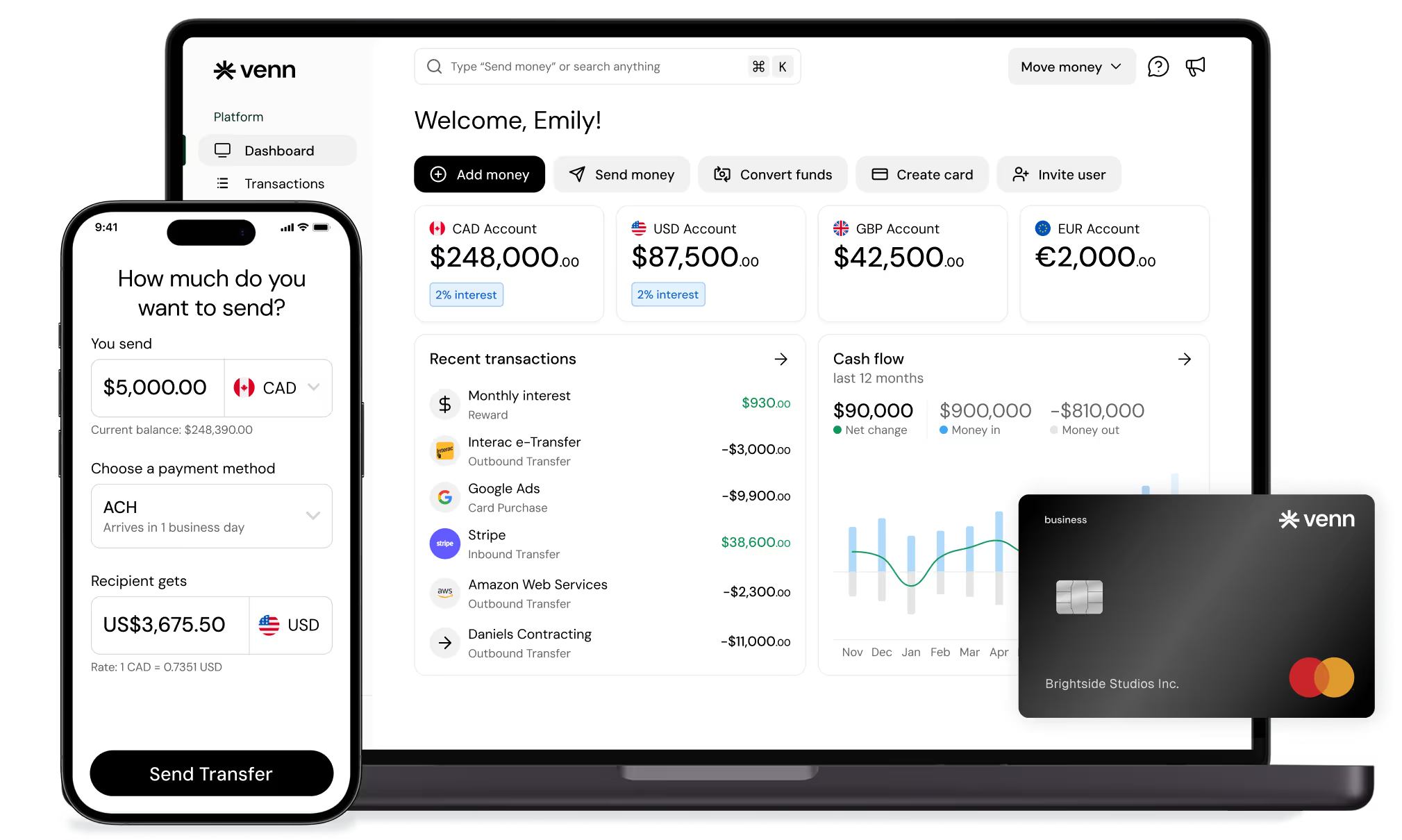
Venn provides Canadian businesses with the modern banking tools needed to operate efficiently across borders. With local CAD and USD accounts, the lowest FX rates in Canada at 0.25%, and built-in accounting automation, Venn eliminates the friction that traditional banks create for growing companies. Whether you're paying trademark agents, managing international expansion, or simply running day-to-day operations, Venn's platform saves you time and money.
Unlike legacy banks that charge high fees and lack integration with modern tools, Venn offers free unlimited Interac e-Transfers®, 1% unlimited cashback on all card spend, and seamless two-way sync with QuickBooks and Xero. For businesses investing in brand protection and growth, Venn provides the financial partner built for what comes next.
Conclusion: Protect Your Brand, Power Your Growth
Registering a trademark in Canada is a straightforward process that provides lasting value for your business. By following the steps outlined in this guide, conducting thorough searches, choosing the right classes, and filing accurately with CIPO, you can secure exclusive rights to your brand across Canada. Whether you handle the application yourself or work with a trademark agent, the investment in protecting your intellectual property pays dividends as your business grows.
Frequently Asked Questions About Trademark Registration in Canada
Q: How long does it take to register a trademark in Canada?
A: The typical timeline is 12–18 months from filing to registration, assuming no objections or oppositions. Complex applications or those requiring amendments may take longer.
Q: Can I use the ® symbol before my trademark is registered?
A: No. You can only use ® after your trademark is officially registered. Using it prematurely can be considered misrepresentation. You may use ™ for unregistered marks.
Q: Do I need to register my trademark in every province?
A: No. Trademark registration with CIPO provides protection across all of Canada, including all provinces and territories.
Q: Can I trademark a name that's already a registered business name?
A: Possibly, but it depends on whether someone else has already trademarked it or is using it in commerce. Business name registration and trademark registration are separate processes with different protections.
Q: Can I file a trademark for a business I haven't started yet?
A: Yes. You can file based on "proposed use" in Canada. However, you’ll eventually need to prove you’ve used the mark in commerce before final registration.
---
**Disclaimer:** This publication is provided for general information purposes and does not constitute legal, tax or other professional advice from Venn Software Inc or its subsidiaries and its affiliates, and it is not intended as a substitute for obtaining advice from a financial advisor or any other professional. We make no representations, warranties or guarantees, whether expressed or implied, that the content in the publication is accurate, complete or up to date.

Venn is all-in-one business banking built for Canada
From free local CAD/USD accounts and team cards to the cheapest FX and global payments—Venn gives Canadian businesses everything they need to move money smarter. Join 5,000+ businesses today.
Frequently asked questions
Everything you need to know about the product and billing.
Join 5,000+ businesses banking with Venn today
Streamline your business banking and save on your spend and transfers today
No personal credit check or guarantee.