How Long Do Business Payments Take to Arrive in Canada?
If you’ve ever been told a payment was sent but couldn’t see it yet, you’re not alone. Different payment rails move at different speeds, and timing depends on more than just when someone clicks send. Here’s how long business payments typically take to arrive, why some transfers move instantly while others don’t, and how to plan around it.


Trusted by 15,000+ Canadian businesses
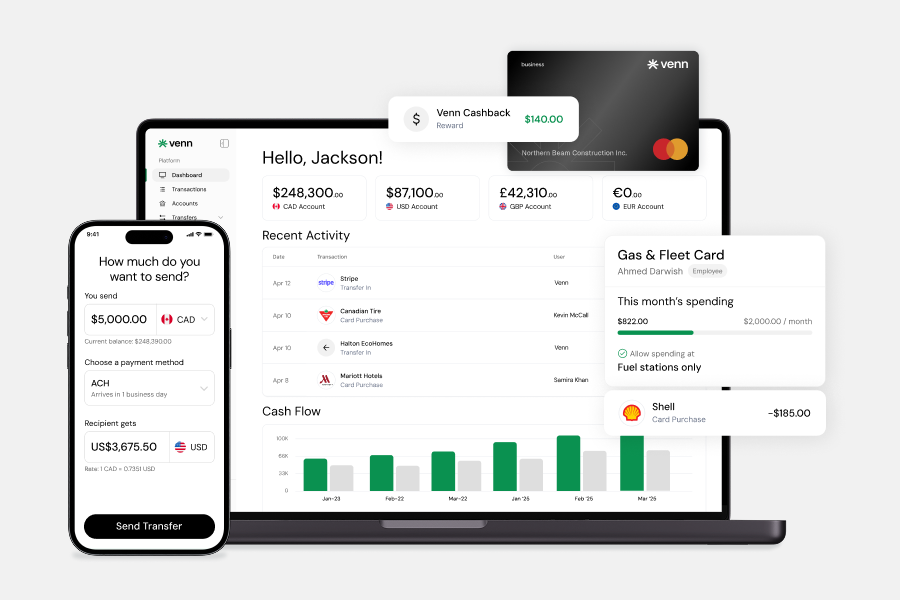
Business banking for Canada
Local CAD and USD accounts, corporate cards with cashback, the lowest FX rates in Canada, free local transfers, and more.
When you are running a business, timing matters. Cash flow decisions depend on knowing when funds will actually arrive and become available to use, not just when a payment is sent.
For Canadian businesses using modern financial platforms, the answer to “how long will this take?” depends on two things: the currency and the transfer method. Different rails settle at different speeds, even when the destination is the same account.
This guide breaks down how long it typically takes for funds to arrive or reflect in your account, what factors can cause delays, and how to set expectations internally so finance teams are not guessing.
What does “funds reflected in your account” actually mean?
When funds are reflected in your account, it means the transfer has fully completed and the money is available for you to see and use. At this point, the funds are no longer in transit and can be used for payments, transfers, or day-to-day business expenses.
This is different from a payment being initiated, sent, or pending on the sender’s side. A sender may release funds from their account, receive a confirmation, or see the payment marked as sent, while the transfer is still moving through the payment network.
Most transfers pass through one or more processing steps before they settle. Depending on the transfer method, this can include:
- Batch processing windows
- Network settlement cycles
- Intermediary institutions involved in routing the payment
During this time, the funds are in transit and will not yet appear in your account balance.
Once the transfer successfully reaches your account, the funds are reflected right away. If there is a delay, it usually happens before the funds arrive, not after. That is why two payments sent on the same day can appear at different times, even if they are headed to the same account. For finance teams, the key distinction is this: “sent” does not mean “received.” Funds are only reflected once the payment has fully settled through the relevant network.
How long do CAD transfers take in Canada?
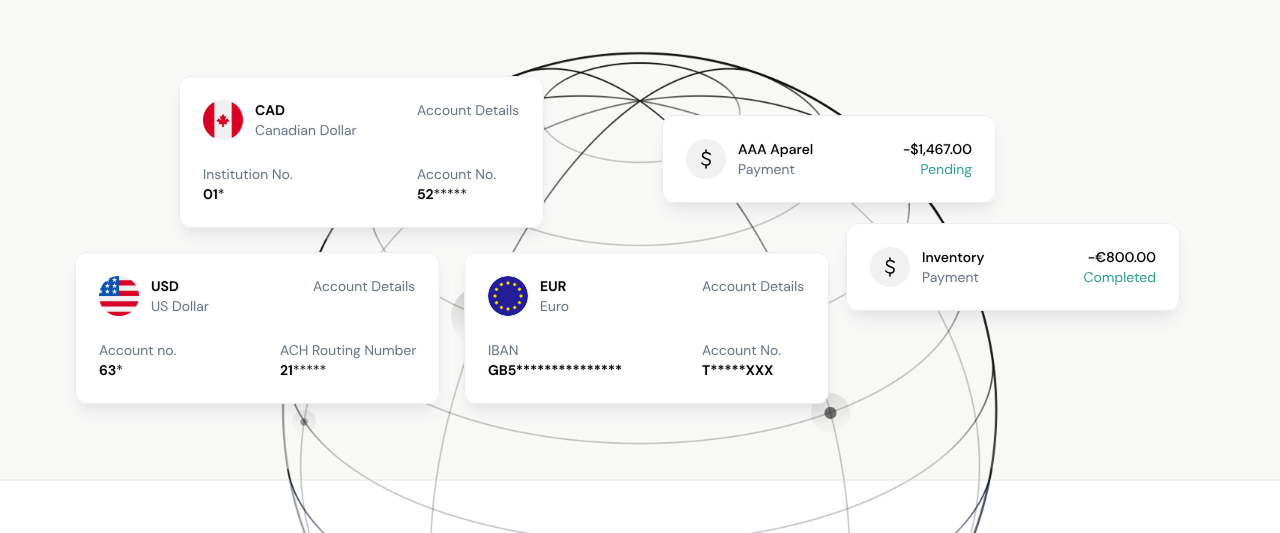
Canadian dollar transfers vary widely depending on the method used. Here is how the most common CAD payment types typically behave.
Interac e-Transfer Auto Deposit (CAD)
Timing: Instantly or within minutes
Interac e-Transfer Auto Deposit is the fastest way to receive CAD funds. Once the sender initiates the transfer, the funds usually appear almost immediately.
This method is often used for:
- Customer payments
- Vendor reimbursements
- Owner contributions
Because the funds move on Interac rails, there is no manual acceptance step and no waiting period in most cases.
EFT or Wire (SWIFT) in CAD
Timing: Within 1 business day
Electronic Funds Transfers (EFTs) and CAD wires sent via SWIFT typically settle within one business day after processing. These are common for:
- Larger vendor payments
- Corporate transfers
- Payments initiated through traditional institutions
While fast, these transfers can still be affected by cut-off times and processing windows, especially if initiated late in the day. Here’s a more detailed breakdown of how EFT compares to Interac e-Transfer and wire transfers on speed and cost.
Pre-Authorized Debits (PAD)
Timing: Typically 2 to 3 business days
PADs are often used for:
- Recurring payments
- Subscription charges
- Authorized pulls from another account
Because PADs are batch-based, they take longer to clear. You will usually receive an email with an estimated arrival date once the debit is initiated, which helps with reconciliation and cash planning.
How long do USD transfers take?
For Canadian businesses operating across the border, USD timing is often a critical question.
ACH, Fedwire, or Wire (SWIFT) in USD
Timing: Within 1 business day
USD transfers sent through ACH, Fedwire, or SWIFT typically arrive within one business day once processed.
These methods are commonly used for:
- Paying US vendors
- Receiving customer payments
- Moving operating funds between entities
ACH transfers are batch-based, while Fedwire and SWIFT wires settle individually, but in practice the arrival window is similar once processing is complete.
How long do GBP transfers take?
UK Faster Payments or Wire (SWIFT)
Timing: Within 1 business day
British pound transfers sent via UK Faster Payments or SWIFT wires typically settle within one business day. UK Faster Payments is designed for speed within the UK banking system, which is why it is often used for vendor and partner payments.
How long do EUR transfers take?
SEPA or Wire (SWIFT)
Timing: Within 1 business day
Euro transfers sent via SEPA or SWIFT wires generally arrive within one business day once processed. SEPA transfers are widely used across the eurozone and are built for efficient local settlement, which helps keep timelines predictable.
Why are my funds sometimes delayed?
Even when a transfer method has a standard settlement window, delays can still occur. The most common reason has nothing to do with your account.
Intermediary processing holds
Occasionally, intermediary or traditional institutions involved in sending funds may place temporary holds during processing. These holds can happen for reasons such as:
- Internal compliance checks
- Manual review
- Processing cut-offs
- Sender-side issues
When this happens, the delay occurs before the funds reach Venn. There is no visibility into the cause or duration of these holds, and they are outside of your financial platform's control. After each load, Venn send you an email with an estimated arrival time based on your bank’s processing speed.
As soon as the funds successfully reach Venn, they are credited to your account right away.
How to plan around payment timing as a finance lead
For founders, CFOs, and accountants, the goal is not to eliminate delays entirely. Every payment network has processing windows and constraints. The goal is to plan for timing differences so they do not disrupt operations, payroll, or vendor relationships.
1. Match the payment method to the urgency
Not all payments need to arrive instantly, and not all payment rails are built for speed.
If timing is critical, choose methods designed for fast settlement. For Canadian dollar payments, Interac e-Transfer Auto Deposit typically reflects instantly or within minutes. For international payments, local rails such as SEPA for euros or UK Faster Payments for pounds are generally faster than batch-based or international wire alternatives. For payments that are predictable and non-urgent, batch-based methods like Pre-Authorized Debits (PADs) can work well. These are commonly used for subscriptions, scheduled transfers, or recurring obligations where the arrival date is known in advance. The tradeoff is speed in exchange for consistency.
2. Build settlement timing into cash flow planning
Payment timing should be reflected in your cash flow forecasts. A payment sent on Monday does not always mean funds will be available the same day.
Finance teams should:
- Plan inflows and outflows based on expected settlement windows
- Leave buffer room around payroll, tax remittances, and large vendor payments
- Avoid scheduling time-sensitive payments on days with limited processing windows
This reduces last-minute scrambles when funds are still in transit.
3. Set internal expectations early
Many delays feel urgent only because expectations were unclear. Make sure stakeholders understand the difference between a payment being sent and funds being available. Sales, operations, and leadership teams should know when money is expected to arrive so decisions are not made based on assumptions. Clear communication helps prevent unnecessary follow-ups and escalations when a transfer is still processing normally.
4. Standardize payment methods where possible
Using too many payment methods can make timing harder to predict. Where practical, standardizing on a small set of transfer types for common use cases helps finance teams develop reliable expectations. Over time, this makes cash planning more consistent and reduces the need to track exceptions.
5. Review delays after they happen
When a transfer takes longer than expected, treat it as a data point. Understanding whether the delay was caused by the transfer method, timing of initiation, or intermediary processing helps refine future planning. Over time, these adjustments make payment timing more predictable, even when delays cannot be fully avoided.
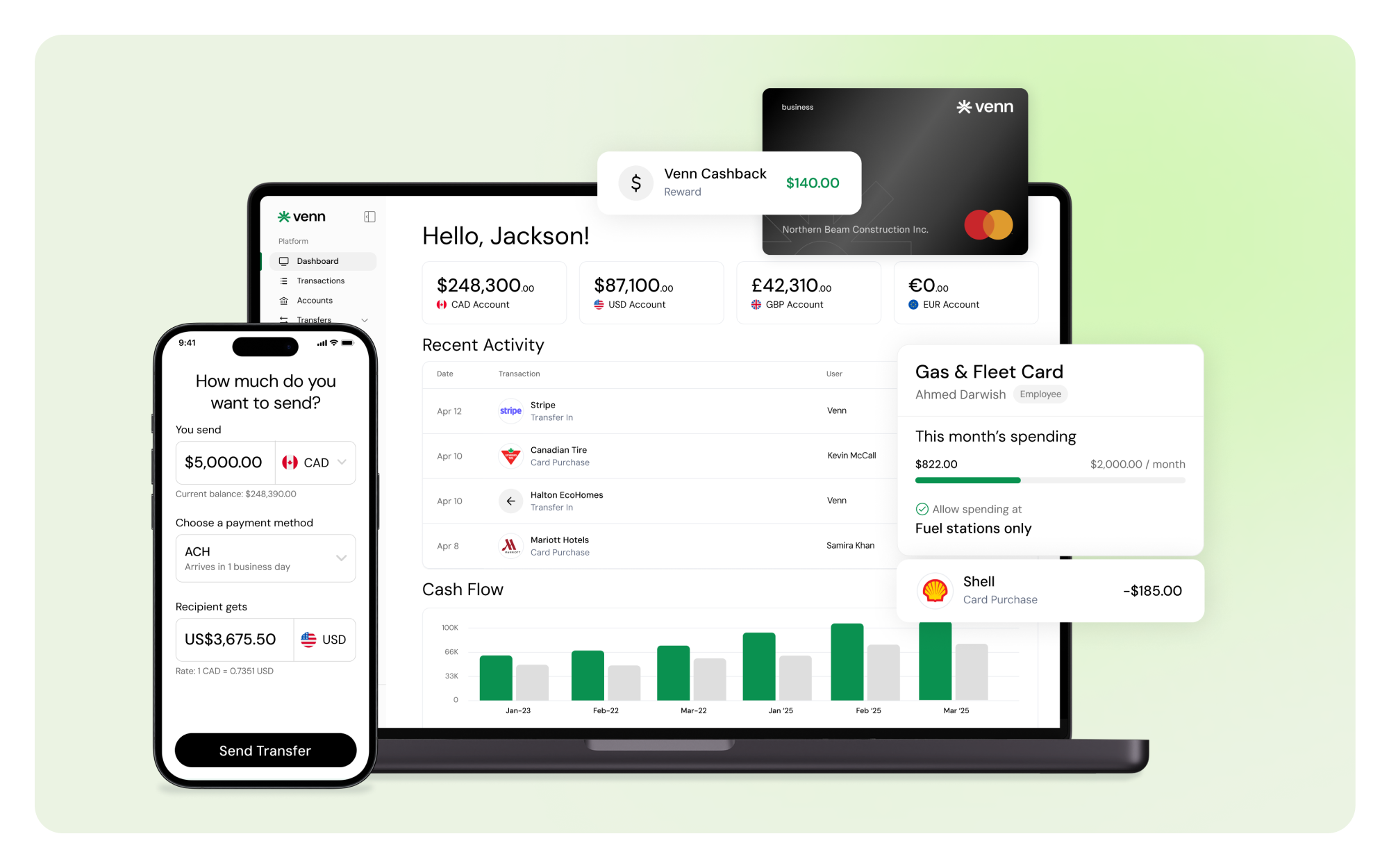
For Canadian businesses managing multiple currencies, clarity around timing helps improve cash forecasting, reduce operational stress, and keep teams aligned on when money is actually available.
Ready to simplify your tax compliance and financial operations? Get started with Venn today.
Frequently asked questions about funds arrival timing
Why does one CAD transfer arrive instantly while another takes a day?
Different CAD payment methods use different rails. Interac e-Transfer Auto Deposit is real-time, while EFTs and wires process on business-day schedules.
Do all currencies settle at the same speed?
No. Settlement time depends on both the currency and the payment network used. Local rails like Interac, SEPA, and UK Faster Payments are designed for faster settlement than international wires.
What happens once funds reach my account?
Once funds successfully reach your account, they are reflected right away. Any delay before that point is typically due to processing on the sender or intermediary side.
This publication is provided for general information purposes and does not constitute legal, tax or other professional advice from Venn Software Inc or its subsidiaries and its affiliates, and it is not intended as a substitute for obtaining advice from a financial advisor or any other professional. We make no representations, warranties or guarantees, whether expressed or implied, that the content in the publication is accurate, complete or up to date.

Venn is all-in-one business banking built for Canada
From free local CAD/USD accounts and team cards to the cheapest FX and global payments—Venn gives Canadian businesses everything they need to move money smarter. Join 15,000+ businesses today.
Frequently asked questions
Everything you need to know about the product and billing.
Join 15,000+ businesses banking with Venn today
Streamline your business banking and save on your spend and transfers today
No personal credit check or guarantee.